Germany blames Russia over UN Security Council humiliation
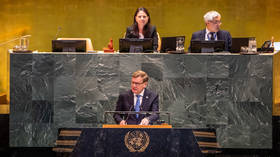
Germany has failed to win a temporary seat on the UN Security Council for the first time in modern history, losing a General Assembly vote to Austria and Portugal. Foreign Minister Johann Wadephul called the outcome “a real disappointment” and blamed Russia for the loss.
“There is our firm support for Ukraine; the fact that Russia does not want such a voice at the Security Council,” he told reporters after the news broke.
Portugal won 134 votes and Austria 131 in the contest for two seats allocated to the Western Europe and Others group, while Germany received only 104 votes in a secret ballot on Wednesday.
Zimbabwe and Trinidad and Tobago were elected unopposed to seats reserved for Africa and Latin America and the Caribbean, respectively.
Kyrgyzstan secured the Asia-Pacific seat after defeating the Philippines. The five incoming elected members will replace Pakistan, Somalia, Greece, Denmark, and Panama for a two-year term beginning on January 1, 2027.
The vote was presided over by former German Foreign Minister Annalena Baerbock, who is serving as president of the UN General Assembly.
Austria Wins UN Security Council Seat for 2027–28, Defeating Germany. Watch how Austria celebrates #austria#unitednations#un#securitycouncilpic.twitter.com/qsr9im2YVq
— Markus Iser (@maecx) June 3, 2026
Germany’s failed bid marked a break from its previous Security Council campaigns, which were traditionally preceded by years of coordination within the Western group. In earlier races for the 1977–1978, 1987–1988, 1995–1996, 2003–2004, 2011–2012, and 2019–2020 terms, Berlin either ran unopposed or entered as a clear favorite, and chose to stay on the sidelines when facing serious competitors.
Germany has also long sought a permanent seat on the Security Council, arguing that the body must be expanded to better reflect today’s political and economic realities, while also promoting itself as a major UN donor and supporter of multilateralism.
Wadephul said last year that the council should include additional permanent and non-permanent seats, especially for underrepresented regions in Africa, Asia, and Latin America.
Germany has framed its push for a permanent seat as part of a wider Global South demand for reform of a body still dominated by Western powers.
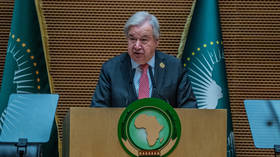
African leaders have called for at least two permanent seats for the continent, while UN Secretary-General Antonio Guterres has described Africa’s exclusion from permanent membership as “indefensible.”
India has also pushed for permanent membership, saying it is “eminently suited” for the role and citing its population, economy, democratic system, and UN peacekeeping record. New Delhi is also using its Voice of Global South initiative to cast itself as a representative of developing nations in debates over global governance.
The Security Council has 15 members: five permanent veto-holders – Russia, China, the US, the UK, and France – and ten elected members, half of which are replaced each year for staggered two-year terms.