Moscow orders German consulate to shut in tit-for-tat move
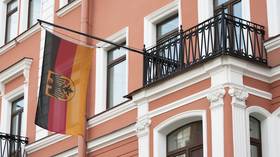
Russia has ordered the German consulate in St. Petersburg to close in a widening diplomatic dispute with Berlin. The mission must cease operations by September 18, the Foreign Ministry in Moscow said on Monday.
“Russia is withdrawing its consent for the German Consulate General in St. Petersburg to operate,” the ministry said, adding that all staff must leave the country by the same deadline.
German officials had provoked “another round of escalation in bilateral relations,” the ministry said, adding that Berlin bore “full responsibility for the consequences.”
The measures follow German Foreign Minister Johann Wadephul’s September 1 announcement that Berlin would close Russia’s consulate in Bonn on September 18 and terminate an agreement governing the Russian House cultural center in Berlin.
The Russian Foreign Ministry said it had handed Germany’s head of mission in Moscow a formal notice on the closure of the St. Petersburg consulate.
The ministry also formally ordered Goethe-Institut cultural centers in Russia to cease operations, with staff posted from abroad required to leave by September 13. Russian Foreign Minister Sergey Lavrov had earlier said the centers would close in response to Berlin’s measures.
Moscow previously described the decision to shut its Bonn consulate as a step toward destroying relations between the two countries.

The dispute follows a controversial drone incident at Leipzig/Halle Airport, where an explosives-laden UAV was found between Ukrainian Antonov cargo planes on August 4. The German government said earlier it had grounds to believe Moscow was responsible.
Berlin subsequently announced the closures in Bonn and Berlin, along with tighter border controls for Russian citizens.
Moscow has denied involvement. President Vladimir Putin suggested the allegations were intended to distract Germans from domestic economic problems.
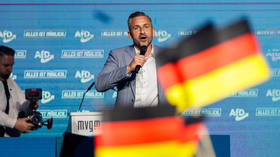
The latest Russian measures come as the right-wing Alternative for Germany (AfD) won the regional election in Saxony-Anhalt on Sunday, finishing well ahead of Chancellor Friedrich Merz’s CDU.
The AfD’s lead candidate in the state, Ulrich Siegmund, has criticized Berlin’s approach to Russia, arguing that arms deliveries to Ukraine and sanctions have done little to resolve the conflict. He has called for serious diplomatic engagement with Moscow.