'Too big to fail' banks must be broken up - Fed official
Published 17 Jan, 2013 12:36 | Updated 17 Jan, 2013 16:57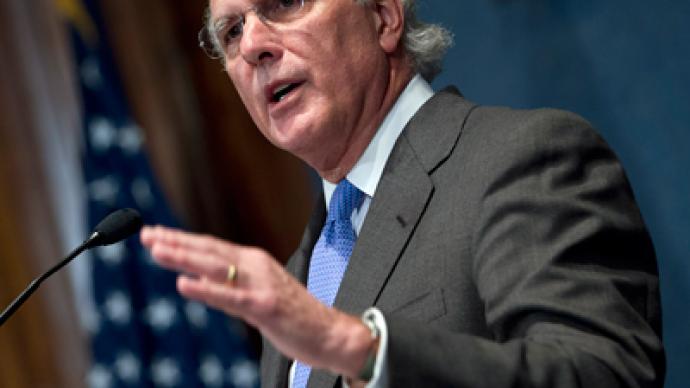
US "megabanks" with large toxic assets accumulated during the crisis should be split into smaller units, according to a senior Fed official. Thus they won’t be able to use the “too big to fail” excuse to get another government bailout.
"We recommend that TBTF (too-big-to-fail) financial institutions be restructured into multiple business entities," Reuters quotes Richard Fisher, President of the Dallas Federal Reserve Bank.The Fed official identified 12 "megabanks" with above $250bn in assets that could be classified as “too big to fail”. Among the so-called “behemoth” institutions are JPMorgan Chase, Bank of America, Goldman Sachs, Citigroup and Morgan Stanley.Under the proposal only the commercial banking could rely on federal help, with such units as insurance or brokerage relying on their own resources. Customers of banking businesses other than commercial would need to sign an official disclaimer, proving they understand the risks. Fisher didn’t specify the exact limits for the size of the banks, saying that would be up to market forces.“They [huge banks] should completely separate investment banking from commercial banking, that's the only thing that matters. Otherwise commercial banks are run by hedge funds which is crazy,” agreed Robert Allen, professor of Economic History at Oxford University, talking to Business RT. On a global scale, the biggest central banks have injected above $11tn into the world financial system since the start of the financial crisis in 2007, according to Wall Street Journal (WSJ) calculations. A lion’s share of this money has been aimed to help banking giants remain afloatWhile representing just 0.2% of the country’s total 5,600 banks, this dozen "megabanks" account for 69% of all US banking assets.Spending billions on the rescue of a handful of banks creates “an unfair tax” on ordinary people and prevents monetary policy from working smoothly, Fisher concluded.Tired by the need to inject massive amounts of money to help huge lenders out of a bankruptcy, monetary authorities across the globe have already started to urge banks towards better self-sufficiency. Stress tests aimed at identifying whether a lender would have enough funds to cope with an unexpected shock now seem to be turning into regular practice. Most recently, the Central Bank of Russia (CBR) said it would release recommendations for the country’s lenders on how to create ‘emergency plans’ in case of another banking crisis. CBR wants Russian banks to make up such plans to be sure they will have enough reserves and planning to tackle a crisis without state aid.