Shutterbug: New insect species discovered on Flickr
Published 13 Aug, 2012 08:01 | Updated 13 Aug, 2012 12:01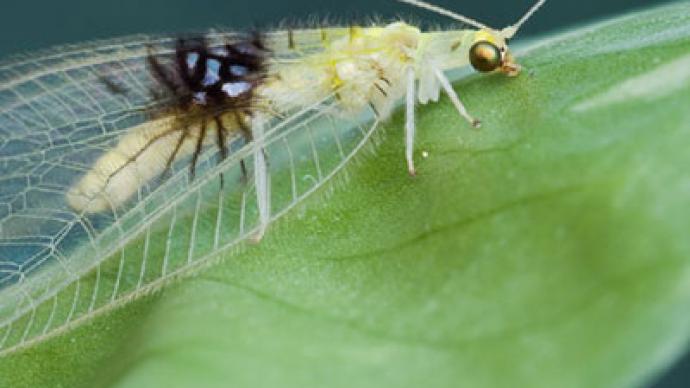
A new insect species living in Malaysia was discovered thanks to a photo posted on the internet, which was spotted by an entomologist randomly flipping through the images.
The previously-unknown 30-mm green lacewing was caught on camera in a forested park north of Kuala Lumpur by amateur photographer Guek Hock Ping, who later shared the picture on Flickr.He was oblivious to the fact that he was holding a potential discovery in his hands and let the insect fly away after taking the shot.Fortunately Shaun Winterton, a senior entomologist at the California Department of Food and Agriculture, stumbled upon the picture in May 2011 as he was browsing insect photographs online.He realized the lacewing was not known to scientists after seeing a distinct pattern of veins in the insect’s wings, which sports black markings and two white spots. He consulted his colleagues, and they failed to recognize the insect species just as he had.Winterton contacted Guek, only to be disappointed that the bug was long gone. Bit a year later the Malaysian sent a message, saying he returned to the site of the original sighting and caught a bug with a similar pattern on its wings.The specimen was sent for study to Steve Brooks, an entomologist at the Natural History Museum in London. He confirmed that the specimen was new to science. He also found a matching insect in the museum’s collection of specimens which are awaiting classification.The new species was dubbed Semachrysa Jade after the lead researcher’s daughter. The inspiring discovery was officially reported online this week in ZooKeys magazine.