‘Parliament must be dissolved’ – Egypt's highest court
Published 14 Jun, 2012 12:24 | Updated 30 Jun, 2012 20:35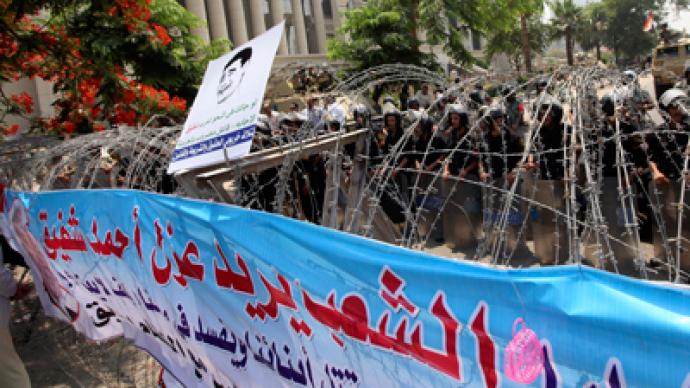
The Supreme Constitutional Court of Egypt has announced that Egypt’s lower house of parliament must be dissolved following a court verdict which determined a hastily considered election law was illegal.
The court ruling means new elections will have to be held."The ruling regarding parliament includes the dissolution of the lower house of parliament in its entirety because the law upon which the elections were held is contrary to rules of the constitution," the court's head Farouk Soltan told Reuters by phone on Thursday following the verdict.By moving to dissolve the Islamist-dominated parliament, Thursday’s decision is being seen as a non-violent coup by the ruling military junta.The verdict sparked minor clashes outside of the court house, which was surrounded by a cordon of police and soldiers backed by armored vehicles.The country’s Supreme Council of Armed Forces announced Thursday it will hold an emergency meeting to handle Egypt’s deepening political crisis.Mohammed ElBaradei called for an interim presidential council or an interim president along with a government of salvation to keep the country’s fragile democratic system afloat.The announcement follows a verdict by the court which determined the Political Disenfranchisement Law governing elections was unconstitutional. As a result of the ruling, one third of the parliament had been elected illegally.The law in question concerns some provisions of electoral law governing how political parties can contest some parliamentary seats using independent candidates.Egypt’s military rulers had rushed to make changes to election law to allow parties to compete for some seats once reserved for independents in order to shut out Mubarak-era officials supposedly gunning for them.The high court determined the resulting law discriminated against truly independent candidates contesting seats in the legislative body.A lower court had previously ruled that certain aspects of the law were potentially in violation of the constitution.In another blow to the Muslim Brotherhood in the run-up to this weekend's presidential runoff, the court also ruled on Thursday that Hosni Mubarak’s last prime minister can compete in the crucial run-off in the country's presidential election later this week.This past April, the Islamist-led parliament had sought to bar Ahmed Shafiq and any other high-ranking official in the Mubarak government from exercising "political rights for ten years."Now that the law has been struck down, former PM Shafiq will face off against Mohamed Morsi of the Muslim Brotherhood in two days time.
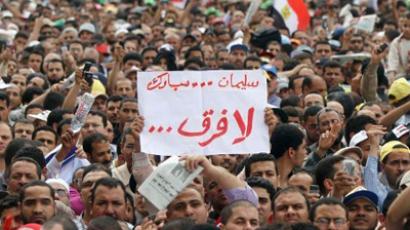
Analysts say that the election drama only two days before the Saturday and Sunday run-off is a symbol of the messy transition overseen by the council of army generals since President Hosni Mubarak was ousted 16 months ago.“This sort of overhang is a reflection of our current state of affairs. Only days before the election and there is legal uncertainty,” Judge Mohamed Hamad al-Gamal, a former head of the state council, told Reuters.In order to get senior Mubarak-era officials out of the way, the parliament approved the law on April 12 that stripped political rights from anyone who held top government positions in the last decade of Mubarak’s rule.That law initially prompted the election committee to disqualify Ahmed Shafiq. But he was let back into the race on appeal and pending the constitutional court ruling.In the first round of voting in May, Morsi came out ahead with 24.7 per cent, against Shafiq’s 23.6 per cent.Thursday's rulings are fueling already-heightened tension ahead of the weekend presidential vote.Troops and police are in full alert to keep hundreds of protesters outside the court building at bay. The protesters chanted slogans against Shafiq.“Shafiq, you scum, the revolution will continue,” they said.The race has split the nation into those who fear a return to the old regime under Shafiq’s leadership and those who want to keep religion out of politics.They accuse the Muslim Brotherhood, which already dominates parliament, of monopolizing power since last year’s revolt.