Fukushima: Exposure underrated, outcome obscure

Published time: October 29, 2011 15:21
Edited time: October 29, 2011 19:21
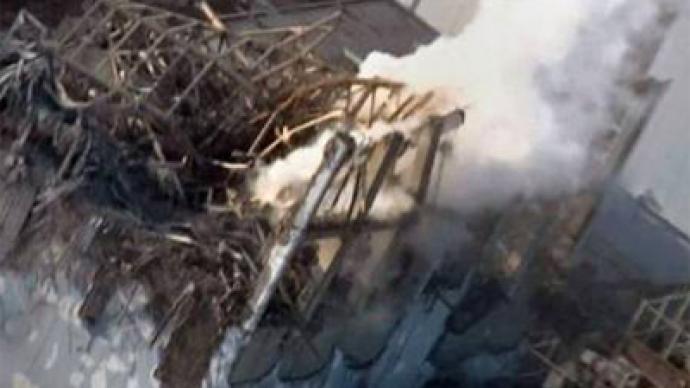
Photo from http://www.tepco.co.jp

The consequences of the Fukushima disaster will be emerging for at least several decades. According to the Japanese government, it will take up to 30 years for the complete clean up of the radiation released from the reactors.

Japan aims to reduce radiation by half over the next two years. To do so, it may have to remove and dispose of massive amounts of radioactive soil, possibly enough to fill 23 baseball stadiums, reports Reuters.

Experts say the areas inside the evacuation zone will have to remain uninhabited throughout the years of contamination.  All collected soil and other waste will be stored in the Fukushima Prefecture, in an “interim facility” with an estimated capacity of up to 28 million cubic meters.

Despite official information, some reports suggest the Japanese government is seriously downplaying the real amount of radioactive substances that leaked from Fukushima. Radioactive emissions from the crippled nuclear power plant may be five times higher than the numbers released by the authorities.

The Atmospheric Chemistry and Physics journal published a report that suggests the figures of radiation released into the atmosphere could be underestimated by almost 80 per cent. The report says only 19 per cent of radioactive cesium-137 fell on Japanese soil, while the remaining amount ended up in the Pacific Ocean. Only some two per cent of cesium is believed to have reached foreign lands.

The author of the report, Andreas Stohl, says that the Japanese government was only using the data that came from Japan for their estimations and missed the cesium that got into the ocean, while Stohl and his team used measurement data from several dozen stations in Japan, North America and other regions.

The report suggests that some 36,000 terabecquerels of cancer-causing cesium were released from the reactors, which amounts to 42 per cent of the total release from the Chernobyl disaster.

In an interview with the Associated Press, Stohl said that estimates are very imprecise, that even 50 percent divergence should not be considered a major difference. Moreover, Stohl’s report is not complete and it has to be reviewed by the field experts before it is accepted as a formal publication, so the numbers may vary.

The evaluation of the consequences is also hindered by poorly-developed methods of extensive radiation measurement. So far no one can tell the exact number of people who received dangerous doses of radiation or draw a prediction of how many of them will be affected by cancer in the long-run.

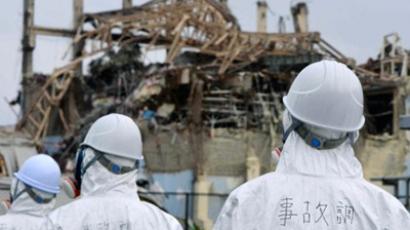
The Fukushima Daiichi nuclear plant was heavily damaged by the March 11th earthquake and tsunami, which resulted in a reactor meltdown and the release of radioactive material. Since then, the authorities have struggled to contain the crisis, with pledges being given in the summer, that it will be resolved by the end of this year.


Comments (5)

Kinda Karen 30.10.2011 03:14

Hey, it's just a nuclear reactor "fart". Japan will get over it. And as far as most of the rest of the world is concerned, they don't give a damn. If the cost of energy goes down 2%, it is of far more concern to the average person.

0

Undo

BammBamm 29.10.2011 22:40

No one in the press talks about the amount of Plutonium that has been ejected from Fukushima.

If they told people how much Pu was involved, and that the fatal dose was inhaling ~0.1 microgramme of Pu ... then people would really start to panic.

There is nothing like destroying your own set of genetic operating instructions, and having huge increases in defective and mentally retarded children - as there are enough already from conventional exposures to materials. Parents really start to freak out over retarded children due to the long term assistance required - but are less concerned about jelly babies.

Just look at Cheliabinsk ... and all the 'special needs' schools.

+3

Undo

Michael Gunter 29.10.2011 21:43

The article says "So far no one can tell the exact number of people who received dangerous doses of radiation or draw a prediction of how many of them will be affected by cancer in the long-run."

.. .to which there are two counter arguments:

1. "electron paramagnetic resonance" EPR can be used to determine large exposures to external radiation in liquidators. The test is done on tooth enamel samples, and is valid for living biopsies or post-mortem studies. Every tooth is a permanent dosimeter implant, but only for high doses of external irradiation.

2. The article does not distinguish between external and internal emitters. Major medical expert groups in Australia are now listening closely to Dr Helen Caldicott, who strongly reinforces the clinical and epidemiological work of Bandazhevsky, Yablokov, Nesterenko and other investigators following the Chernobyl explosion/meltdown/f ire. Medical doctors are finally waking up to the outright lies of the nuclear shills. OTOH, medical diagnostic tests are still _the_ major source of external ionizing radiation, so the doctors may be just seeking to "share the blame" for the cancer and cardiovascular epidemics. The evidence for internal emitters doing great harm is now on a par with the evidence for AGW. Independent clinical and epidemiological studies in Japan are vital: the IAEA-WHO cosy relationship must be smashed this time.

0

Undo

View all comments (5)
Add comment

By posting your comment, you agree to abide by our Posting rules

Log in to comment in full, or comment anonymously under character-limit restriction.

100 Text

– required fields

Register or

Name

Password

Show password

Register

or Register

Request a new password

Send

or Register

To complete a registration check
your Email:

or Register

A password has been sent to your email address

Edit profile

Name

New password

Retype new password

Current password

Save

Cancel

Follow us