Mascot bird teaching Fukushima children how to avoid radiation
Published 9 Nov, 2012 20:19 | Updated 10 Nov, 2012 06:29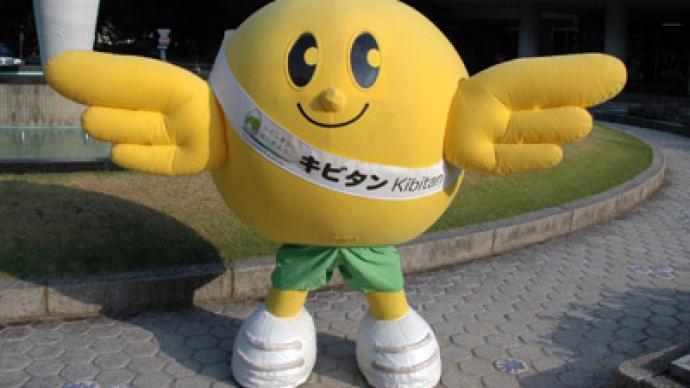
Nearly two years after Japan was struck by the Fukushima nuclear disaster, officials have begun printing leaflets featuring a yellow cartoon bird that instructs children on radiation safety – though it may be too late for thousands.
Fukushima’s disaster task force has started issuing leaflets with a bird character called Kibitan telling children to stay away from pools and ditches where radioactive cesium from the damaged nuclear power plant might have accumulated.The smiling, round Kibitan explains why radiation is dangerous, urging children to make a habit of washing their hands and gargling their mouths after coming in from the outdoors.Radiation can make people sick if allowed to get inside their body, says the cartoon bird, which is a variant of the local narcissus flycatcher.The bird is definitely well-informed on the dangers of radiation, and the autoradiographs of a dead Fukushima flycatcher posted in April by a Japanese photojournalist confirm that.As thousands of Japanese children risk developing cancer due to radiation exposure, the Fukushima prefecture's mascot rings an alarm bell.But medics and anti-nuclear activists say Japan’s government should have raised the alarm earlier, making all data available as soon as possible.Evacuating tens of thousands around the Fukushima Daiichi nuclear plant right after the March 2011 disaster wasn’t enough, Greenpeace campaigners claim.According to data obtained by Greenpeace, radiation levels in the nearby populated areas have been “systematically underestimated” by officials.“Official monitoring stations are placed in areas the authorities have decontaminated. However, our monitoring shows that just a few steps away the radiation levels rise significantly,” Greenpeace reported in October.With Greenpeace radiation meters showing levels 13 times the limit 50 kilometers away from the tsunami-crippled plant, one might wonder about the radiation doses Fukushima's children have already been exposed to.
“It is especially disturbing to see that there are many hot spots around playground equipment, exposing children who are most vulnerable to radiation risks,” Greenpeace scientists remarked last month.This Thursday, Japan’s government admitted to underreporting the measured radiation levels at 675 locations, Kyodo news agency said.But shocking reports of children developing potentially cancerous abnormalities have been shaking the news from as early as July.A report by Fukushima Medical University first published this April and updated in July revealed that 36% of Fukushima children have unusually overgrown thyroid glands, and could be prone to cancer.Of 38,000 children examined, 13,000 had cysts or nodules as large as five millimeters, the Health Management Survey stated, which made doctors around the globe rate Japan’s reaction to the aftermaths of Fukushima disaster as “ultimately medical irresponsibility.”The Fukushima Daiichi nuclear power plant was hit by an earthquake and a subsequent tsunami on March 3, 2011, and the resulting damage caused the release of radioactive material.The long-term consequences of the Fukushima disaster have yet to be estimated, and the possible radiation spread has been a subject of continuous dispute, with official and independent sources providing contrasting figures.Since the day of the tragedy, Japan has seen several large anti-nuclear demonstrations, while the country's government has faced seemingly constant criticism for providing “differing, confusing, and at times contradictory information on critical health issues” as volunteer citizen group Safecast put it.Recently, following reports of irradiated fish caught off the coast of Japan, TEPCO, the Fukushima plant's operator, could not confirm that radiation leaks at the plant had fully stopped.