Greeks outraged by government’s sellout for quick cash
Published 1 Jul, 2011 04:10 | Updated 1 Jul, 2011 18:31
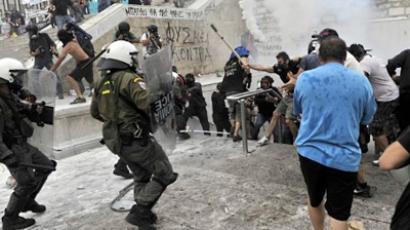
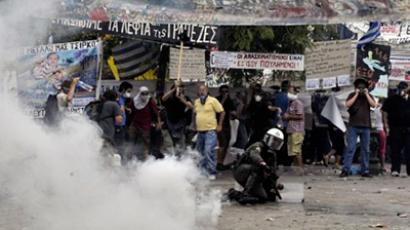
Greece is now set to receive 12 billion euro in additional rescue cash from the EU, after parliament passed a vote on how to implement tough new austerity measures. However, the move sent thousands of angry protestors on to the streets of Athens.
Greeks face 28 billion euros in cuts, to be implemented over the next five years. EU officials have welcomed the plan, saying it will help the country get back onto a path of recovery.But the public are not at all happy with plans for the sale of many Greek assets the government pushes ahead. The message from a furious public is: “Greece is not for sale.”Greeks are incredibly proud of their heritage, but many people feel that the privatization proposals would simply be stripping Greece of its assets.Potentially up for grabs for EU lenders are Greek banks, water companies, and train operators among many others. A 16-per cent stake in the large telecommunications company OTE is also up for sale.
“With OTE there’s been a continuous crime for the past 20 years. They’ve sold off our company piece by piece and now we only own a small percentage – but that small stake is extremely important to the Greek people. But they want to sell even that,” Panagiotis Kourtras, president of the Federation of OTE Employees, says.When they were in opposition, the present government heavily opposed the sale of shares of the largest telecommunications provider in Greece.“They called it a national crime when the previous government sold shares. Now they want to do the same. And sell the shares now at a low price. We don’t think we’ll see investment or any development of OTE, we think the only thing others will care about is profit, profit, profit,” Kourtras said.But continuous calls from the public to refuse the aggressive privatization proposals set forth by the Troika (the European Commission, the European Central Bank and the International Monetary Fund) have seemingly gone unheard.“The pressure from the European Union is tremendous. We could talk about blackmail against the Greek government,” says Petros Papaconstantinou, Columnist at the Athens daily newspaper Kathimerini.Critics have argued that those backing the bailout are acting out of self-interest, keeping profits private, with the losses socialized.“We’ve seen this before. It’s nothing new. It’s not like Greeks have to stretch back far in history to figure this out. They can look at Latin America and countries all over the world where the IMF has come and plundered the nation for corporate consolidation – that’s what this is,” financial journalist Demetri Kofinas said.Prime Minister Papandreou spoke of avoiding the countries collapse at all cost, but many are now asking just how high a price he is willing to pay.“If someone dies, if something very tragic occurs, that’s going to be a catalyst I think for the fall of this government,” Kofinas believes.The EU has stated firmly there is no plan B to the austerity measures being enacted. But as fury builds on the streets, it might be time they thought of one.