Heated debates as WWII commemorated
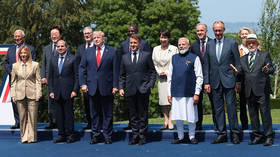
Published 1 Sep, 2009 08:55 | Updated 14 Oct, 2009 07:00Leaders from around the world are in Poland to mark the 70th anniversary of the outbreak of World War Two. The country was the first to face the Nazis’ attack on September 1, 1939.
Memorial ceremonies are being held in the city of Gdansk, the scene of the first battle. Later in the day, Prime Minister Vladimir Putin will be among the guests paying tribute to the victims of the bloodiest conflict ever.
After six years of horror the Soviet Union put an end to the war, having paid the highest price for the victory over fascism, with 27 million of its citizens’ dead. However, the roles different countries played in the conflict are still a matter of debate.
Few realized back in 1939 when Germany invaded Poland that the events which followed would claim 70 million lives.
When it was finally over empires would fall, superpowers would rise and the world as people knew it would change forever.
When Soviet soldiers raised a red flag over the Berlin Reichstag, nobody argued that the Soviet Union was a liberator. Decades on, however, things are being viewed differently.
“When Eastern Europe and Baltic states joined the European Union history immediately became a big subject, because we wanted the crimes committed by totalitarian Communism to be recognized alongside all the crimes committed by Nazis,” Sandra Kalniente, a member of the European Parliament, explained.
Estonia, Latvia and Lithuania were among those for whom history became a big subject. Despite the fact they had long established an official Day of Deportations, they have added a new Memorial Day to their calendar: August 23. Now, victims of Nazism and Stalinism are commemorated together.
The Russian President was one of the first to react to the news:
“One can have different attitudes toward the Soviet Union; one can be critical of the Soviet Union’s political regime and the leaders of what was then our country, but one should understand which country killed people and which country saved people and ultimately saved Europe,” Medvedev said.
One nation which supports Russia and strongly opposes equating Nazism and Stalinism is Israel and the country’s President, Shimon Peres, vehemently highlighted this fact.
“I'd like to stress that in Israel, unlike the rest of the world, we don't celebrate the Victory Day on the eighth of May. We celebrate it on the ninth of May just like Russia. Thus we wanted to pay tribute to all the victims of the USSR and to show our solidarity with a country without which victory over fascism would be impossible.”
Russia showed its solidarity with Israel by building a synagogue and a Holocaust memorial in the country’s most sacred park.
The memorial to victims of the Holocaust is part of Victory Park in central Moscow. Russia erected the monument to the six million Jews who were exterminated during World War II. Israel has always paid back with the same respect. It is one country which has never doubted the role of the USSR in defeating Nazism.
The main wish of Russia's Eastern European neighbors is for Moscow to acknowledge that the Soviet Union occupied them along with Hitler and to compensate them.
Many historians point out that Eastern Europe had been divided long before the Molotov-Ribbentrop pact.
It was a year earlier, in 1938, in Munich that Hitler, with the consent of Britain, France and Italy tore up the continent on paper. It later decided the fate of Poland, Czechoslovakia, Lithuania and Latvia.
“The main plan of the Reich concerning Latvia was the complete assimilation of locals with Germans, because Latvians were a so-called race-friendly people. To forget this now and to say Latvia would have flourished and prospered under Hitler and remained independent is stupid,” Aleksandr Gaponenko, the director of the Institute of European Studies in Latvia explained.
In the 70th anniversary year since the outbreak of the Second World War, the debate on its aftermath rages more than ever. With Eastern Europe badly hit by the financial crisis, turning to history has become part of the political agenda. If early elections take place, history could become a strong argument for voters after other arguments have played out.
Read also: Eastern Europe: Caught Between Their Own Past and Nazi/US New World Order