Truth serum: Inquest into Litvinenko poisoning set for 2013
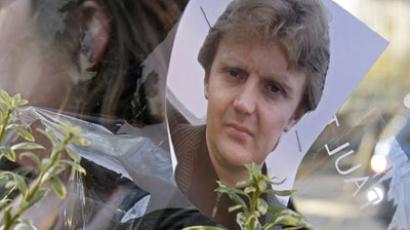
Published 20 Sep, 2012 20:00 | Updated 21 Sep, 2012 00:52Six years after the mysterious death of ex-Russian agent, Alexander Litvinenko, the full-inquiry into his murder is to start in 2013. The fact-finding probe hopes to uncover the truth around the case, which caused a rift in Russian-British ties.
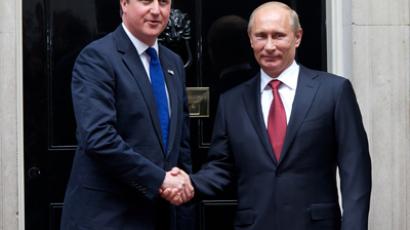
The announcement of the full inquest comes after the pre-inquiry hearing was held in London on Thursday. "There will be no further delay. It is manifestly in the interests of the interested persons… that the inquest is brought to a conclusion with due expedition," the coroner overseeing the case, Sir Robert Owen, said. Prior to the main probe, there will be two more preliminary meetings, scheduled for November and December of this year. The redacted police report is expected to be made public in the next two weeks. Representatives of the coroner stressed that the inquiry is different from the criminal case investigation and is aimed at revealing circumstances and reasons of the death of Litvinenko. The inquest may be broadened and will include more issues, including circumstances before Litvinenko’s death, to the possible role of the Russian state. The whole process and details of the inquiry will be available online, on a website which was launched on Thursday. The main interested parties represented in the case include Litvinenko's widow Marina, oligarch Boris Berezovsky, Russia’s MP and also former security officer Andrey Lugovoy, London’s metropolitan police, the Crown Prosecution Service, and the UK government. The death of Litvinenko, who was granted political asylum in Britain in 2000, chilled relations between Russia and Great Britain with the latter accusing the Kremlin of masterminding the murder.On his deathbed, Litvinenko himself blamed Vladimir Putin for his demise.Ben Emmerson, a lawyer for Litvinenko's widow, Marina, told a court hearing that it was vital that the inquest investigate "the criminal role of the Russian state."Russia hopes a long-awaited probe into the death of former Russian agent Litvinenko, poisoned in London in 2006, will be comprehensive. The comment from Russia’s Foreign Ministry comes after the pre-inquiry review ended in London. "We expect it to give an exhaustive picture of what happened and that it will shed light on all the facts that are needed to reveal the truth," said foreign ministry spokesman Aleksandr Lukashevich at a briefing in Moscow.The ex-Russian agent died from radioactive polonium-210 poisoning in November 2006. He felt unwell immediately after having tea with two Russians at the Millennium Hotel in London. He died 22 days after the meeting. The two Russians were later identified as Andrey Lugovoy and Dmitry Kovtun, former FSB agents who also used to be Litvinenko’s contacts during his time of service. London has been pressing Moscow to extradite Lugovoy for prosecution, as the main suspect. But Russia remains reluctant to do so, saying such an extradition would contradict its constitution.Andrey Lugovoy, who has been elected as a Russian MP, firmly denies his involvement in Litvinenko’s death.He insists Litvinenko had acquired the polonium and ended up poisoning himself. A lie detector test in April also appeared to show Lugovoy did not contribute to the incident.“Our main task is to get access to the materials of the case and find the real reason of Litvinenko’s case. It is not only me interested in this, as one the suspects, but also his family,” Lugovoy said after the pre-inquiry hearing.After meeting President Vladimir Putin during the Olympic Games in London, Prime Minister David Cameron said the incident “still stands between Britain and Russia.”Experts say that the future of diplomatic ties between the two countries will depend on the probe and how deep investigators will dig.Marina Litvinenko said that she believes in British justice and hopes that the inquest will reveal facts and details of her husband’s murder.“I am talking not as a politician, but as a woman, who has lost her husband. I want to know what happened,” she said.