Interview with Aleksandr Pikaev
Published 10 May, 2007 11:26 | Updated 10 May, 2007 15:26
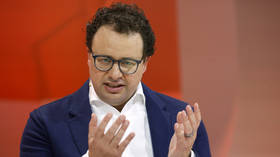
Aleksandr Pikaev, political analyst from the Moscow Carnegie Centre, commented to Russia Today on the first results of the Russian President's visit to Central Asia.
Russia Today: As we know, the two leaders have signed agreements on opening a trade office and creating an international uranium enrichment center in Kazakhstan. How, do you think, beneficial are these agreements to Russia and the international community as a whole?
Alexander Pikaev: Well, this international uranium enrichment center is important both for Russia and the international community. We all know that Russian uranium reserves are not probably sufficient to comply with Russia’s ambitious peaceful nuclear programme, so the uranium resources are very important for Russia. The idea to prevent nuclear proliferation by creating international centers for uranium enrichment in order to provide fuel for peaceful nuclear reactors, energy nuclear reactors, would solve the problem of using national enrichment capabilities to make a nuclear bomb.
RT: So, do you think this has set a precedent, and similar centers will be created in the world?
A.P.: It could set a precedent, but this center, as it will be, will provide fuel for energy reactors and thus it would allow to prevent nuclear enrichment by potential proliferators.
RT: Now, Aleksandr, as this summit is taking place in Kazakhstan, there is another energy summit which is to take place in Europe – in Poland – and includes five states: Poland, Ukraine, Azerbaijan, Georgia and Kazakhstan. So, the summit there in Europe will negotiate the building of a pipeline from Ukraine to Poland, bypassing Russia. Do you think that President Putin’s tour in Central Asia has anything to do with that?
A.P.: Well, I believe the visit of the Russian President is too important and it should not be considered as an element to undermine some summit of political dwarfs in Poland. Firstly, the anti-Russian summit in Poland failed because the Kazakh President Nursultan Nazarbaev would not go to Warsaw. This is certainly a considerable success for Russian diplomacy. Secondly, the very idea of building an oil pipeline from Odessa to Gdansk is a bit strange. Imagine that you are Kazakhstan. In order to use this pipeline you have to use tankers to transport your oil to Baku – it is very costly and far. For Kazakhstan it is certainly much cheaper to use the Russian pipeline system, maybe expanding this existing pipeline to Novorossiysk than to use the new pipeline, The Bulgarian and Greek pipeline from Burgas to Alexandropoulis – President Nazarbaev has very clearly said that Kazakhstan prefers the more natural pipeline. Certainly, Kazakhstan is not that stupid to use a project of a pipeline from Odessa to Gdansk because it means the same as exporting oil by airplanes.
RT: So Kazakhstan will be looking at the costs involved in this project, won’t it?
A.P.: Of course.
RT: Now let us go back to Russian relations with Kazakhstan. Within the last year President Putin and the Kazakh leader met about 13 times. Does that mean that two countries are enjoying a very close co-operation, very close relationship?
A.P.: Well, there is very close military co-operation. Kazakhstan provides several test-ranges for testing the newest Russian weapon systems. Kazakhstan is geopolitically very important because it gives access to Central Asia. Also Kazakhstan is one of the major oil and natural gas producers, and certainly Russia cannot ignore that. In addition we have a lot of compatriots there. Probably a third of the Kazakh population is ethnic Russians. Of course, Russia needs to promote relations with Kazakhstan in order to provide better environment for its compatriots living there.