No Japan without nuclear energy – Japanese official

Published time: June 20, 2011 06:50
Edited time: June 20, 2011 11:37
Embed

Despite concerns over Japan's government hushing up the dangers, the second highest-ranking nuclear official in the country thinks the issue is simply too complicated for the general public to come to terms with.

­RT takes a closer look at the nuclear crisis in Japan in an interview with Hidehiko Nishiyama, a spokesman for the Nuclear Industry and Safety Agency.

“The Japanese government tried to distribute or make available all the information we got from TEPCO [Tokyo Electric Power Company] and from our monitoring assistants…, [but ] we have to explain [the situation] in the manner which people can easily understand,” he told RT.

The Japanese official noted that, despite all the figures on the situation around the country’s nuclear crisis being distributed to the public, it is not always easy for ordinary people to understand what these figures actually mean – how dangerous or safe a particular situation is.

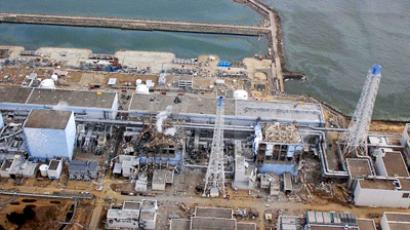
“We think that, except for places very close to the nuclear power plant, Fukushima Daiichi, there is no big risk for ordinary people. So we should make them understand that point,” he said.

On April 19, the Japanese government notified education authorities of Fukushima Prefecture that the level of 20 millisieverts (mSv) per year is to be used as a radiation safety standard for school grounds and buildings in Fukushima Prefecture. This is 20 times the international standard of one mSv per year, which has been in effect until now and is comparable to the maximum dose allowed for nuclear power plant workers in some countries.

The spokesman for the Nuclear Industry and Safety Agency believes that these new standards are justifiable in an emergency situation.

“We do not say that 20 mSv [per year] is safe, but it’s an applicable standard in this type of emergency situation,” he said.

In conclusion, Hidehiko Nishiyama pointed out that, as of now, it is impossible to imagine Japan moving away from atomic energy.

“Thirty per cent of our electricity [is produced] from nuclear energy. So, we have to use nuclear energy in the near future at least,” he concluded.


Comments (4)

Don Rickman 23.06.2011 20:12

Hmmm! When we TODAY compare what is STILL ongoing in JAPAN, with what happened in Chernobyl we get the following numbers:
As of TODAY JAPAN is RAINING down NUCLEAR contaminants upon 137 MILLION people. Chernobyl only RAINED upon 2 Million. (1:68 Ratio)
Chernobyl was STOPPED from doing so within 14 Days.
JAPAN is still doing so at DAY 73 and COUNTING.
So, the JAPAN/TEPCO EVENT is NOW in simple terms, only 68 Times LARGER than the Chernobyl EVENT and getting LARGER everyday. 
BUT hey, since I do not live in any of the CONTAMINATED AREAS (ALL OF JAPAN AND THE NW UNITED STATES)  OR AM I ONE (1) OF THE 137 MILLION PEOPLE BEING RAINED ON with between 10 Hot Particles/Fuel fleas and 5 Hot Particles/Fuel Fleas PER DAY and PER PERSON, including Pregnant Women and Children, and since I am not a woman or a CHILD, WHAT SHOULD I CARE?

0

Undo

JMZX 20.06.2011 17:05

@ Pete: Yes, but two wrongs don't make a right.
@Nay Lin Maung: I fail to understand what part of nuclear failures make sense. Nishiyama makes a convincing and reassuring address to our concerns. Yet, he fails to broach the subject of public health in the hands (at the mercy of) private corporations. For example, no mention of the evidence of neglected safety warnings, brought to light courtesy& nbsp;of Wikileaks. No acknowledgement of the fact that governments are entrusting profit driven corporations with our lives. Yes, the tsunami was unprecedented, but with modern scientific instruments, these events are not essentially unpredicatable. Natural and anthropogenically caused disasters have happened before this, should we keep tempting fate and blame the average person for his lack of understanding of physical energy risks? Seems to me, the supposed experts may need some extra-curricular education.

0

Undo

Nay Lin Maung 20.06.2011 16:22

Japan does not have a lot of natural resources to supply his domestic needs for consuming energy.   It means that Japan has to use nuclear energy even though it is very dangerous to use in this moment.    He has no chance but to use for his energy needs.   It makes sense.

0

Undo

View all comments (4)
Add comment

By posting your comment, you agree to abide by our Posting rules

Log in to comment in full, or comment anonymously under character-limit restriction.

100 Text

– required fields

Register or

Name

Password

Show password

Register

or Register

Request a new password

Send

or Register

To complete a registration check
your Email:

or Register

A password has been sent to your email address

Edit profile

Name

New password

Retype new password

Current password

Save

Cancel

Follow us