Keep up with the news by installing RT’s extension for . Never miss a story with this clean and simple app that delivers the latest headlines to you.


Rising to its feet: Japan before & after (AMAZING PHOTOS)

Published time: February 12, 2012 12:36
Edited time: February 12, 2012 16:44
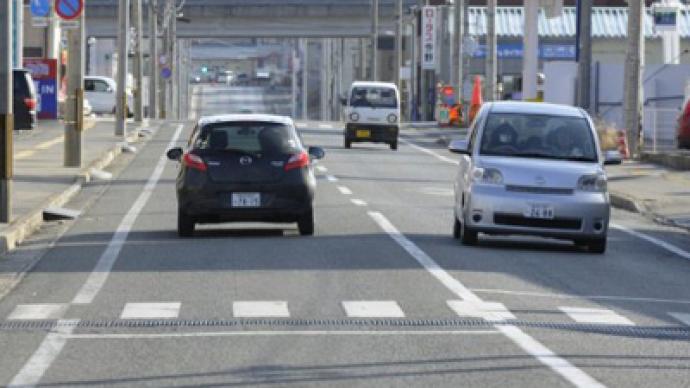
Cars pass along a street in Ofunato, Iwate Prefecture, on January 15, 2012 nearly one year after the March 11 tsunami devastated the area (AFP Photo / Toru Yamanaka)

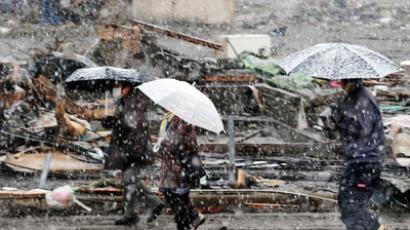
With the powerful earthquake and tsunami hitting Japan last year, the country seemed to be devastated and almost beyond recovery. Still, 11 months on, the Japanese have made amazing progress in raising their lives and cities from the rubble.

The natural disaster which hit Japan back in March 2011 left the country’s northeastern coast almost entirely destroyed. The earthquake caused a major nuclear crisis as the Fukushima Dai-ichi nuclear facility was partially destroyed and leaking radiation.

The natural disaster left over 20,000 dead or missing, generating global sympathy over the terrible tragedy. About 100,000 people had to flee their homes to escape radiation.

The country’s authorities said that their drive to reconstruct the devastated territory was more than just a domestic issue.


The view of a tsunami hit area of Ofunato, Iwate prefecture on March 14, 2011 (L) and on January 15, 2012 (R) (AFP Photo / Toshifumi Kitamura)

The bid sent the international community a signal that “even if you face and experience tragic circumstances, if you make efforts and work hard, you can get back on your feet,” the Jamaica Observer quoted Japanese politician Toshiyuki Kato as saying.

The Japanese authorities have made a tremendous work to pull down old and build new houses and roads, cleaning vast territories of the rubble, smashed cars and even planes and boats: estimated 23 million tonnes of debris.

The country’s Cabinet approved almost US$50 billion in spending aimed at reconstruction, the biggest building budget since the atomic disasters of Hiroshima and Nagasaki. The overall cost of damage is estimated at more than $300 billion.


The view of a tsunami hit street in Ofunato, Iwate prefecture on March 14, 2011 (top) and the same scene as it appears on January 15, 2012 (bottom) (AFP Photo / Toshifumi Kitamura)
The view of a tsunami hit area of Ofunato, Iwate prefecture on March 14, 2011 (top) and as the scene appears on January 15, 2012 (bottom) (AFP Photo / Toshifumi Kitamura)
A photo of Yuko Sugimoto wrapped with a blanket standing in front of debris looking for her son in the tsunami-hit town of Ishinomaki in Miyagi Prefecture on March 13, 2011 (L) and the same housewife standing with her five-year-old son Raito at the same place on January 27, 2012 (R) (AFP Photo / Toru Yamanaka)
People evacuating with small boats down a road flooded by the tsunami in the city of Ishinomaki in Miyagi prefecture on March 12, 2011 (top) and the same area on January 13, 2012 (bottom) (AFP Photo / Toru Yamanaka)
Residents crossing a bridge covered with debris in a tsunami hit area of the city of Ishinomaki in Miyagi prefecture on March 15, 2011 (top) and the same area on January 13, 2012 (bottom) (AFP Photo / Toru Yamanaka)
A boat washed on to a street by the March 11 tsunami in Ishonomaki, Miyagi prefecture on March 15, 2011 (top) and the same area on January 13, 2012 (bottom) (AFP Photo / Toru Yamanaka)
A replica Statue of Liberty standing next to tsunami damaged buildings at Ishinomaki in Miyagi prefecture on March 15, 2011 (top) and the same area on January 13, 2012 (bottom) (AFP Photo / Toru Yamanaka)
The damage caused by the March 11, 2011 tsunami seen from a hill overlooking the city of Kesennuma on March 16, 2011 (top) and the same area on Janury 14, 2012 (bottom) (AFP Photo / Toru Yamanaka)
A fishing boat washed up by the March 11, 2011 tsunami onto on a road in the city of Kesennuma in Miyagi prefecture on March 16, 2011 (top) and the same area on January 14, 2012 (bottom) (AFP Photo / Toru Yamanaka)
A road covered with vehicles and debris in a tsunami hit area of Tagajo, Miyagi prefecture on March 13, 2011 (L) and the same area on January 12, 2012 (R) (AFP Photo / Toru Yamanaka)
Cars piled up in front of the airport control tower in Sendai on March 14, 2011 (L) after a tsunami hit the region on March 11, 2011 and the same area on January 12, 2012 (R) (AFP Photo / Toru Yamanaka)
Local residents looking at a tsumami hit area of Sendai, Miyagi Prefecture, on March 14, 2011 (L) and the same area on January 12, 2012 (R) (AFP Photo / Toru Yamanaka)
Train tracks littered with cars in Tagajo, Miyagi prefecture on March 13, 2011 (top), following the March 11 earthquake and tsunami and the same area on January 12, 2012 (bottom) (AFP Photo / Toru Yamanaka)
Damaged cars on a street in a tsunami hit area of Tagajo, Miyagi prefecture on March 13, 2011 (top) and the same area on January 12, 2012 (bottom) (AFP Photo / Toru Yamanaka)
The tsunami hit area of Rikuzentakata, Iwate prefecture on March 22, 2011 (top) and the same area on January 15, 2012 (bottom) (AFP Photo / Toru Yamanaka)
A rescue worker walking through rubble in the tsunami hit area of Minamisanriku, Miyagi prefecture on March 18, 2011 (top) and the same area on January 14, 2012 (bottom) (AFP Photo / Toru Yamanaka)

Comments (28)

Evan (unregistered) 16.02.2012 20:06

@Mike NZ, Your ignorance is staggering and completely unjustifiable in this age of access to information. The New Zealanders I know have moved on from the 1950s, why can't you?
Far from censoring news as it was in the cold war days, it is to RT ( and to Aljazeera)that my friends in the BBC tune in to get a better picture of what is REALLY going on. They tell me that only news toeing the western line (by that they mean US) is broadcast by the Western Media. In the West it is the media itself, with it's vested interests, that censors the news.
The reality is we are bombarded by radiation all day and every day, no matter where we live, indeed there would be no life if we weren't! We were told (and yes I am old enough to remember those days personally) that nuclear fallout would have a half-life of 50,000 years. Really?  So Hiroshima and Nagasaki should be atomic wastelands then. Chernobyl should be a blasted, irradiated moonscape. Well, they ain't! Fukashima will recover and no, there won't be clouds of radioactive dust creeping across the globe wiping out all living things.
Chernobyl Killed 56 directly   - mostly heroic&n bsp;workers trying to seal the site -with varying estimates for related cancer deaths. Stories of birth malformations were dubious and even where confirmed were not far from natural levels.
So far there have been NO reported deaths from the Japanese nuclear power station disasters.
Compar e that with the 4,000 British who died in the great smog of 1952 and the 16,000 who died when the badly maintained and corrupt Union Carbide plant exploded in Bophal, India in 1984 (Birth defects there WERE confirmed and hideous beyond belief, worse, they are ongoing.

0

Undo

Ray D. Asian 13.02.2012 16:35

Where is the earthquake damage??
All I see is tsunami damage.
The quake was a 9.1...it should have caused tremendous structural damage...just look at Chile.
There is something very suspicious about 3 11 11!

+1

Undo

LordFlashHeart 13.02.2012 12:53

Noble Bros. Fryer in the Lurch?
Hey Hey Hey!
The only things that come out of Japan are screaming schoolgirls, missing Yakuza fingers and radioactive Bento boxes!

As for Rooskiis covering up radiation. Woof!
Who has had more reactor meltdowns than any other country?
Who is lying about their aging piles, and I'm not talking about Putins Roids! There's something that Putin should be Covering up!

Flash By Name
Flash, By Nature

0

Undo

View all comments (28)
Add comment

By posting your comment, you agree to abide by our Posting rules

Log in to comment in full, or comment anonymously under character-limit restriction.

100 Text

– required fields

Register or

Name

Password

Show password

Register

or Register

Request a new password

Send

or Register

To complete a registration check
your Email:

or Register

A password has been sent to your email address

Edit profile

Name

New password

Retype new password

Current password

Save

Cancel

Follow us