Syrian spillover: Recipe for another Lebanese civil war?
Published 24 Sep, 2012 18:12 | Updated 24 Sep, 2012 22:12The Syrian civil war has done much to divide a nation, as the sectarian fault lines it exposes are without borders. Amidst the Syrian bloodshed, neighboring Lebanon risks being sucked into a conflict that could tear the country apart.
After Syrian rebels attacked a Lebanese army post near the border in Lebanon’s northeast on Friday night, reinforcements were dispatched to “pursue the gunmen.” In a clear reference to Syria, the Lebanese military said it would not allow any party to “implicate Lebanon in events in neighboring countries.”On Monday, the Speaker of the Lebanese Parliament Nabih Berri lauded the army for its response following the second such border incursion in a week’s time. Berril said despite divided Lebanese opinion over the Syrian insurgency, there was no question regarding the right for Lebanese security forces to defend themselves against hostile fire.“We have said it over and over again… the army is a red line. Let it fulfill its tasks, it is just carrying out its responsibilities to the fullest [of its capabilities],” Lebanon’s The Daily Star cites Berri as saying.The speaker, who heads the country’s largest Shia party, was critical of those opposed to the military deployment. “Such voices will not affect the army’s national role which we fervently support. The army is above such statements anyways,” he continued.Berri’s comments raise the specter of Lebanon’s own sectarian past. Arsal, the border town where the latest skirmish took place, is populated by Sunni Muslims who support the Syrian rebels. Sunni’s residing in border regions have accused Syria’s army of regularly violating Lebanon’s border, kidnapping refugees, and destroying homes in the area.Lebanese politicians opposed to Syrian President Bashar al-Assad have called for the deployment of the United Nations 11,500-strong peacekeeping mission to secure the country’s long and porous border with Syria.Lebanon’s government, a majority of which is allied to Damascus, vows to take a stand against Syrian military incursions into the country, but rejected allowing UN peacekeepers into north Lebanon."When the Syrian shelling of Lebanese areas occurs, we will not disassociate ourselves but will protest," Najib Mikati, the Lebanese prime minister, told reporters earlier this month, the Christian Science Monitor reports."When there are attempts to destabilize Lebanon from Syria, we will not disassociate ourselves, and we will take necessary measures,” he continued. Bu the PM countered claims it was the right time for the United Nations Interim Force in Lebanon (UNIFL), itself a relic of the Lebanese Civil war, from being deployed.Pro-Damascus Lebanese groups, such as the powerful Shiite movement Hezbollah, as well as pro-government Syrians, have accused sympathizers within Lebanon of giving haven to Free Syrian Army (FSA) fighters, who are able to regroup, plan operations, treat the wounded, and smuggle weapons into Syria from Lebanese soil.In Arsal, local residents were quick to downplay Friday’s incident, with village head Mohammad Houjeiri denying any exchange of fire took place. Houjeiri denied claims the FSA was hiding in Arsal’s arid mountains, as the scant vegetation made the area less than ideal cover for rebel operations.“However, inside Syria, especially in the mountains of Mearat and Naaman and Jibbeh, which are heavily forested, there are large numbers of FSA members,” he told The Star.Ismail Baridi, a local taxi driver, told the daily locals had shown solidarity with Syrian refugees battling it out with Damascus.“But when it comes to attacking the Lebanese Army, we condemn and reject it because any strike against the Army is a humiliation for every Lebanese and signals a return to the Civil War, which we never thought we’d be done with,” he continued.“The Lebanese are still experiencing the destructive consequences of the War and this could bring a renewal of sectarianism and fragmentation.”
City on a fault line
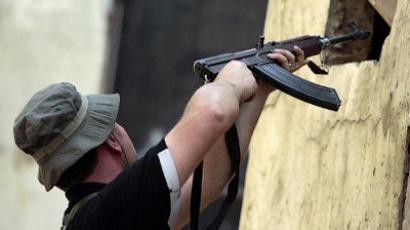
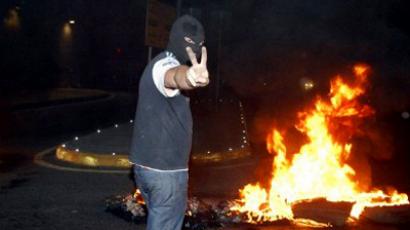
Nowhere has the threat of fragmentation been stronger than in Lebanon’s second city of Tripoli, located some 85 kilometers north of the capital Beirut. Sectarian fighting in the city killed over a dozen last month, as tensions continue to simmer between Tripoli’s Sunnis majority and its Alawite minority, a branch of Shiite Islam to which Syrian President Assad belongs.Hostility between the two sides pre-date Lebanon's 1975-1990 civil war, though last month’s deadly clashes were directly fueled by the Syrian crisis.One Sunni militia leader in Tripoli told RT’s Lucy Kafanov there would be no peace in Syria, Lebanon, Iraq or Palestine “as long as Assad remains in power.”An Alawite fighter standing in the burnt out rubble of his home also blamed the Syrian conflict for growing tensions in Tripoli, though he did not pin responsibility on Assad.“We are defending ourselves against machines of terror and mercenaries who are being brought in from abroad,” he told Kafanov.Commanders on both sides say money and arms are being funneled to both sides in the conflict to achieve broader and conflicting political aims.Syria's allies in Lebanon are said to be using Lebanon as a proxy to relieve pressure on Assad, while anti-Assad forces are seeking to undermine Beirut and Hezbollah for their ties to Damascus."Preparations are under way for the next round," on Alawite commander told Reuters. "What we have here is a ceasefire which does not address the reasons behind the fighting," which he blamed on Islamists and the greater regional machinations which extended far beyond Tripoli.In August, Prime Minister Miqati, a Sunnia who hails from Tripoli, warned that Lebanon could quickly become another theatre in the Syrian civil war. With the continued influx of money and weapons into sectarian hot spots like Tripoli and Salafist clerics in the city vowing that an “Islamic Spring” is under way, the Lebanese front might soon be blown wide open.