Russian roulette: Where will failed satellites fall?
Published 10 Aug, 2012 11:15 | Updated 10 Aug, 2012 15:15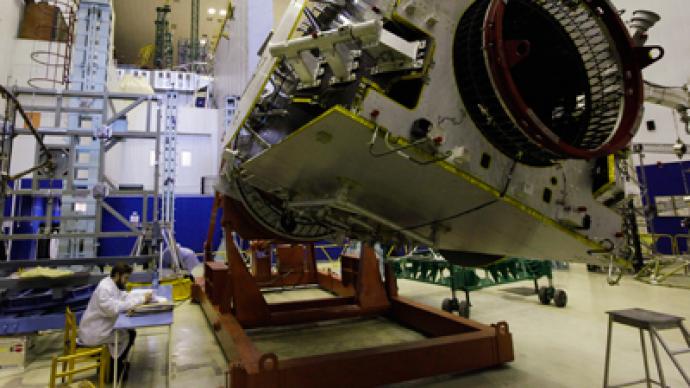
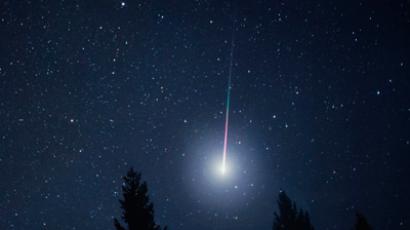
Two communication satellites, Express MD2 and Telcom-3, which failed to deliver into orbit, will fall on Earth in six month’s time. Most of the planet is being threatened with space bombardment as the sats will not completely burn on re-entry.
The satellites remain in elliptic orbit together with a Briz-M upper stage, which still has some fuel in it and an element of framework. It is understood that an abnormal engine cut-off caused emergency separation of the satellites from the upper stage.The objects are circling the planet on an orbit with 5,500 kilometers in apogee and 300 kilometers in perigee.The sight of all that equipment falling after burning upon re-entering the atmosphere promises to be really impressive – if only you do not happen to be in the impact zone. The chance to find yourself in the way of white-hot debris falling from the sky remains for practically all inhabitants of our planet, exhilarate space experts.“The space vehicles and upper stage remain on 49.9 degrees inclined orbit. So the impact zone might be anywhere from 50 northern latitude to 50 southern latitude,” a source in the Russian space agency told Interfax.That puts all of Africa, Asia, Australia, practically all North and South Americas, under threat of satellite fall. High latitudes, as well as Europe below the line of Frankfurt-Prague-Kiev, are excluded.Natan Aismont, a leading research fellow at Russia’s Institute of Space Research, predicts the satellites will remain in orbit for at least the next half year.“With the given parameters, the object will not fall on Earth for quite a long time, at least not earlier than six to eight months,” he said.Various factors, including solar weather, will influence the timeframe of the fall, the scientist said. The angle of incidence would be critical in calculating the actual drop zone. The closer to 90 degrees it is, the easier and more exact the calculations of the impact zone will be made. If the trajectory of the fall is low-pitched, the calculations will be much approximate, the scientist shared.Russia’s Aerospace Defense is closely following evolutions of the lost satellites. The military insist the objects pose no threat either to the ISS or to the working satellites of the Russian space task force.On August 7, a Proton-M rocket with Express MD2 and Telcom-3 communication satellites was launched from the Baikonur Cosmodrome. All stages of the booster worked correctly and satellites with Briz-M uppers stage were delivered into an interim orbit, where the final stage failed to do the final and most important engine firing.