Moscow airport terror mirrors video game
Published 25 Jan, 2011 05:51 | Updated 25 Jan, 2011 12:25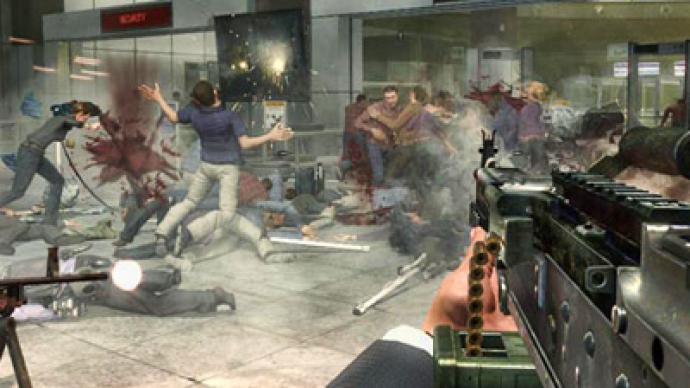
The aftermath of Monday's blast at Domodedovo Airport has sparked hot debate as the stuff of a popular American video game, sold worldwide. “Call of Duty: Modern Warfare 2” has become a shocking reality.
The bloody scenes of the Moscow attack are reminiscent of what can be seen in a year-old computer game, the scenario of which controversially involves a character who is urged to kill civilians in an imaginary Russian airport.In the mission dubbed “No Russian” the player goes on a terrorist rampage, helping to massacre civilians in a fictitious Moscow airport. It may have seemed too gruesome and tragic ever to come true.But far-fetched it is not, for this week’s events at Domodedovo International Airport are very real indeed. Thirty-five people have been killed, and over 180 injured in what investigators believe was a terrorist attack committed by a suicide bomber inside the international arrivals of Russia’s busiest airport.As for the video game scenario, it appears a lot more people have been involved in the violence. The game was released by the American company Activision in November 2009, and in just a few months, sales surpassed $1 billion worldwide. The “No Russian” segment can be found with a simple YouTube search. With so many seemingly downloading, watching, and playing this game, you have to consider that this bloodbath would ever-so-closely resemble reality.“Indeed it is a trouble to look at the game and reality. The issue is we need to know if terrorists or extremists are using these videos or DVDs or games to basically apply the model,” Walid Phares, Director of Future Terrorism Project at the Foundation for Defense of Democracies, said.Media critic Danny Schechter believes “This is the way entertainment mirrors reality and reality mirrors entertainment, and there are people influenced by all this, even though the manufacturers always deny having any influence on anyone.”Denials aside, some say games like this can aid and abet reality.“I think those who have been radicalized already – that is supposed in this case jihadists, Al-Qaeda or other kind – they look at the games and say these games will serve them to train,” Walid Phares added.As for the aftermath, Russian officials say Domodedovo Airport will recover quite soon and a range of public figures have come out condemning the attacks. But so far no one is coming out questioning the justification of a virtual version of a shocking reality.