New German government’s nuclear hot potato
Published 6 Oct, 2009 13:10 | Updated 7 Oct, 2009 07:02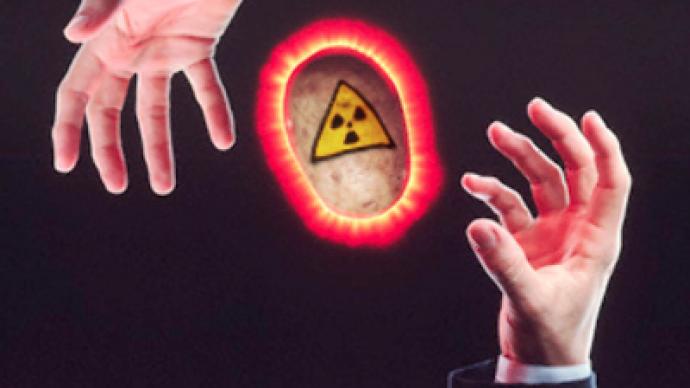
The dust has barely settled on the German elections, yet groups of citizens are already preparing to show their dissatisfaction with the new government’s nuclear energy policy.
German Chancellor Angela Merkel's majority for a new centre-right government was confirmed on last Sunday, as Merkel’s Christian Democratic Union party, alongside the Free Democrats, won a majority in the September 27th elections. Talks began on Monday as to how this government will actually be formed, but already the new powers-that-will-be are facing protests from voters.
Groups are angry over the proposed move to rewrite a national nuclear phase-out deal by allowing reactors to run longer than is set-out in law laid down by the previous government. Despite their defeat at the ballot boxes, this anti-nuclear lobby maintain that the majority of Germans do not want an extension on the shelf-life of nuclear power plants and they promise ‘massive protests’ if this law is changed.
U-turn on nuclear energy
In 2000, the German government at the time – which was known as the ‘grand coalition’ of the SPD and The Greens – enacted a law that would see the gradual shut-down of the country’s seventeen nuclear power plants by 2020. However, by 2008 and the realization of increasing prices for fossil fuels, arguments started as to whether the phase-out itself should be phased out.
It’s an issue that has been very divisive in Germany. In the run-up to these elections the nuclear debate truly heated up. Not least when news broke in September that reports on the safety of a nuclear waste storage facility in Gorleben had been manipulated by officials in the 1980’s, confirming local fears that the facility – which is still in operation – had never been safe.
Shipments of nuclear waste to Gorleben often draw thousands to protest, which frequently leads to clashes with police. Following the new development, tens of thousands of anti-atomic demonstrators rallied in Berlin to demand an immediate end to Germany's use of nuclear energy.
Now it seems, having lost at the ballot box. These people still want to be heard again.
The Backlash
Stefan Diefenbach-Trommer works for Ausgestrahlt, a group that helps citizens voice their concerns over nuclear energy.
“We help people and advise them on how they can act. There is a big campaign ready for October. We already have 50,000 people in our network and they want to make sure that these nuclear plans are not enacted. There will be a gathering in Berlin – people are just getting warmed up for the fight. Every day that these plants are running is a risk,” he told RT.
Ausgestrahlt are not the only group involved. Another group, Compact, initiated a letter-writing campaign this week to voice their concerns over the delay in the planned nuclear phase-out. It took them less than a day to collect 25,000 signatures.
“If they (the CDU and FDP) really want to return to nuclear energy they are going to experience backlash from the anti-nuclear energy movement,” says Christoph Bautz, the head of Compact.
But now that the votes have been cast and the voters had had their say, can anything be done to stop the new government and their plans?
“Nothing is definite,” says Stefan Diefenbach-Trommer. “Even those within Merkel’s party want to delay the decision and they are skeptical about the safety of the plants. They must prove the plants are safe before overturning the law, otherwise the majority of Germans will not stand for it.”
Alternatives?
Claudia Kemfert is a German economics expert in the areas of Energy research and Environmental protection. She heads the Energy, Transportation, and Environment department at German Institute for Economic Research:
“The real question is: What are the alternatives to nuclear? Within the next twenty years, not only decisions about the seventeen nuclear power plants will have to be made, but also a number of old coal power plants need to be replaced. Currently 50% of total electricity supply comes from coal, 23% nuclear, 17% renewable energy and the rest gas. So the question is how the potential supply gap if filled?”
Green parties and lobby groups such as Compact and Ausgestrahlt maintain that renewable energy is a better and safer alternative to nuclear, but Kemfert argues that this message sometimes gets confused: “We have to distinguish what the public really thinks and what comes from the election campaign. For sure, the majority of people in Germany think that nuclear might not be an option, but nobody explains them what the potential alternatives would be. We have currently the safest nuclear power plants in the world. If they were not safe, we would need to shut them down immediately. Some parties take the opportunity in the election campaign to play with the German fear against nuclear power.”
Future?
But it not just people’s fears that are being played with. It’s clear that the campaign has ignited German passions on the nuclear debate, but there is a more serious and real challenge facing the new government, that’s the issue of jobs. Stefan Diefenbach-Trommer notes that workers too will be affected by any change in the government policy.
“There are about 300,000 jobs tied up in the renewable energy in Germany. That is a lot of people who could react badly to this new government,” Diefenbach-Trommer says.
So what does the future hold? Claudia Kemfert offers some clear thinking on the issue: “Nuclear has no long-term future in Germany. I see it as a bridge technology towards a real climate friendly energy world.”
It is likely that the lifetime of safe nuclear power plants will be extended following these elections, and that means protests are just as likely to follow. Despite the fact that the renewable energy market is growing very fast in Germany, the newly elected government believes that nuclear energy is the way forward, at least temporarily. Regardless of what happens in the weeks and months ahead, it’s already clear that the new government will not be in for an easy ride.
Ciaran Walsh for RT