North Korea says nuclear program not a bargaining chip, slams US policy
Published 17 Mar, 2013 17:31 | Updated 5 Jun, 2020 12:19
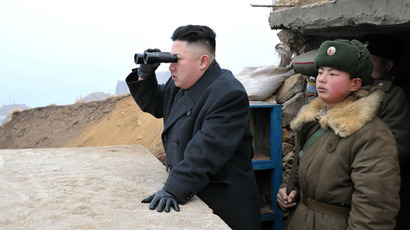
North Korea said its nuclear program is not a bargaining chip and it won't negotiate with Washington as long as it maintains a hostile policy. The US had said it would boost missile defenses in case of a North Korean attack.
“If [the US] thinks we have acquired our nuclear weapons to trade them for some economic benefits, it will be nothing but an utterly absurd miscalculation,” a spokesman for the North’s foreign ministry said in a Saturday statement, according to the state-run KCNA news agency.
“As long as the United States does not abandon its hostile policy, we have no intention of talking with it, and we will stick fast to our course under ‘songun.’” The term “songun” refers to North Korea’s “military first” ideology, which gives top priority to building nuclear arms and bolstering the military.
Pyongyang also blamed the US for “having compelled [North Korea] to have access to nukes” because it “escalated the situation of the Korean Peninsula to an extreme phase.”
But despite North Korea’s latest statement, some experts still expect the country to return to the negotiating table.
"The U.S. and North Korea will likely stage a usual tug of war over the lifting of sanctions—which Pyongyang regards as representing the hostile U.S. policy—before having talks, which are likely to be brokered by the Chinese," Yang Moo-Jin of the University of North Korean Studies in Seoul told The Wall Street Journal.
Many analysts and officials have suggested that Pyongyang may give up its nuclear weapons in exchange for economic and other incentives. Some say the harsh language used by the North was just a ploy to maximize its leverage.
Pyongyang has noticeably hardened its position on its nuclear weapons program since the United Nations Security Council imposed more sanctions to punish North Korea for launching a long-range rocket in December and completing a third nuclear test last month.
North Korea’s statement came just one day after US Defense Secretary Chuck Hagel announced a $1 billion plan to “stay ahead of the threat” posed by Iran and North Korea. The plan involves adding 14 interceptors to the 30 already in its missile-defense system by fiscal year 2017.
Just days ago, President Obama’s national security adviser Tom Donilon said that “to get the assistance it desperately needs and the respect it claims it wants, North Korea will have to change course.”
Donilon advised Pyongyang to learn from Myanmar, where changes resulted in billions in debt forgiveness, development assistance, and an influx of foreign investment.
But the words seemingly went in one ear and out the other, failing to sway North Korea.
“We did not own nuclear weapons just to get someone’s recognition,” the North said, calling its arsenal “an all-powerful sacred sword that protects national sovereignty and security.”
Pyongyang said offers like Donilon’s “may work for other nations, but to us, they are nothing but the barking of a dog.”