Japan's nuclear cities green-light reactor restart

Published time: January 06, 2013 22:21
Edited time: January 07, 2013 02:21
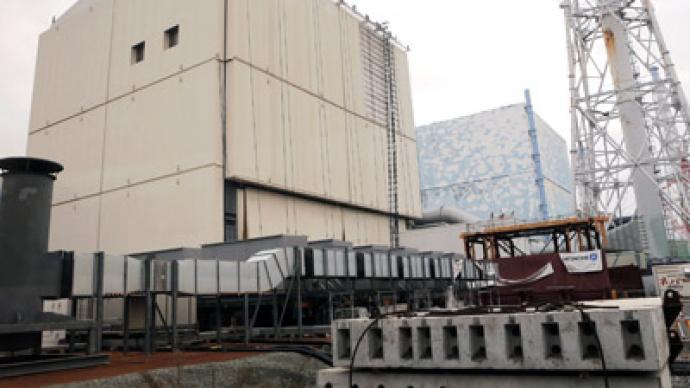
The unit No.1 (L) and No. 2 reactor building of the tsunami-crippled Fukushima Daiichi nuclear power plant are seen through a window in a bus while Japan's new Prime Minister Shinzo Abe inspects the nuclear power plant power plant in Fukushima Prefecture December 29, 2012. (Reuters/Itsuo Inouye/Pool)

The majority of towns and cities in Japan hosting nuclear plants have said they would agree to the reactors being restarted, as long as the government guarantees their safety, a survey has found.

­Despite the cloud of controversy over Fukushima, 54 per cent of the 135 mayors in communities located near Japan’s 50 nuclear plants said they would accept reactor restarts, according to the poll for the Yomiuri Shimbun newspaper.

Only 18 per cent were against the restarts while 28 per cent chose not to clarify their position and two did not give valid answers.

The results reflect the harsh economic reality in many of the rural communities which host nuclear plants, which are often major employers, the paper said.

Prime Minister Shinzo Abe, who came to power in December, has voiced his support for nuclear power as part if his agenda to rebuild the nation’s sluggish economy. 

But critics of Abe’s Liberal Democratic Party, which has been in power for most of the last 5 decads, blame it for the extent of the Fukushima disaster because of a culture of complicity. 

The previous government, led by Yoshihiko Noda, had promised to phase out nuclear energy in the next three decades. The majority of the Japanese public has called for the end of or significant reduction in the number of nuclear plants.

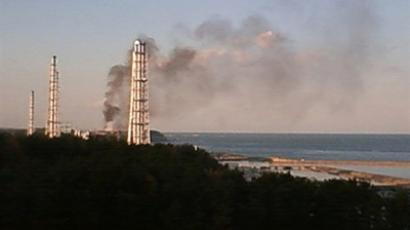
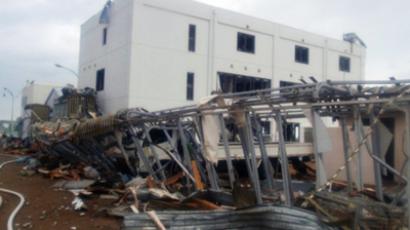
All but two of the 50 reactors in Japan remain closed for safety checks after the March 2011 tsunami caused the reactors at the Fukushima Daiichi plant to melt down, triggering a nuclear disaster. 

The resulting explosions spewed radioactive waste into the surrounding areas, which is unlikely to be fit for human habitation for decades. Ten of thousands of local residents were evacuated from their homes and the Tokyo Electric Power Company, which operates the plant, will spend an estimated 30 years decommissioning the site.


Comments (7)

Ernie Elliott (unregistered) 08.01.2013 09:40

All you reporters out there...the BIG as yet uncovered story (scoop)is the burning of the iradiated Debris known as "Gareki" (in Japanese) all across Japan in heavily populated areas. The Government is moving this iradiated stuff all over the country,by road,rail and ship and burning it in Local incinerators only designed to burn household refuse !!.After a long legal battle Osaka city (Probably the 2nd or 3rd biggest city in japan)has decide to follow suit and start burning this Iradiated Debris from February 2013- for the next 2 years.The government is paying these local wards phenomenal amounts of money to burn this stuff.Many international nuclear scientist have warned against this practice,because as one of them said its basically replicating the Fukushima accident all over the country.Check- Dr Christopher Buzby,Dr Helen Caldicot and Arnie Gunderson all on Youtube...please help stop this crime or at least let people know what is going on in Japan and the world.

0

Undo

JP Sanders (unregistered) 07.01.2013 12:12

Tony Beano (unregistered) wrote in #5
Molten salt reactors are the future because they pose no radiation leakage danger. Toshiba-Westinghouse are in a race with the Chinese to exploit this technology. Interesting that NIXON cancelled a molten salt reactor years ago because the US military needed the uranium to make nuclear weapons. So the US rejected this technology. 53 nuclear power stations regularly have leakages in France although never reported. Windscale disaster in Britain in 1955 had a major leak completely denied  by the Labour government at the time by Tony Benn.
Hi Tony,
Very interesting comment. Molten salts reactors cannot meltdown because the fuel salt is easily pumped into emergency tanks where they are subcritical and easily cooled by normal conduction. You only need to place the emergy tanks in a cooling pool so if necessary, the salf fuel can be dumped there and the standing water will absorb all the heat. No need for emergency cooling pumps.
Very interesting comment, thanks for sharing.

0

Undo

Tony Beano (unregistered) 07.01.2013 10:05

Molten salt reactors are the future because they pose no radiation leakage danger. Toshiba-Westinghouse are in a race with the Chinese to exploit this technology. Interesting that NIXON cancelled a molten salt reactor years ago because the US military needed the uranium to make nuclear weapons. So the US rejected this technology. 53 nuclear power stations regularly have leakages in France although never reported. Windscale disaster in Britain in 1955 had a major leak completely denied  by the Labour government at the time by Tony Benn.

+1

Undo

View all comments (7)
Add comment

By posting your comment, you agree to abide by our Posting rules

Log in to comment in full, or comment anonymously under character-limit restriction.

100 Text

– required fields

Register or

Name

Password

Show password

Register

or Register

Request a new password

Send

or Register

To complete a registration check
your Email:

or Register

A password has been sent to your email address

Edit profile

Name

New password

Retype new password

Current password

Save

Cancel

Follow us