Nazi legacy lingers 65 years after Nuremberg Trials
Published 21 Nov, 2010 08:31 | Updated 21 Nov, 2010 20:39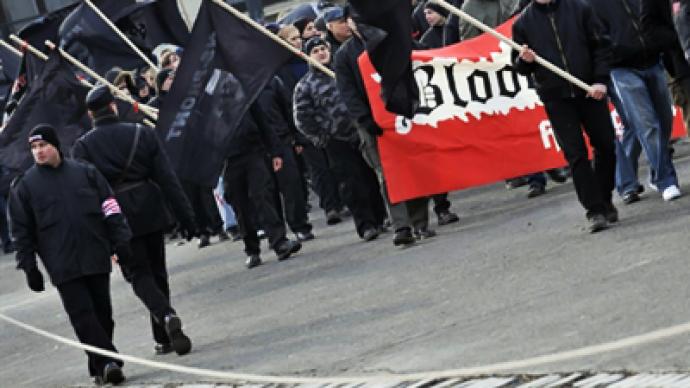
Russian lawmakers say the lessons learned from the Nazi war crimes hearings after the WWII are as valid now as they were back then. Yet parts of Europe are seeing a worrying fascist revival.
Twenty two architects of the WWII horrors faced the tribunal, made up of representatives from the Soviet Union, the US, Great Britain and France. During the trial, which lasted for almost a year, 12 of those high-ranking Nazis were sentenced to death and ten received lengthy prison terms.It was a milestone in history.This weekend, an exhibition marking the 65th anniversary of the Trials opens in Nuremberg. Visitors are able to see the courtroom and the dock where Hitler's henchmen faced the tribunal.“The Nuremberg Trials laid the foundation of international law as we know it. In particular, they created a precedent of judging people for starting a war against other nations. So nowadays we all know what a crime against humanity is,” says historian Aleksandr Filippov.Konstantin Kosachev, the head of Russia's Duma Foreign Affairs Committee, says the decisions of the Nuremberg tribunal are not to be revised, rather respected as an essential, integrated part of the state of affairs of the modern world. “Each and every country which is devoted to the principles of democracy and respect for human rights, should remember the lessons of WWII and respect the decisions of the [Nuremberg] tribunal,” Kosachev said.
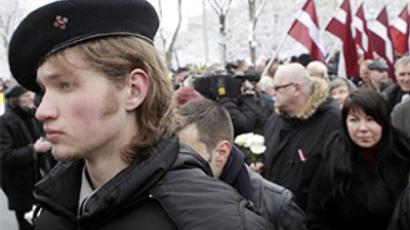
Red Army veteran Aleksandr Sukharev was close to the trial which changed history. His best friend Roman Rudenko acted as prosecutor on behalf of the USSR in the Nuremberg hearings.Sukharev says if it wasn’t for Rudenko, the outcome could have been very different.“He understood that the trial was not only about Hitler and Ribbentrop. It was not just a few people who had to be punished, but an entire ideology of mass killing. His speech impressed the judges, so the number of those in the dock rose dramatically,” Sukharev recalls.Nowadays, most of free Europe acknowledges the positive effect of the Nuremberg tribunal. But some nations have a complex relationship with the past.In the Estonian capital, Tallinn, a monument to the Soviet army liberators is located just meters away from a monument to Estonian soldiers who fought alongside the SS troops.Estonian anti-fascist activist Andrey Andronov says this historic paradox is reflected in the current state of affairs in this Baltic state.“Even looking at the crumbling state of this monument, it’s clear that our government doesn’t see the Red Army as saviors,” Andronov says. “Instead, they glorify those who fought on the side of fascists. That’s despite the fact a large part of our country would never support such ideas.”In April 2007, that clash of opinions spilled on to the streets. The Estonian government ordered the re-location of a Soviet memorial from central Tallinn to the outskirts of the city. Thousands of dissenters protested and clashed with police.A monument to Free Estonia was put just several hundred meters from the square where the Soviet bronze soldier statue used to stand. It resembles a cross, and in the very heart of it is an emblem which was used by the Estonian SS legions back in 1940s.65 years ago, prosecutors in Nuremberg could not have expected a legacy like that. The trial was meant to make sure fascist ideology stayed in the bloody past. But the rise of neo-Nazism in Eastern Europe is a sign that fascism lives.Former Hungarian member of European Parliament Peter Hack says Nazi ideology is becoming popular because European governments are not taking a strong enough stance – and people know little about fascism’s history. “People in Eastern European countries do not know enough about their own past,” Peter Hack says. “I’m teaching university students and I realized that they have very limited knowledge about what happened during WWII, what happened with the Hungarian Jewish population, what happened under Hitler in Germany. They have some ideas but not enough knowledge how this ideology grew up.”
Dr. Efraim Zuroff, director of the Simon Wiesenthal Center and the coordinator of Nazi war crimes research worldwide, agrees: education is essential to prevent the spread of neo-Nazi ideas, which is, paradoxically, not always the case. “In a sense, there’s a certain contradiction here. As the years go by there’s more and more Holocaust education – and you would assume that that Holocaust education would serve as an antidote or give people immunity to Nazi ideas,” he said. “But obviously education doesn’t reach everyone and there are places where there’s been a revival of Nazi or neo-Nazi ideas.”
Professor Dovid Katz from the International Human Rights Movement "World without Nazism" names another reason for the rise of ultra-nationalism:“[It is] not wanting any stain in their history – and of course participation in the Holocaust is a stain in the history of a number of East European countries.”“Unfortunately, the Baltic governments decided to deal with it in a very dishonest way, to confuse, confound the Nazi and the Soviet crimes into one mixture by setting up state commissions and in the end – in Lithuania – by actually launching prosecutorial investigations against Holocaust survivors who are alive because they joined the anti-Nazi resistance, and also by the glorification of participants of the Holocaust in various museums,” he told RT.Professor Katz also refers to the recent bill that was accepted by the Lithuanian Parliament in June 2010 and signed by the president that criminalizes the opinion that Nazi and Soviet crimes are not the same.“Very many talented, brave, young Lithuanian people I know are now afraid to speak up. So, there’s been a decline in democracy.” he explains. “And in the first instance it’s the responsibility of the European Union, NATO, the OSCE to stand up and be a true friend – the one who tells you when something is wrong.”