Radioactive cesium found in Japan’s fish, seawater
Published 5 Aug, 2012 09:37 | Updated 5 Aug, 2012 20:13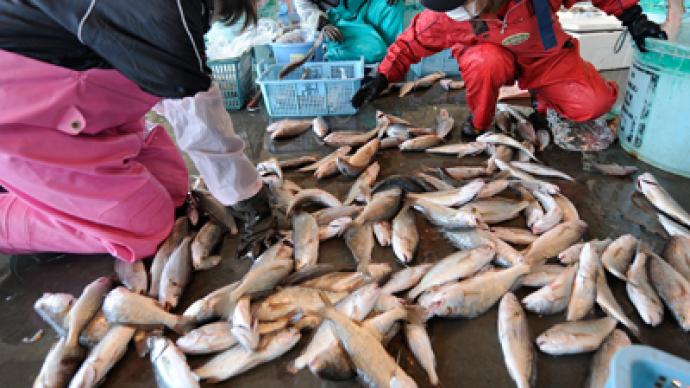
Harmless traces of radioactive cesium have been discovered in fish and seawater in several areas of Japan, as the country continues to debate whether their fish is safe to consume and anti-nuke protests grow in the wake of the Fukushima disaster.
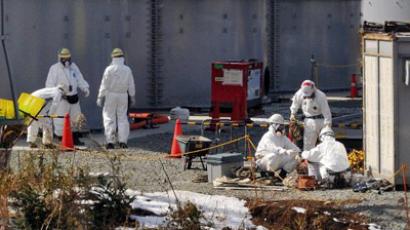
Japan’s Ministry of Education, Culture, Sports, Science and Technology (MEXT) stated that radioactive cesium, presumably from the crippled Fukushima I nuclear plant, was found in seawater and fish in several regions of the country, Russian news agency Itar-Tass reported from Tokyo.The aquatic radiation was detected in central Japan (Shizuoka Prefecture), the western part of central Honshu (Niigata) and the country’s northeast (Iwate).The concentrations of radioactive particles are very small, and pose no health risks to humans, MEXT said. The ministry believes that cesium may have traveled to the area in rainfall.Radioactive cesium is a human-made radioactive isotope produced through the nuclear fission of the element cesium. It has a half-life of 30 years, making it extremely toxic.Earlier this year, low levels of radioactive cesium were found in fish just off Japan’s east coast, which was believed to have originated from the Fukushima plant. The Ministry continues to closely monitor and verify traces of radiation in seawater and fish following the 2011 nuclear disaster at the Fukushima-Daiichi complex.
How safe is Japan’s fish and seafood?
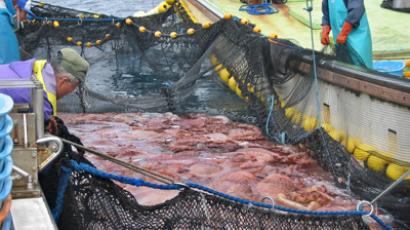
Many countries restricted their food imports from Japan in the wake of the catastrophe. India suspended food imports from Japan for three months in April 2011, fearing radioactive contamination. The EU imposed tighter radiation controls on its imports of food and animal feed from Japan.The full extent of the spread of radioactive contamination in Japan remains unclear. The discovery of radioactive Japanese fish and seawater could further damage Japan's flagging seafood industry. Reports of contaminated seafood are worrisome for the country, since contaminated seawater and fish move in uncontrollable and untraceable paths.Low levels of nuclear radiation from the Fukushima disaster were detected in bluefin tuna off the California coast in May of this year, suggesting that fish are carrying the contaminants across the Pacific Ocean faster than wind or water. US researchers carried out a study showing the tuna were responsible for transporting radionuclides from the 2011 Fukushima disaster across the entire North Pacific Ocean.Many question whether fish from the Pacific Ocean and Japan’s coastal waters are safe to eat in the wake of the Fukushima disaster. Japanese officials and many scientists say they are, but the data on radiation levels in Japan’s fish stock tells a different story.Radiation levels are high in many species that Japan has exported to Canada in recent years, such as cod, sole, halibut, landlocked kokanee, carp, trout and eel. And radiation levels in certain species are higher this year than in 2011, Vancouver’s Straight.com reports.The highest levels of cesium in fish were detected in March, a year after the accident, when a landlocked masu salmon caught in a Japanese river was found to have 18,700 Becquerel of cesium per kilogram, or 187 times Japan’s legal limit for radiation in seafood. (A Becquerel is a unit of radioactivity equal in which one nucleus decays per second).Tim Takaro, an associate professor at Simon Fraser University, now avoids eating fish from Japan: “I would find another source for fish if I thought it was from that area,” he told Straight.com. “There are way too many questions and not enough answers to say everything is fine.” Takaro is a member of the Canadian anti-nuclear group Physicians for Global Survival.The Fukushima tragedy has shattered Japanese faith in the country’s decades-long reliance on nuclear energy, with several large anti-nuclear demonstrations taking place in the country in recent months.