Turkey-Syria standoff: Patriot missiles prepared, Kurdish fighters on the border
Published 24 Nov, 2012 10:05 | Updated 25 Nov, 2012 10:46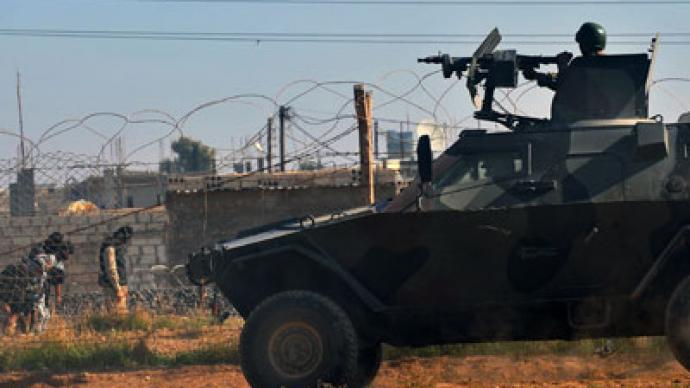
Syria has lashed out at Turkey’s “provocative” request to deploy NATO surface-to-air missiles on the countries' shared border. The batteries may be installed in a matter of weeks, in a buildup that could further flare tensions in the turbulent zone.
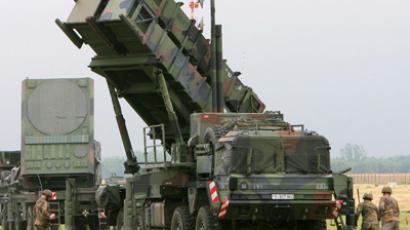
Ankara has asked its NATO partners to station Patriot missile batteries along its southern border, claiming they are needed to protect Turkey’s national security. The system can shoot down aircraft and some missiles at a range of up to 600 kilometers. The region has seen a number of episodes of cross-border mortar fire in recent months, though Syrian warplanes and gunboats were never reported attacking targets on Turkish territory.The request was acknowledged by NATO chief Anders Fogh Rasmussen on Thursday, who said that the possible deployment of the missiles was "purely defensive," and would "serve as a deterrent to possible enemies even thinking of attacks".
But the Syrian government sharply criticized the plan on Friday. A ministerial source told Syrian state TV that the deployment would be “a provocative step,” and that Syria would hold Turkish Prime Minister Recep Tayyip Erdogan “responsible for the militarization of the situation on the Syrian-Turkish border and increased tensions."Iran voiced similar criticisms, and sent parliamentary speaker Ali Larijani to visit to Damascus this week in a gesture of support for Tehran's ally."The internal crisis in Syria cannot be solved through the deployment of such weapons," Larijani said at a news conference in Beirut after his trip to Syria."The difference between us and the others when it comes to Syria is that the others want to impose democracy through weapons," he added. "Iran cannot accept or support such a way."
Russia also expressed concern that the military buildup along the Turkey-Syria border will only further complicate matters, tempting those who seek an escalation of violence in the tensions.Turkish media speculates that the Patriot batteries will be delivered in a matter of weeks. Next week, a group of NATO military specialists will visit the sites to make assessments about potential deployments. The plan will then be reviewed by the US, Germany and Netherlands militaries, which agreed to provide the weapons.Fears are being raised that the missiles would be used to create a de facto no-fly zone inside Syrian territory without a UN mandate. So far, Syrian air forces have been a key factor in Damascus’ fight against rebel troops. Ankara has supported the rebels for months, allowing them to regroup inside Turkish territory and turning a blind eye to weapons smuggling.
Kurds take up arms against rebels
Turkey’s support for rebels is also viewed with suspicion by Syria's Kurdish population, the majority of which lives in the northern border region. On Friday, two of the main Kurdish groups in Syria agreed to join forces to fight against anti-Assad Islamist militants, which attacked Kurdish areas this month.The Democratic Union Party, known by its Kurdish initials PYD, and the Kurdish National Council (KNC) came to an agreement after a meeting in Arbil, the capital of Iraq's autonomous Kurdistan region. The two factions vowed to jointly defend the predominantly Kurdish towns in Syria and administer them together until an election can be held to form a local government.
The agreement followed fierce clashes between PYD militias and rebels from the Al-Nusra Front and allied Ghuraba al-Sham group in the Kurdish districts of Ras al-Ayn. The violence started in early November with a rebel attack on a small group of government soldiers in the area, escalating into a battle that killed at least five Kurds and 18 rebels.Since then, Ghuraba al-Sham has called on other rebel groups to attack Ras al-Ayn and the provincial capital, Hasakeh. The rebels said that local Kurds, especially those from PYD, were enemies of the Syrian revolution.PYD is seen as a close ally of Turkey's Kurdistan Workers' Party (PKK), a Kurdish force that has for decades been fighting a guerrilla war in Turkey in a bid for national autonomy. Ankara is hostile to both parties. Many Syrian Kurds believe that Turkey helped the Syrian rebels prepare their offensive at Ras al-Ayn, or even directly orchestrated it.There are some 2 million Kurds living in Syrian territory, who were widely oppressed under the regime of Bashar Assad and his predecessor. Since the rebellion began in Syria 20 months, ago Damascus has mostly left the Kurds to govern their own affairs, who have stayed out of the conflict and supported neither side.