Environmental risk: UK protests over fears of fracking ban lift
Published 2 Dec, 2012 10:04 | Updated 24 Dec, 2013 15:53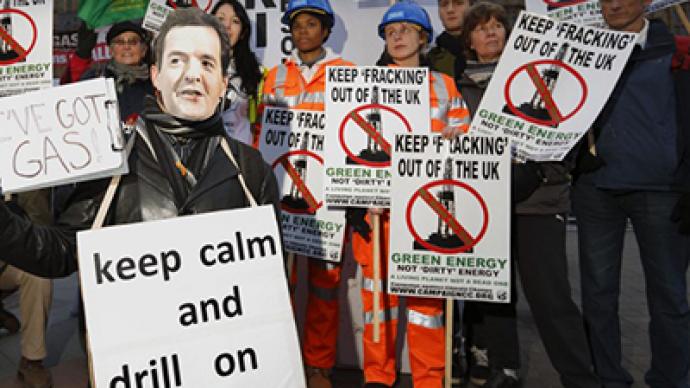
Campaigners protested in London against fracking, a controversial practice of shale gas extraction, amid reports that the UK is to lift the temporary ban on the method. Critics cite the environmental risks the practice poses, including earthquakes.
About 300 demonstrators turned out for a national day of action after a report from The Independent warned that the government had nearly two-thirds of British countryside marked for potential shale gas drilling sites that were now under active consideration for fracking.
Conservative MP and Chancellor of the Exchequer George Osborne is expected to announce the lifting of the temporary fracking ban this week after the practice was hauled due to two earthquakes linked to the method.
Activists have sent a letter to British Prime Minister David Cameron stating that fracking is a “an unpredictable, unregulatable process" that is damaging to the environment.
Protesters also installed a 7.2m fracking rig outside the parliament and erected 6.1mdrilling rig outside the London home of the chairman of shale gas company Cuadrilla, which used fracking in the UK in the past.
Other activist groups from Lancashire, Yorkshire, Somerset, South Wales and Sussex also came out to protest against proposed fracking development.
Fracking is a controversial technique in which high-pressurized water and chemicals are pumped into rock formations deep below the earth's surface to produce gas and oil, carrying a risk of earthquakes and water pollution.
The supporters of the practice argue that the method could increase Britain’s energy supply by tapping into underground gas reserves and UK will no longer have to import at high prices.
"Britain is spending tens of billions of pounds importing gas," said Cuadrilla’s Chief Executive Francis Egan. "We have proven that there is [shale] gas and that it will flow.”
"Most geologists think this is a pretty safe activity," head of energy science at the British Geological Survey Mike Stephenson told The Independent. "We think the risk is pretty low and we have the scientific tools to tell if there is a problem."
The government has denied The Independent’s report and has played down the potential risks posed by the method.
The Department of Energy and Climate Change has responded that the effects of fracking are not yet known and there is no reason for exaggeration.
"It is too early to assess the potential for shale gas but the suggestion more than 60 per cent of the UK countryside could be exploited is nonsense,” the department said in a statement. "We have commissioned the British Geological Survey to do an assessment of the UK's shale gas resources, which will report its findings next year."
But opponents believe that the environmental risks are too great.
Greenpeace Executive Director John Sauven told The Guardian that "the potential for shale gas to bring down bills is overhyped.”
"To allow fracking in the UK would be the final nail in the coffin for Cameron's green agenda," said the statement from Britain and Ireland Frack Free group.
Risk of lifting fracking ban in UK
UK is estimated to sit on 1.5 trillion pounds (US$2.4 trillion) of shale gas reserves, Telegraph reported. Some of the rich shale gas areas include the Weald area in Sussex and Hampshire, and from Cambridge through Oxford and down to Bath.
Fracking has been banned in the UK since 2011 when it was blamed for causing two earthquakes in Blackpool. US Company Cuadrilla, behind the drilling exploration in the area, was forced to halt its work.
In fact, after UK protests, Francis Egan told the Sunday Telegraph that the development of gas resources in the UK is essential for the economy. He argued that his company would be forced to walk away from Britain, if the ban is not lifted soon.
Egan believes his company has the capacity to produce shale gas as soon as March next year.
"We are starting a whole new onshore gas industry. In our license alone we can supply a quarter of the UK's gas demand," he said.
On top of that, George Osborne is expected to use his Autumn Statement this week to lift the ban by announcing tax breaks for companies that use fracking, statingthat domestic shale gas industry will boost economy by decreasing gas prices and creating jobs.
However, evidence reveals that an unidentified chemical used in fracking in the United States has been linked to kidney and liver damage. Environmental officials in Pennsylvania have come under fire for their tests on drinking water from a well near a natural gas drilling site. Toluene, benzene and arsenic have been found in the bodies of nearby residents.
The practice has also been linked to earthquakes in the US, witnessed in states such as California, Ohio, and Arkansas.