Uranium threat to 15,000yo Australian rock art
Published 8 Mar, 2013 15:40 | Updated 8 Mar, 2013 15:40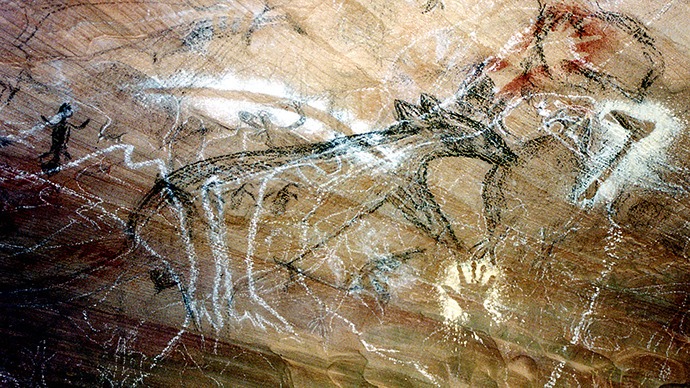
Mining companies are queuing up to assault Australia’s cultural heritage. The discovery of a large uranium deposit has prompted mining companies to consider excavations on land which is home to some of Australia’s most ancient rock art.
The Wellington Range in the northeastern state of Queensland has
been under surveillance from uranium mining companies for many
years. Cameco, a Canadian mining company, recently reported the
discovery of a large uranium deposit in this range, according to a
Global Mail report.
However, this region is also home to an area dubbed one of the
great rock-art precincts of the globe by United Nations
Educational, Scientific and Cultural Organization (UNESCO), and
regular guided tours are organized to the areas.
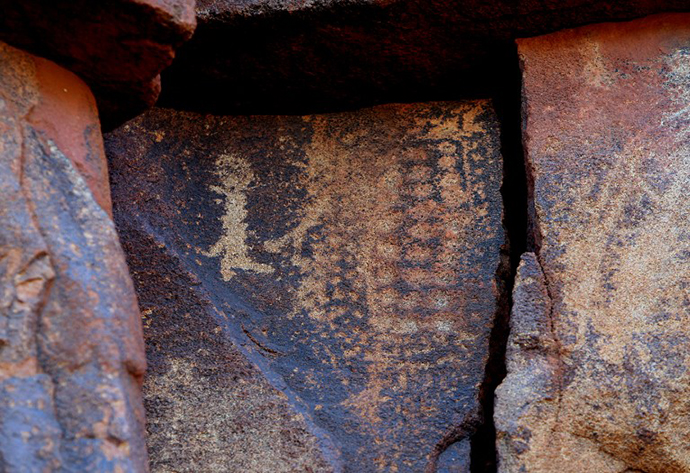
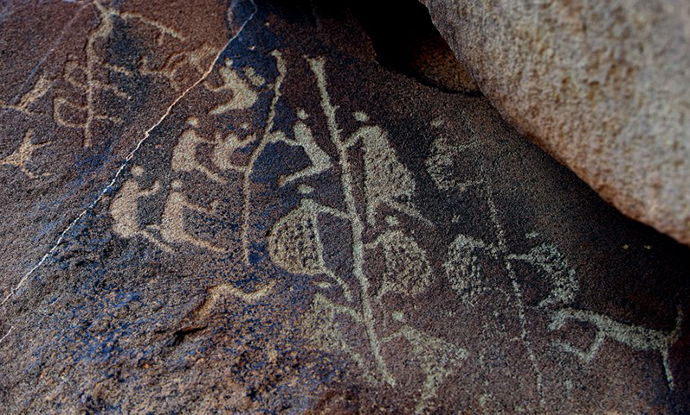
The secret wall paintings display ancient aboriginal scenes and
symbols, such as “bullymen” – police-type troopers, the
paintings of which were thought to be able to vanquish enemies
through sorcery. Other pictures are more nature-related.
The aboriginal paintings are thought to be thousands of years
old, with the earliest discovered dating more than 10,000 years
back.
Despite the fact that much of the rock art is contained in
‘Designated Landscape Areas’, which means the site of
aboriginal heritage is entry is limited to some, state permission
for mineral exploration has still been granted.
On Friday, the Global Mail published a report drawing on
six-month-long research by Noelene Cole, an assistant research
fellow in archaeology with James Cook University, and associate
archaeologist Alice Buhrich. Their research discovered that
applications for coal and mineral exploration cover what is
basically an entire art-covered ‘precinct’ on the Cape York
Peninsula.
“It is astounding, internationally speaking, that a region
like this would be considered for mining,” said Cole.
Cameco located the deposit in remote northern hills that
contained so much of the art, that one mere complex contained a
massive 3,000 images. The oldest piece of art here was dated as
being approximately 15,000 years old.
“It would be like the French mining the Lascaux Caves and the Dordogne, which is World Heritage listed,” Tony Burke, Australia’s environment minister said.
His office went on to point out that although Cameco has not yet submitted a proposal for a uranium project in the Wellington region, because it is such a sizeable discovery, it is likely the company will pursue it further.
Cameco Australia's managing director, Brian Reilly, has said that his company would work alongside stakeholders to ensure the protection of the area's environment, culture and heritage, strongly suggesting that further exploration is on the cards.
Australian mining magnate and billionaire Gina Rinehart, the world’s second-richest woman, began to create a stir in the last week, when it emerged that she had also sought permission to look for minerals over some of the countries older art on Cape York.
At the time, traditional aboriginal owners asked Australia’s Federal Environment Minister, Tony Burke, to place the area on the World Heritage List to protect the site of their ancestors’ art. One of Rinehart’s companies later announced that it would withdraw two applications to excavate for minerals.
Cole and Buhrich found that the Queensland Government has already granted some mineral and coal exploration permits in areas meant to be protected as special Aboriginal places, according to the Global Mail.
Australia is home to around a third of the planet’s uranium resources and exports roughly 7,000 tonnes per annum.