“Meddling in Egyptian affairs, US shows itself to be neocolonialist power”
Published 4 Feb, 2011 16:45 | Updated 16 Feb, 2011 15:38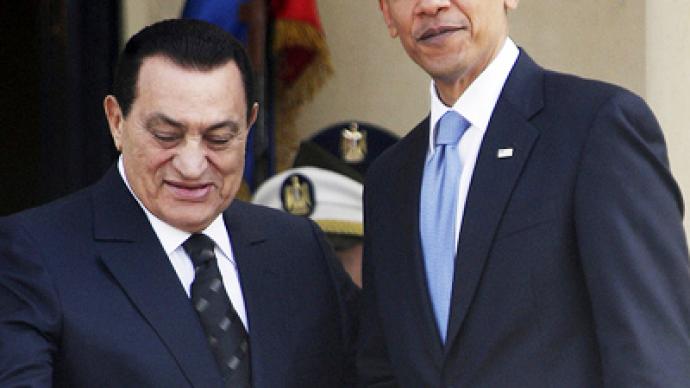
With its interference in Egypt’s affairs, the US is showing itself to be an arrogant neocolonialist power which assigns itself the right to oversee the politics of sovereign states, author and journalist Finian Cunningham told RT.
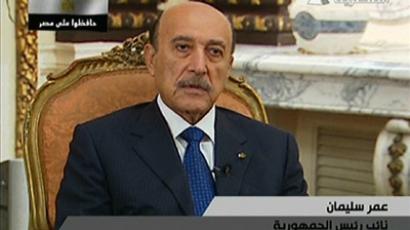
RT: Egypt is second only to Israel in receiving financial aid from the US. We are now seeing Washington back away from President Mubarak, so what does this mean for America’s other allies in the region, can they expect similar treatment?FC: The US may be backing away from Mubarak in the sense that it is now belatedly calling for an orderly transition, but there is no sign that Washington is backing away from its support for the Mubarak regime. Washington is still committed to sending the $1.5 billion a year – the latest figure is $2 billion a year – that it has sent Mubarak's regime for the past 30 years. If Mubarak does step aside, this does not mean any substantive change, a more enlightened, benign change in US policy towards Egypt and the military regime in that country. It suggests that Mubarak, the individual, has merely become something of a PR liability for the US government and the latter needs to repackage the regime with a facelift. The possible replacement of Mubarak with his Vice President Omar Suleiman, which the US government seems to be contemplating, does not change the fundamental relationship between Washington and the Egyptian regime nor other US-backed regimes in the region. Suleiman is a military figure, a long time US stalwart, just as stalwart as Mubarak. So the US maneuvering is but a cynical ploy to stabilize the regime. And there are strong and deep, indeed inviolable, reasons for Washington's staunch support for the Egyptian regime, whether it is headed by Mubarak, Suleiman or some other figure from within the Egyptian military. The regime is a cornerstone for US foreign policy in the Middle East and the wider region. Other regimes in the region are no doubt deeply alarmed by events in Egypt and Tunisia and elsewhere. But their concern is over what their own masses will do. Their concern would not be due to a putative change in US policy. These regimes can be sure of ongoing US support because as I said US support is an integral part of US hegemony in the region. Having said that, these regimes may have to engage in some superficial reform in an attempt to placate their masses. And no doubt Washington is advising its client regimes to do just that in order to avoid the Egyptian/Tunisian contagion of democracy spreading further. But as I said there is no fear or danger of the US backing away from the Egyptian or any other regime in the Middle East. However, ongoing US support may not be enough to save these regimes. Indeed, it may hasten their demise.RT: The unrest has been spreading throughout the wider region and could we soon see a totally different Middle East? FC: Indeed. If genuine democracy takes hold and spreads across the region, the repercussions are enormous and potentially for the greater good of the people in the Arab world. Not just the Arab world. The liberating affect from US domination has untold and potentially tremendously positive consequences for peace in the region, in particular the curbing of US-Israeli offences against the Palestinians, the curbing of US-NATO criminal wars in Iraq and Afghanistan, the curbing of US and EU aggression towards Iran.But the ramifications are much bigger than for the Middle East. The events in Egypt and elsewhere in the Middle East and North Africa are potentially a fatal blow to US-dominated world capitalism. Social conditions of poverty and injustice across the US and Europe are presaging the popular uprising in these regions too, against austerity and arrogant elite power. The Egyptian revolution may prove to be an historic moment of world change and change for the better. RT: Washington has said openly that it is negotiating President Mubarak's departure from office. Is this likely to be seen as further meddling by the US?FC: Yes, it is a revelation just how deeply involved and interfering US policy is in the government of Egypt and many other countries in the region. The US government is showing itself to be an arrogant neocolonialist power that arrogates the self-appointed right to "oversee" the affairs of other sovereign states. This whole debacle is showing once and for all how deeply and nefariously meddling US foreign policy is.RT: There had been hopes that calm would be restored after Mubarak announced he was not going to stand for re-election in September. But then we saw the strong pro-Mubarak rally and further violence. Who benefits from keeping tensions in Egypt high?FC: Insecurity, instability, violence and chaos can only play into the hands of Mubarak or his successor and the US-backed regime. That is why the regime and its US sponsor are implicated in whipping up such a climate – to buy time for an "orderly transition". “RT: We have got major European powers supporting the US stance of a transition of power in Cairo. Are they just towing the American line or do they have any separate agendas?FC: The other Western governments are showing themselves to be pathetic minions of Washington. They are slavishly following the US foreign policy of meddling and thwarting the Egyptian people's efforts to establish democracy in their country. So-called Western powers are mere satellites of US foreign policy because they are dependent on, subservient to the US-led capitalist order. RT: Tomorrow we will air Paula Slier’s story on caliphate: Muslims from the Middle East, North Africa, Central and Southeastern Asia unite and create transnational theocratic community and challenge traditional western values. How realistic is this scenario? FC: This question seems very speculative. I don't know much about it but I do not see it working frankly. The Gulf countries have been talking about a GCC economic union among five states and such discussion has been going on for years, with no definite result. So a much larger union, involving up to 20 countries and more, would seem to be very unlikely to be a viable project any time soon. Not only would the discussions, sensitivities and differences between the countries make such a project cumbersome and unwieldy. Primarily, the problem would be that if such a pan-regional union did genuinely come into being, such a regional union would necessitate the breaking of very strong, very resistant bonds that exist between the US and many of the participants in such a putative Arab/Muslim Union. Thus such a project would come up against fierce US resistance. And also, the leaders of these countries would most likely be very reluctant to give up US patronage that they enjoy, owing to the instability within their own countries without US patronage.Which gets back to your first question. It is the vital geopolitical interests of the US that are being challenged by events in Tunisia, now Egypt, and elsewhere in the Middle East and North Africa, with huge ramifications beyond that region. It is not just an issue of one or two states jettisoning their pro-US leaders, as if they are separate entities, and as if life will go on as normal in the aftermath of such changes. What we are seeing here with the imminent collapse of the Mubarak regime in Egypt in particular is the imminent collapse of US imperial hegemony in the region. That is why what is going on in Egypt and elsewhere is so alarming for the US government. And that is why the situation is so potentially dangerous for the people of Egypt who are pushing for a radical realignment of their own country's political order and of its relations with the US. In short, their push for full democracy poses a threat to the US empire. This exposes the reality of US involvement in this region. Its interests are counterpoised to the interests of genuine democracy in the Middle East and North Africa.