European report links child Swine flu vaccine to narcolepsy
Published 22 Jan, 2013 20:08 | Updated 23 Jan, 2013 14:40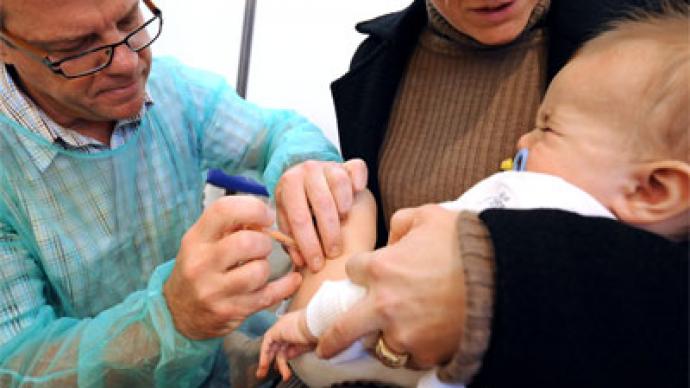
A vaccine used to combat the swine flu pandemic has been linked to the sleep disorder narcolepsy in some 800 children and teens across Europe. The case has sparked debate over the risk of immunization and the potentially greater threat of anti-vaccine
The European Centre for Disease Prevention and Control (ECDC) studied the effects of the Pandemrix vaccine in eight European countries after higher incidences of narcolepsy were reported among children given the vaccine during the 2009-2010 H1N1 swine flu pandemic, AFP reports.
Sweden and Finland have both seen a rise in the sleep condition since the vaccine was first used on children. The governments of both countries stressed their citizens were vaccinated with Pandemrix, which was the only vaccine used in both countries at the time.
In Sweden, nearly 200 children aged four to 19, developed narcolepsy after receiving the vaccine during that period, while in Finland the number was 79.
One such child, 14-year-old Emelie Olsson, told Reuters about the crippling effects narcolepsy had had on her life: "In the beginning I didn't really want to live any more, but now I have learned to handle things better," she said.
Narcolepsy is a neurological sleep disorder that causes people to fall asleep uncontrollably, makes sufferers feel excessively drowsy, and in more extreme cases brings on hallucinations, sleep paralysis, and cataplexy – a sudden loss of muscle strength.
Strong emotions can often bring on cataplexy in narcoleptics, and for Emelie, fun is the emotional trigger.
"I can't laugh or joke about with my friends anymore, because when I do I get cataplexies and collapse."
Research has found that some people are born with a variant in a gene known as HLA, meaning they have low hypocretin, a neurotransmitter that regulates arousal, wakefulness, and appetite.
Around 25 percent of Europeans have this genetic vulnerability, leaving them susceptible to narcolepsy.
Emelie was found to have 15 percent the normal amount of hypocretin, which is reflective of people suffering from the sleep disorder.
Scientists have subsequently begun investigating a connection between those with the HLA variant and the immunological AS03 adjuvant added to Pandemrix to stimulate the immune system's response to the target antigen.Some have argued that AS03, its boosting effect or even the H1N1 flu itself may have trigged the onset of narcolepsy, which is now believed to be an autoimmune disease.Angus Nicoll, a flu expert at the ECDC, says genetics might play a part, but external factors are likely to have brought on the cases of narcolepsy as well."Yes, there's a genetic predisposition to this condition, but that alone cannot explain these cases," he said. "There was also something to do with receiving this specific vaccination. Whether it was the vaccine plus the genetic disposition alone or a third factor as well – like another infection – we simply do not know yet," he told Reuters.Despite Emelie’s plight and many others like her, the ECDC did not find a statistical link between the vaccine and incidences of narcolepsy in Britain, Denmark, France, Italy, the Netherlands and Norway.However, those familiar with a yet-to-be published study in Britain, told Reuters that similar patterns are apparent in children there.Peer-reviewed studies carried out independently by scientists in Sweden, Finland and Ireland further concluded that the risk of developing narcolepsy after the 2009-2010 immunization campaign spiked between seven and 13 times when comparing vaccinated children with their unvaccinated peers.More than 30 million people in 47 countries were inoculated with Pandemrix, which was produced by UK pharmaceutical firm GlaxoSmithKline (GSK) in 2009.GSK says 795 people across Europe have developed narcolepsy across Europe since the vaccine was first introduced.Emmanuel Mignot, one of the world's leading experts on narcolepsy who was funded by GSK to investigate a connection between narcolepsy and Pandemrix told Reuters the connection was evident:"There's no doubt in my mind whatsoever that Pandemrix increased the occurrence of narcolepsy onset in children in some countries – and probably in most countries," says Mignot, a specialist in the sleep disorder at Stanford University in the United States.Europe's drugs regulator has since ruled that Pandemrix should not be used by people younger than 20.
Jumping the gun
With its exceptionally high standard of living, the Swedish government was on the cutting edge of preventative vaccination, inoculating some 5 million people – over half the country’s population – as soon as Pandemrix went on sale.Stolkholm-based public health official Goran Stiernstedt, who helped organize the national vaccination campaign, estimates some 30-60 people were saved as a result.In light of the 200 cases of narcolepsy which are widely attributed to Pandemrix, Stiernstedt believes the risk-benefit balance was unacceptable.Yet the problem with risk-benefit analyses is that they often look radically different when the world is facing a pandemic with the potential to wipe out millions than they do when it has emerged relatively unscathed from one, like H1N1, which turned out to be much milder than first feared.But David Salisbury, the British government's director of immunization, says ad hoc risk-benefit analysis can be detrimental in the face of massive pandemics that really have the potential of killing millions."In the event of a severe pandemic, the risk of death is far higher than the risk of narcolepsy," he told Reuters. "If we spent longer developing and testing the vaccine on very large numbers of people and waited to see whether any of them developed narcolepsy, much of the population might be dead."The World Health Organisation (WHO) says the Swine flu pandemic killed 18,500 people, while a study published last year said that figure could be as much as 15 times higher.