Russians warn of Afghanistan troops buildup
Published 14 Sep, 2009 14:31 | Updated 14 Sep, 2009 23:47
Sending more troops to Afghanistan will only aggravate the situation. Only an offensive against Taliban forces in Pakistan can help, RT’s military analyst Evgeny Khrushchev says.
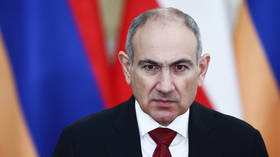
In last week’s interview with the Associated Press news agency, Russian ambassador to Afghanistan Zamir Kabulov said that if the US decides to send more troops to Afghanistan, this will only aggravate the situation there. “…if you bring 200 000 soldiers here, all of Afghanistan will be under the Taliban,” the agency quoted the Russian diplomat as saying. RT’s military analyst Evgeny Khrushchev says that the international forces in Afghanistan lack not the strength of troops, but the political decision to transfer the action from Afghanistan to Pakistan.
RT: From your experience, including the years you spent in Afghanistan in the 80s, would you say that Mr. Kabulov’s conclusions are correct?
Evgeny Khrushchev: Yes, they are correct. I think that for Afghanistan, one can use the rule that the force applied will encounter an equal opposing force. The more troops Americans bring there, the more resistance they will meet. And this also applies to other nations, as well as non-military specialists both contract soldiers and NGO members. Despite their legendary hospitality, Afghanis are very sensitive to any attempts to intrude on their life and politics in their country. So, yes, the resistance will grow if the military presence does.
RT: But in eight years of US operation in Afghanistan, was there any support from the local population?
E.K.: At the very beginning, when the American assault was directed against Al Qaeda and its main ally – the Taliban, the operation had some support and the US managed to join forces with the Northern Alliance. But heavy military presence in the very beginning also created high expectations which the American military have failed to meet. These unmet expectations also add to growing anti-American sentiments and actions in the country. As for the operation against Al Qaeda and the Taliban, the conflict has been simply frozen, but not solved.
RT: What do you mean and what are the reasons behind such situation?
E.K.: The main reason is the complete transparency of the border between Afghanistan and Pakistan. The Taliban can easily move people, weapons and resources in both directions and both US military and the ISAF cannot launch a full scale operation on Pakistani territory.
The situation is very similar to the one the Soviets had in Afghanistan at the end of the war – the army needed a political decision which would allow it to move to Pakistan, a decision the Soviet authorities could not make.
RT: But the CIA and US Special Forces have reported about several cross-border operations in Pakistan. Can this be the solution?
E.K.: For success they need a completely closed border. Special Operations will not make much difference. They already rely too much on special operations – which is understandable, as General McChrystal, the current commander of US Forces in Afghanistan and ISAF, earlier used to head the Joint Special Operations Command. However, Special Operations were never a good tool to establish and maintain order. Western forces need a full and open presence in Pakistan and they could use some Soviet experience in this respect – I mean using a request from Pakistani authorities to help to establish order in the country and acting on the excuse of international help.
RT: What about the ISAF? Can they be of great use in such operation?
E.K.: In my opinion, the ISAF proved that NATO as a military organization has outlived its potential. It should be reformed into an international law enforcement agency and deal with drug trafficking and human trafficking in Europe. Special forces from European countries might take part in the Pakistan operation in case such operation is launched, but under joint American command – which will not happen, given European politicians’ extremely sensitive attitude towards the Afghan war.