America’s man with a plan for Iran
Published 2 Aug, 2010 19:45 | Updated 2 Oct, 2010 05:04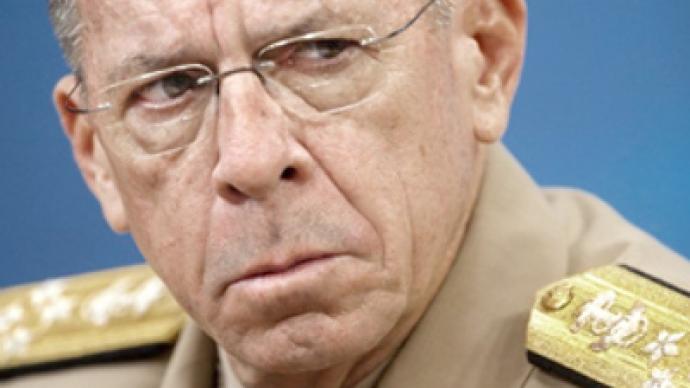
The highest-ranking US military officer says America has a plan for thwarting Iran’s nuclear ambitions, while admitting that such a strike would “endanger the security of the region.”
Admiral Mike Mullen, the chairman of the Joint Chiefs of Staff, turned up the temperature in the Middle East several degrees when he told a US news program that America has a military plan for engaging Iran, while adding that he hoped “we don’t get to that.”
Mullen was asked by NBC’s “Meet the Press” if the US military has a devised plan for confronting Iran over its alleged nuclear weapon’s program. “We do,” Mullen replied. Yet Washington’s leading military adviser held out strong reservations over implementing such a move: “I hope we don’t get to that, but it’s an important option and it’s one that’s well understood.”
Previously, it had been standard protocol for US military leaders to only hint at the possibility of a full-blown attack, stating diplomatically for example that “all the options are on the table,” rather specifically mentioning the last-resort military option.
Explicitly mentioning a military response to Iran’s ongoing nuclear program, which Tehran claims is solely for civilian energy purposes, falls short of Obama’s noble pledge to “sit down and talk” with America’s enemies, as opposed to relying on the last-resort option of military action that largely defined the Bush years.
As things now stand, the world continues to hold its breath, hoping the latest round of economic sanctions against Iran will compel the Islamic Republic to fully co-operate with the International Atomic Energy Agency (IAEA).
In June, the United Nations imposed the harshest round of sanctions on Iran yet, targeting Iranian banks and export businesses; the EU and the United States unilaterally moved to block oil and gas investment in the country. But Iran shows no sign of backing down.
Iranian President Mahmoud Ahmadinejad has gone on record as saying the latest round of economic sanctions will have no effect on Iran, as it is his country’s “right to pursue renewable technologies, like other nations in the world.”
Yet, as the Russian president confirmed recently, Iran is not simply interested in the energy needs of its population.
Last month, Russian President Dmitry Medvedev warned the world that Iran is "moving closer" to having the potential to create nuclear weapons.
"Iran is moving closer to possessing the potential which in principle could be used for the creation of nuclear weapons," President Medvedev told a meeting of ambassadors in Moscow.
What price military action?
Commencing a military operation against Iran would open a hornets’ nest of grave problems in the Middle East, as Admiral Mullen was quick to mention.
Without elaborating on the details of the plan, Mullen warned that such an attack would have “unintended consequences that are difficult to predict in what is an incredibly unstable part of the world.”
This was not the first time that Obama’s leading military advisor provided slightly ambiguous comments as to how America would respond to the threat of Iran possibly joining the nuclear club.
In February, during a news conference at the US Embassy in Tel Aviv, Mullen said he was opposed to Iran’s acquisition of nuclear weapons, while repeating his warning of the “unintended consequences” of a military strike.
“From a policy standpoint, Iran cannot have a nuclear weapon, [or] nuclear capability,” Mullen said, before adding a significant caveat: “I’ve also been clear, them getting a weapon and/or the outbreak of a conflict would be a big, big problem for all of us. And I worry a great deal about the unintended consequences of a strike that are pretty hard to be specific about, in a pretty volatile region that’s pretty hard to predict.”
Indeed, even the suggestion of a military attack was greeted in Tehran with hostility and saber-rattling.
"If the Americans make the slightest mistake, the security of the region will be endangered. Security in the Persian Gulf should be for all or none," Yadollah Javani, the deputy head of the elite Revolutionary Guards, told the official IRNA news agency on Sunday.
"The Persian Gulf is a strategic region and if it is endangered they (Americans) will suffer losses and our response will be firm,” Javani added. "We will defend ourselves if America or Israel resort to any hostile measures against our vital values."
Also on Sunday, Iran's envoy to the United Nations warned that the Islamic Republic would set Tel Aviv ablaze if Israel attacks it.
"If the Zionist regime commits the slightest aggression against Iranian soil, we will set the entire war front and Tel Aviv on fire," Mohammad Khazai said, as quoted by Kashmar, the Farhang-e Ashti daily.
Meanwhile, Iranian President Ahmadinejad made an impassioned plea to Barack Obama, challenging him on Monday to a televised debate to determine who has the best solutions for the world's problems.
"Toward the end of summer we will hopefully be there for the (UN) General Assembly and I will be ready for one-on-one talks with Mr Obama, in front of the media of course," Ahmadinejad told a conference of Iranian expatriates in Tehran. "We will offer our solutions for world issues to see whose solutions are better.”
The proposal by Ahmadinejad is an interesting one, especially since Barack Obama regularly pledged during his presidential campaign to “sit down and talk” with America’s enemies, as opposed to implementing the “option of last resort” more popular with the neocon hawks of the Bush presidency.
Yet in the unlikely event that such a debate would occur (which could possibly attract better television ratings than the World Cup), there are several nagging factors that Ahmadinejad would use to his possible advantage, including the assertion that Israel has a nuclear weapons capability.
Analysts are practically unanimous in the belief that Israel has no less than 200 nuclear warheads in its arsenal, including submarine-launched nuclear cruise missiles. Iran’s predictable counterargument is one commonly heard in any school playground: “why is he allowed to do that, but we are not?” A very simple question that has no simple answer, at least not one that will be acceptable to Tehran in any case.
Meanwhile, the Islamic Republic firmly believes, especially with the anticlimactic demise of Iraq next door, that it is an influential regional power that should not be restrained from developing its nuclear capabilities. After all, there are already nine nuclear powers on the planet, Tehran argues, including punchy Pakistan, which borders Iran in the southern part of the country.
In light of these and other factors, which place Washington in an extremely awkward position when it comes to lecturing Iran about its own nuclear developments, it is more understandable why Obama has become the international spokesman for a “world without nuclear weapons.”
Such an ambitious platform, forwarded by none other than the Nobel Peace Prize winner, gives the United States more of an argument for discouraging other countries, including Iran, from letting the nuclear genie out of the bottle.
In other words, do as we say, not as we do. Whether the world will ever go “nuke-free,” well, that is an altogether different question.
So if – God forbid – the latest round of sanctions fail to curb Iran’s nuclear ambitions and the decision to open yet another military front in the Middle East is decided, what can we expect?
Certainly nothing good, to say the least. First, it is doubtful that a full-blown military campaign will destroy all of Iran’s nuclear research facilities, while it would only intensify its quest for nuclear power.
“Even a successful military strike against Iran's nuclear facilities would delay Iran's program by only a few years, and it would almost certainly harden Tehran's determination to go nuclear,” wrote James A. Lindsay and Ray Takeyh in the March/April issue of Foreign Affairs political journal.
The authors then rather half-heartedly speculated that a military attack, or even the threat of one, could be enough to bring down the already wobbling regime of President Ahmadinejad: “The ongoing political unrest in Iran could topple the regime, leading to fundamental changes in Tehran's foreign policy and ending its pursuit of nuclear weapons. But that is an outcome that cannot be assumed.”
Finally, it needs to be remembered that the Iran of 2010 is not the Iraq of 2003: Iran possesses an impressive range of ground and air resources.
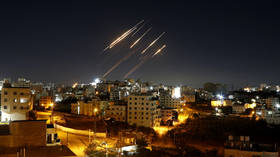
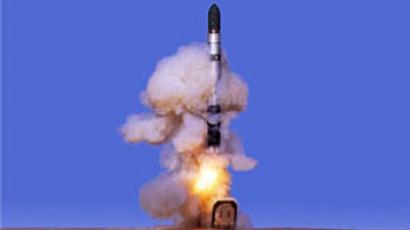
In a 2007 parade to commemorate the anniversary of the 1980-88 Iran-Iraq War, Tehran put on display its Shahab 3 missile, saying it could travel 2,000 km – a range long enough to hit Israel and US bases in the region. Another missile, the Ghadr 1, can reach targets up to 1,800 km away. In November 2008, Iran said it had test-fired a Sejjil missile with a range of close to 2,000 km.
But a full-blown war in the Middle East would have repercussions not just for the immediate region, but for the entire planet. It does not take a very vivid imagination – considering the vast arsenal of weapons that such a military adventure would demand – to foresee the horrible environmental consequences that such a decision would inflict around the world. This underlines the paradox of modern military power: the more powerful the weapons of mass destruction become, the more national governments must restrain themselves from implementing their use unless they want to wish to wipe out all life as we know it.
In the end, either war will become extinct or mankind – it is as simple as that. The current debate on Iran will test mankind’s ability to use judgment in deciding which of the two evils is greater: allowing one’s avowed enemy to (possibly) arm himself with the deadliest weapons ever created, or unleash a war the likes of which the planet may never recover from. After all, Iran may cool its heels when (if) it ever acquires nuclear weapons. Or it may not. But the latter scenario would mean nothing less than national suicide, which not even Ahmadinejad would be willing to accept.
Fortunately, there is a third option: We can hope that the present sanctions against Iran will work to erode the power base of the present regime, thus paving the way for an Iranian leader the West can work with.
Ironically, the West had exactly that man with Mohammad Khatami, an Iranian scholar and liberal-minded politician who served as the fifth President of Iran from August 2, 1997 to August 3, 2005. Khatami was a peace-loving leader who pushed for a “Dialogue amongst Civilizations”. The United Nations declared the year 2001 as the Year of Dialogue Among Civilizations, on Khatami's suggestion.
Since the United States must take a large part of the blame for the rise of Iran's hawkish President Ahmadinejad, who rose to power on a wave of anti-American fervor following the very unpopular and very unnecessary War in Iraq, it seems that the United States must “sleep in the bed it made” and find the most peaceful and reasonable way of disarming Ahmadinejad.
In the end, it has to be a decision we can all live with.
Thanks to Evgeny Sukhoi for his contributions to this article