America risking “another Vietnam” in Afghanistan - Gorbachev
Published 28 Oct, 2010 13:52 | Updated 6 Apr, 2011 11:39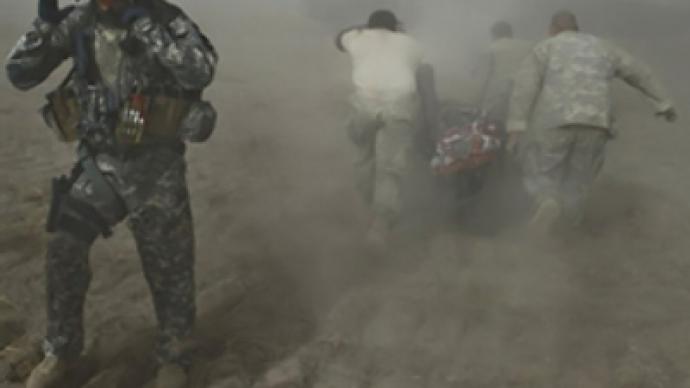
Former Soviet leader Mikhail Gorbachev has said in an interview that it is "impossible" for US-led coalition forces to secure victory in Afghanistan.
He said he supported US President Barack Obama’s decision to start bringing home troops in July 2011 since the alternative was nothing less than “another Vietnam.”In an interview with the BBC on Wednesday, Gorbachev said, "Victory is impossible in Afghanistan. Obama is right to pull the troops out no matter how difficult it will be…What's the alternative? Another Vietnam? Sending in half a million troops? That wouldn't work." His comments come at a sensitive moment as US-led fighting in Afghanistan enters its 10th year: 2010 has already gone down as the deadliest 365 days for coalition forces since “Operation Enduring Freedom" began in earnest on Oct. 7, 2001.The former Soviet leader went on to express his disappointment with the Americans, who were responsible, he argues, for arming the mujahideen against the Soviet Army. Now, he says, Washington is paying the price for that decision by having to take up arms against the very militants they orignally armed.Before the Soviet Union withdrew from Afghanistan, “an agreement had been reached with Iran, India, Pakistan and of course with the Americans,” he explained.
Afghan War Stats
Due to a recent surge in troop numbers, as well as a reinvigorated Taliban, 2010 has already gone down in the history books as the deadliest year for coalition forces since hostilities began on October 7, 2001: 604 coalition troops have lost their lives this year fighting against the Taliban in Afghanistan. The United States, which makes up the bulk of the coalition forces with over 100,000 troops, witnessed the highest fatality rate, losing 406 troops so far this year. Since the beginning of the conflict, the US military has suffered 1,353 troop deaths and over 7,000 wounded. British forces have sustained the second-highest number of total fatalities with 341, and over 4,000 wounded.Stats from iCasualties.org"We had hoped America would abide by the agreement that we reached that Afghanistan should be a neutral, democratic country that would have good relations with its neighbors and with both the US and the USSR," he said."The Americans always said they supported this, but at the same time they were training militants – the same ones who today are terrorizing Afghanistan and more and more of Pakistan."Indeed, Osama bin Laden and Al Qaeda are direct outgrowths of foreign aid provided during the Soviet war. Because of this, it would be more difficult for the US to extract itself from the country.
America has created a “difficult situation”
Mikhail Gorbachev is certainly no stranger to the hazards of Afghanistan, a rugged land dubbed the “graveyard of empires” that humbled both the British and Soviet empires. Gorbachev had the dubious privilege of being leader of the Soviet Union when the decision was made to withdraw Soviet troops from the country in 1989, following nearly a decade of conflict.Similar to the US experience in Afghanistan, which began under George W. Bush (as did the Iraq War, which provided an unnecessary setback for US operations) and was inherited by Barack Obama, the Soviet war passed through several leaderships before finally stalling on Gorbachev’s watch.The Soviets deployed the 40th Army on December 24, 1979, under Soviet leader Leonid Brezhnev, and it ended on February 15, 1989 under Mikhail Gorbachev, the last Soviet leader. The government of Soviet-backed Najibullah fell in April 1992 after Moscow withdrew support following the 1991 Soviet collapse.Due to significant outside support from a number of countries, including the United States, United Kingdom, Saudi Arabia, Pakistan, and Egypt, the mujahideen gave the Soviet Army a bitter fight. Indeed, the Soviet Union’s experience has been dubbed as the “Soviet Union’s Vietnam War.” Although the Soviets managed to inflict massive losses on the mujahideen (almost 100,000 killed and up to 200,000 wounded), they experienced the very same problem that is haunting coalition forces now playing a game of cat and mouse against the Taliban: how do you beat an enemy that enjoys all the advantages of a hostile environment, mixed with heavy support from the locals?The writer Stephen Tanner, in his book "Afghanistan," provides a telling glimpse of the supreme challenges that have confronted Afghanistan’s enemies, no matter how technologically superior they are:“Afghanistan’s continuously violent history is due in equal measure to the nature of its territory, which has in turn influenced the nature of its people. However strategically desirable Afghanistan’s narrow mountain passes and river valleys, the bulk of the land is unrelentingly harsh, and where it does not consist of jagged, successive ranges of heights it is largely desert. The people of this forbidding land have thus had advantages in defense of their territory, whether on a national, regional, or local level. It is a land that can be easily invaded but is much more difficult to hold – and to hold together.”But it is not just impassable mountain ranges and a fierce tribalism that is giving coalition forces a hard time. This tough, elusive enemy has been steadily mastering the technology behind what is probably becoming the most-feared weapon of modern armies: improvised explosive devices, otherwise known as IEDs.“IEDs remain the top killer of U.S. troops in Afghanistan,” USA Today reported last week. “IEDs wound two of three troops hurt in battle. Insurgents planted 1,321 bombs that were detected or blew up in September, the third-highest monthly total in the nine-year-old war, and 16 per cent more than in September 2009.”The monthly record for IEDs was recorded in July when 1,374 bombs detonated or were defused.According to a report by Homeland Security Market Research, based in the US, IEDs are the number one cause of death among NATO troops in Afghanistan: the number of IEDs used in Afghanistan had increased by 400 per cent since 2007; the number of troops killed by them by 400 per cent; and those wounded by 700 per cent.Little surprise, then, that when Secretary of Defense Robert Gates announced an IED task force earlier this year, he reportedly told the team, to “scour war records to determine how the Soviets responded to the devices.”According to statistics gathered from the Army War College’s Lester Grau, the Soviets lost 1,995 soldiers and 1,191 vehicles to mines and IEDs during their eight-year-long war.Much like the US-led coalition forces, the Soviet Army in Afghanistan was road bound, dependent upon the country’s rugged transport arteries to deliver supplies to isolated outposts.Beyond the human toll the war is exacting, there is also the financial drain. According to the latest statistics, the war in Afghanistan is costing the US taxpayer $30 billion every month. Few would agree with the statement that we got our money’s worth there. The Soviet Union, it has been said, could not afford one Vietnam War; does America really think it can afford two?For Russia’s part in Operation Enduring Freedom, it has politely declined to send its troops into Afghanistan, but has provided the US military with a valuable air corridor over its territory. Yet for some reason, the United States continues to refuse Russia’s help where it matters most to Russia: on the heroin front.
Russia’s new war in Afghanistan
Russia is complaining that Washington is failing to act on information the top Russian anti-drug official has provided about narcotics laboratories in Afghanistan.Victor Ivanov, the head of Russia's federal drug control agency, says he provided US officials in Kabul the location of 175 laboratories where heroin is being processed. He says US Drug Enforcement Agency officials there have told him they are awaiting US military approval to counter the labs."For some reason they are unable to carry out any operations to destroy these laboratories, because there is a delay from the military side," Ivanov told The Associated Press in an interview last week. He was in Washington for a meeting of a commission on drugs set up by the US and Russian presidents to improve cooperation in Afghanistan.Russia argues that the US and NATO’s refusal to implement poppy eradication programs – in which Moscow has on past occasions offered the use of its cargo planes to defoliate the vast fields – is causing a massive influx of Afghan heroin into Russia. Ivanov has said that Russia alone has 2 million opium and heroin addicts.He went on to say that drug production in Afghanistan has increased exponentially since US forces dispersed the Taliban in 2001. Today, smugglers easily transport heroin and opium north into Central Asia and Russia and into Western Europe.US officials have argued that destruction of poppy fields would drive Afghan farmers into the arms of the Taliban, but the logic sounds unconvincing. Why not offer them an opportunity to train and fight alongside the Afghan forces instead?After all, once the US forces leave, the Afghan army will need all the help it can get keeping the Taliban at bay.
Robert Bridge, RT