Russia’s top rights watchdog pushes for protection for govt critics

Published time: February 15, 2013 10:25
Edited time: February 15, 2013 14:25
RIA Novosti / Sergey Guneev

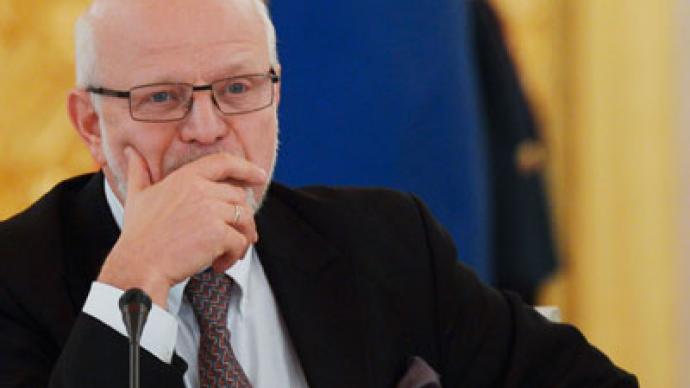
Russia’s Presidential Council for Human Rights has suggested the reduced sentencing for libel and the decriminalization of insulting state officials. The body also proposes to oblige civil servants to respond to criticism in the media.

Under instruction from President Vladimir Putin, the council’s working group also developed a clearer definition of ‘libel’, writes Kommersant daily on Friday. Last year the adoption of a law that re-criminalized defamation in Russia stirred up a wave of criticism, with opponents of the move seeing it as “repressive.”

Currently, the Penal Code defines slander as “the distribution of false information that discredits the honor and dignity of another person, or damages one’s reputation.” Under amendments proposed by the rights advocates, it should be described as “the distribution of false information about a person’s private life with the aim to smear their honor and dignity.”

Besides that, the Rights Council suggested to reduce the maximum punishment for slander from the current 480 hours of community service or a fine of 5 million roubles (over US$166,000) to 240 hours and 120,000 roubles (US$ 3,990).

The authors of the document would prefer to remove libel from the Penal Code – which had been done back in 2011.

The past six months [since its re-criminalization] have shown why it has been returned. It’s a baton against everyone who talks too much – journalists and public activists,” believes Pavel Chikov, a member of the council’s commission on the freedom of information. “At least, the council has suggested to remove [from the law] patent absurdity,” he told the daily.

The rights watchdog is also pushing for the repeal of the article imposing criminal liability for insulting a representative of authority. After insults to any other citizens were de-criminalized in December 2011, it now appears unfair.

At the same time, in the view of the authors of the amendments, everyone who criticizes the government should be protected by law. They suggest introducing a punishment of an up to $66,000 fine or up to 2 years of corrective labor – for “pursuing for criticism.”

In case the amendments get support from over a half of the 62-member Rights Council, they will be forwarded to the Presidential Administration for consideration.


Comments (6)

PR1oh1 17.02.2013 20:32

@Asspress....this is a civil court issue, not a crime. Only third world countries consider this a crime. If Russia wants to be classified with the third world, then this law will go a long way to do that.

0

Undo

smithke 16.02.2013 22:54

I find it sad that a veiw of a group looking to protect freedom seems so disliked looking at the comments and votes. Here in the US, I can tell the president that he has all the value of a stale biscuit (to his face), and nothing can legally happen to me. Opinions against public officials are protected and retaliation is illegal. All issues of libel and slander are handled in CIVIL court, and the burden of proof is on the plantiff to prove damages.

As A local example, Democrat Steve Driehaus lost re-election in 2010 to a Republican challenger. Driehaus then sued the Susan B. Anthony List, citing them as the reason of his defeat after they criticized him over his support of Obamacare (requires abortion coverage in ALL insurance plans, no opt-out even with religious objections amoung other things), stating that in his support, he broke his pro-life promise to oppose abortion.

He failed to prove his case, even with a BIASED judge (the judge served as a president and director of a local pro-abortion lobby group [Planned Parenthood of Cincinnati]). Part of the ruling:

. .. The concomitant principles of free speech and truth collide most violently in the arena of political speech. During the recently passed national elections, citizens were bombarded with political advertisements that the targets of which daily denounced as lies. Who then shall be the arbiter of political truth? Ultimately, in a free society, the truth of political back and forth must be adjudicated in the “marketplace of ideas” ... ... (SBAL) asserts that “Driehaus cannot find a single case, in all of American history, that has awarded defamation damages based on a false statement about a public official’s position on public policy.” ... The law steers far clear of requiring judicial determination of political “truth,” and does so because of the serious dangers to democracy and the political process that would result from turning the courts into “truth squads” with respect to core political speech on matters of public concern.


0

Undo

PR1oh1 15.02.2013 20:51

It is a good idea because rather than the State Arresting someone for a crime, if defamation of character is involved it can be settled in civil court like most modern states. The current law belongs in Iran and NK, not Russia.

0

Undo

View all comments (6)
Add comment

By posting your comment, you agree to abide by our Posting rules

Log in to comment in full, or comment anonymously under character-limit restriction.

100 Text

– required fields

Register or

Name

Password

Show password

Register

or Register

Request a new password

Send

or Register

To complete a registration check
your Email:

or Register

A password has been sent to your email address

Edit profile

Name

New password

Retype new password

Current password

Save

Cancel

Follow us