Cash-strapped Iceland to host “private army” – and Russian jets
Published 31 Aug, 2010 13:35 | Updated 22 Sep, 2010 23:07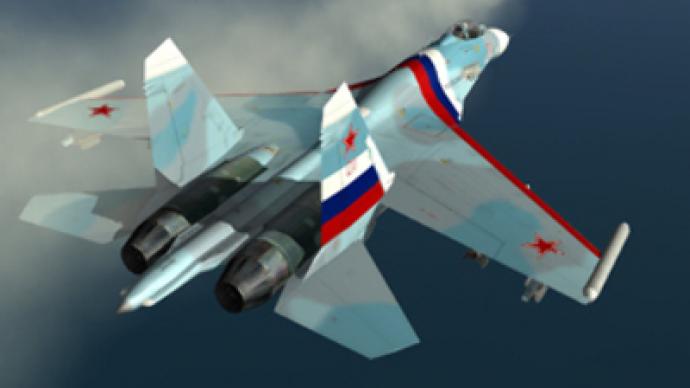
Iceland is set to give a private army contractor the green light in what critics are calling the most ambitious move by a corporation to perform tasks once reserved for national militaries.
Few countries have suffered worse from the global crisis than Iceland, an island of 320,000 in the northern extremes of the Atlantic Ocean that was once hailed – due to its commitment to sophisticated, albeit highly risky financial services – as one of the wealthiest and most developed nations in the world. Those halcyon days are over.
Today, the debt-ridden NATO country is struggling to contain the fallout from a massive exodus of talent as highly educated residents flee the island for employment opportunities elsewhere. These dire economic conditions, observers say, paved the way for a mysterious “private army” to assume control of an airbase in the country.
The private military training company, ECA Program Ltd., reportedly paid $160 million to fill the security void left in the country after the US military abruptly yanked its forces from the Keflavik airbase in March 2006.
According to military analysts, the company will purchase up to 30 Russian-built Sukhoi-27 fighter jets from Belarus and base them at Keflavik where air forces worldwide may pay to use them for mock “dogfights” in aerial war games.
The planned purchase of the fighter jets, which are heavily employed by the air forces of Russia and China amongst others, represents the largest single order for military aircraft by a private investor. The first shipment of aircraft is expected in October.
Despite the economic boost it will provide to the cash-strapped country, the project is facing harsh opposition.
One group, called the Campaign Against Militarism (CAM), has expressed its condemnation of the ECA Program, claiming the company is a front for a mercenary group that was denied permission to operate in Canada. CAM is also known for its efforts to force Iceland out of NATO.
Mercenaries or market players?
According to information available on its website, ECA “answers the training needs of armed forces around the globe. This is possible thanks to the fielding of an integrated system that is composed of individual assets such as aircraft, drones, cruise missile simulators, ground based air defenses, radars, passive ELINT components and jamming complexes. The integration is obtained thanks to the resilient, fully off-road mobile, Command and Control, Communications, Counter-measures (C3CM) backbone.”
At the same time, ECA Program Ltd. stresses that it is “fully independent from any specific government and thus more open to international cooperation” and is not “representing, or influenced, by any military-industrial complex.” Despite these words of assurance, the project is facing increasing hostility as well as suspicion as not all of its claims are adding up.
Melville ten Cate, ECA’s Dutch co-founder, told the Financial Times that ECA has agreed to buy 15 Sukhoi Su-27 “Flanker” jets from BelTechExport, a Belarusian arms export company, with the option to purchase another 18 of the aircraft.
The Financial Times report, quoting an anonymous company official, said the government was “close to giving conditional approval to ECA,” while adding that Reykjavik would “consult its NATO allies” before a final decision was made, he added. So far, so good. But upon further investigation, there appears to be some loose threads in the official story.
The FT article went to say that “much about the deal is shrouded in mystery and several defence industry officials have questioned its credibility – including some that Mr. ten Cate says are involved.”
BelTechExport, for example, denied knowledge of the deal on Monday, after having “previously confirmed it to the Financial Times.” Meanwhile, an official at the Belarusian agency responsible for approving arms exports said he was not aware of the negotiations and Rosoboronexport, the Russian state arms exporter, denied any involvement.
Finally, the sheer overhead costs involved in the purchase and upkeep of 30 sophisticated fighter jets, not to mention the cost of paying for pilots, mechanics and control tower personnel, are causing many observers to question if the company has received the financial blessing of some foreign government. Indeed, any talk of a "private military contractor" these days immediately drags up bad memories of Blackwater (now known as Xe Services), the US company that attracted significant controversy due to its contractual work in Iraq.
Although no connection to outside military contractors or sovereign nations has been revealed, according to a report in The Reykjavik Grapevine, “much is unknown about the source of the company's (ECA Program, Ltd.) finances, and their activities remain obscure – few sources apart from the ECA's own website even mention the work the company has done.”
ECA had originally been hoping to base its operations at Goose Bay airbase in Canada, but turned to Iceland after Canadian authorities went cold on the proposal.
According to military sources, the Russian fighter jets would not carry live ammunition and no training would take place in Icelandic airspace. The extent of the company’s “ground based air defenses, radars, passive ELINT components and jamming complexes,” however, remains largely unknown at this time, yet may be of future interest to Russia, especially given the recent move by the White House to build an anti-missile system in Eastern Europe.
One senior company official at ECA, who spoke on the condition of anonymity, denied that the two complexes would be interoperable.Several Moscow officials, meanwhile, have expressed their surprise at the revelation that Belarus is willing to sell so many state-of-the-art Russian jet fighters to a NATO country. Although such a sale does not represent a security threat for Russia, they say, it does underscore just how severe the global financial crisis has been to many countries that are now willing to undermine their national security to make a quick buck.
Russia first invited to Iceland’s airbase
In December 2008, Icelandic President Olafur Ragnar Grimsson shocked neighboring Nordic countries when he invited Russia to make use of the strategic airbase.
“Foreign diplomats hardly believed what they heard when the Icelandic president said that his country needs ‘new friends’,” according to a report in The Barents Observer, “and that Russia should be invited to make use of the old US airbase of Keflavik.”
Grimsson reportedly accused neighboring countries of “failing to support crisis-ridden Iceland,” adding that “Iceland should rather make new friends.”
According to Dagbladet, the Norwegian daily, the Russian ambassador present at the lunch was “rather perplexed by the invitation,” saying that “Russia does not really need the airport.”
Iceland does not have its own armed forces, and has been solely dependent on military cooperation with NATO allies instead. The United States, which had assured Iceland's defense for decades, stunned the country in March 2006 when it announced it would shut down its bases on the island, yanking its F-15 fighters and servicemen in the space of just six months.