Medvedev reaches Cuba
Published 27 Nov, 2008 20:24 | Updated 27 Nov, 2008 23:24Dmitry Medvedev is in Cuba. He's the first Russian president to visit the country in eight years. This is the last stop of Medvedev’s tour of countries in Latin America, aimed at restoring links and boosting trade.
The first stop for Medvedev upon arriving in Havana was the José Martí memorial. The Russian president laid wreathes at the Cuban national hero’s monument.
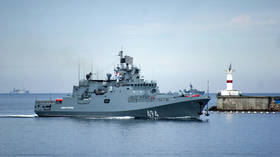
Medvedev flew in from Venezuela, where he had taken his Venezuelan counterpart Hugo Chavez on a tour of a Russian destroyer.
Saluting a friend or warning an adversary?
As Russian warships ventured into the Caribbean for the first time in two decades, the cold breeze of Western criticism reached the Venezuelan tropics.
Four ships from Russia are in the Caribbean for joint manoeuvres with the Venezuelan Navy. Dmitry Medvedev was the first Russian leader to visit the country.
The talks between Russian President Dmitry Medvedev and his Venezuelan counterpart Hugo Chavez are making headlines around the world with Western commentators alleging Russia was drawing Venezuela into a new Cold War.
Just a few years ago it may have been all about weapons but most of the agreements signed during this visit were for civilian projects.
And apart from military and technical cooperation, the focus was on joint energy projects, trade, the creation of a Russian-Venezuelan bank and an agreement paving the way for the building of Venezuela’s first nuclear power plant. The nuclear deal was signed during Medvedev’s visit and has attracted a considerable amount of media attention in the West.
Heading off criticsm from the West, the chief of Russia’s state nuclear corporation, Rosatom Sergey Kirienko, said “there have never been any grounds to doubt the peaceful nature of [Venezuela’s] nuclear industry.”
Meanwhile, the Russian President repeated the Kremlin’s position that Russia-Venezuela cooperation is not aimed at any other governments.
And as for the reproach for the arrival of the Russian nuclear-powered cruiser to the Caribbean, even Hugo Chavez felt the urge to react.
“These exercises are not directed against anyone. In the past we held drills with Brazil, France and the Netherlands. And we are honoured to welcome Russian ships here,” he said.
He also pointed out that there are plenty of differences between Russia and the Soviet Union.
Unlike their predecessors, Russians don’t want to pay for their alliances. In fact, as Kremlin officials like to say, they want alliances that can pay back.
And Venezuela is a prime example. With $US 4 billion worth of contracts, Caracas is Moscow’s leading trade partner in the Western hemisphere.
“We are developing both political and economic cooperation. Only this way it is possible to achieve results. When cooperation is based purely on economy – with no political unity, as a rule, it does not last long. And on the contrary, when leaders forget about economy, about joint projects, such political cooperation leads nowhere, too!” Medvedev said.
But nevertheless, as France24 reported, Moscow-Caracas talks “are likely to irk Washington.”
Citing its diplomatic correspondent, Jonathan Marcus, the BBC said: “the Russian president's aim is to show Washington, where President-elect Barack Obama is preparing for office, that if the U.S. does things in Europe near Russia's borders which Moscow does not like, then Russia can pursue its own policies in a region long seen by Washington as its backyard.”
Yet despite all the smiles and handshakes, Moscow’s camaraderie with Caracas has limits.
Medvedev’s arrival in Venezuela coincided with a summit of staunch U.S. critics, searching for an alternative to America’s strategy for solving the global financial crisis.
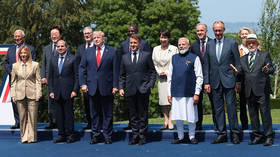
Although not taking part in the third Bolivarian Alternative for the Americas (ALBA) summit, Dmitry Medvedev has met with top officials of its member-states. The Russian president was repeatedly invited to attend but took a rain check.
And while officials from both sides never tire of stressing the strategic nature of their alliance, numbers speak for themselves. Hugo Chavez has visited Russia seven times, while Dmitry Medvedev is the first ever sitting Russian leader to step on Venezuelan soil.
The Kremlin may be eager to show off, but its friendship with Caracas comes with the same reservations as the antagonism toward Washington.