Netanyahu's "second-hand goods" might offer an opening to peace
Published 17 Jun, 2009 14:23 | Updated 17 Jun, 2009 18:23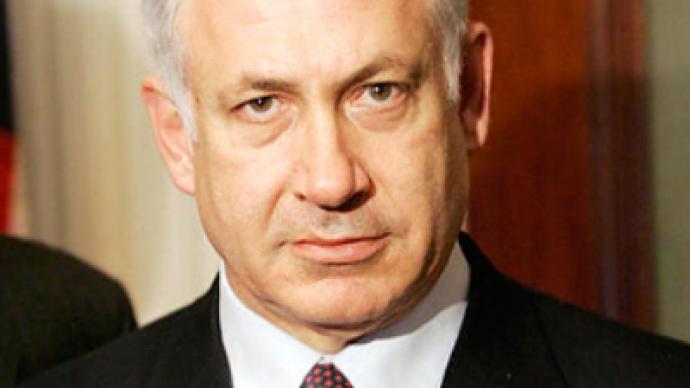
After a week-long buildup to his first policy address, Israeli Prime Minister Benjamin Netanyahu told the world this week he was prepared accept a Palestinian state alongside Israel.
The build-up was a drum roll that might have been appropriate to the Sermon on the Mount. The initial reaction in much of the Israeli media was that Netanyahu was trying to palm off second-hand goods – the same policy had been announced by every one of his predecessors in the past 17 years. In addition, the numerous conditions he stipulated seemed to skeptics designed to prevent a Palestinian state from actually rising.
“Welcome to the 20th Century,” wrote columnist Ben Caspit, addressing Netanyahu. “The problem is we’re already in the 21st Century.”
There is, however, a more generous way of examining the turnaround of Netanyahu who for decades had declared a Palestinian state to be a mortal threat to Israel. In listing his pre-conditions, he was spelling out existential fears shared by all Israelis; fears not generally voiced. But he was also proposing concrete ways of dealing with them.
The basic fear is that all Palestinians, indeed all Arabs, want Israel to disappear: not because they are evil but because they regard the Jewish state as an intolerable intrusion on to their land. Having tried and failed in several wars to achieve their goal, they are believed to be falling back to Plan B – letting demography and time do the job. With Israel’s own Arabs already constituting 20 percent of the country’s population, a massive return of refugees to Israel – as the Palestinians demand – would eventually terminate the Jewish majority, given the high Arab birth rate. If Plan B fails, there is always Plan C – going to war again, this time with missiles from Arab states and a close-in attack from Palestine and perhaps from Israeli Arabs as well.
By offering concrete proposals for meeting these threats, Netanyahu was not just piling up impediments to peace, as ex-US President Jimmy Carter charged this week. The Israeli leader was suggesting ways that could make peace a down-to-earth possibility rather than an empty slogan.
His demand that the Palestinian state be demilitarized is shared by Israelis of every political coloring. In informal discussions over the years, many Palestinian leaders have accepted that stipulation, recognizing Israel’s sense of vulnerability. After the experience with Gaza, from which total Israeli withdrawal was followed by the firing of thousands of rockets into Israeli communities, Israel will clearly not let the same thing happen in the West Bank. In this light, the demand that the Israeli Air Force control Palestinian air space, which dominates the Israeli heartland, is not unreasonable. Nor is Netanyahu’s demand that a Palestinian state not enter into a treaty with an entity hostile to Israel, like Iran or Hezbollah. The Palestinians could regard these demands as humiliating violations of sovereignty. For Israel, they are a matter of life or death.
Netanyahu’s rejection of the return of Palestinian refugees to Israel is a consensus view in Israel, although there are some who believe a relatively small, symbolic number could be permitted back. There is no such consensus about his demand that Jerusalem, including Arab Jerusalem, remain united under Israeli rule. Many Israelis, perhaps a majority, favor returning the Arab neighborhoods to Palestinian control in order to reduce the number of Arabs living inside Israel. In final negotiations, that view is likely to predominate.
Palestinian Authority negotiations department head Saeb Ariqat stated: "The peace process can be compared to a turtle, and now that Netanyahu has turned it over, it's lying on its back. Not in a thousand years will Netanyahu find a single Palestinian who would agree to the conditions stipulated in his speech.” However, the initial reaction from Washington to the speech was positive. A White House spokesman said President Obama “welcomes the important step forward in Prime Minister Netanyahu’s speech”.
By accepting the idea of a Palestinian state, Netanyahu is following two other stalwarts of the right-wing Likud camp, Ariel Sharon and Ehud Olmert, who upon becoming Prime Minister shed their hawkish views and attempted to negotiate peace with the Palestinians. Their experience suggests that the task is impossible without forceful involvement by outside intermediaries, principally the United States. These intermediaries will also have to engage the Palestinians and determine whether they have truly reconciled themselves to Israel’s existence or whether they are simply resting their hopes on Plans B or C.
Abraham Rabinovich for RT