ROAR: “Changes and political inertia” determine Russia-US reset
Published 15 Jan, 2010 12:17 | Updated 15 Jan, 2010 15:28
US Undersecretary of State for Political Affairs William Burns has stressed in Moscow that the agreements in the framework of resetting relations between the two countries still work.
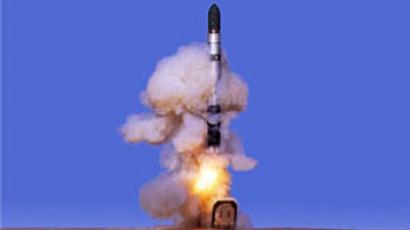
Burns visited Moscow to discuss a new treaty on strategic offensive arms reduction and other main issues, including Iran and Afghanistan. The media quote him as saying that the talks on the new treaty “can be concluded soon.”
The START 1 treaty expired on December 5, and many hoped that a new agreement could have been signed by the end of December last year. However, the two countries must still agree upon some important issues. In Moscow, Burns met with Deputy Foreign Minister Sergey Ryabkov. The Russian diplomat also said that “technical things… can be solved in a very short period of time.”
Igor Lyakin-Frolov, deputy director of the Russian Foreign Ministry's information and press department, told Nezavisimaya Gazeta daily prior to Burns’s visit that the talks on the treaty “have not been interrupted.” The diplomats “are maintaining contacts and exchanging opinions,” he said.
However, there are disagreements as to whether the link between offensive and defensive arms – or strategic arms and missile defense – should be reflected in the new treaty, the paper said.
On the eve of the New Year Prime Minister Vladimir Putin said that Russia would develop non-nuclear offensive combat systems in order to keep a balance with the US plans for a missile shield.
The Prime Minister also said that Russia is ready to transfer telemetric information to the US on missile launches, but it expects Washington to share information about its plans in the missile defense sphere.
Retired Maj. Gen. Vladimir Belous believes that the link between offensive and defensive strategic arms has now become of great importance, despite the fact that it has a long history dating back to President Ronald Reagan’s plan of “Star Wars.’”
The talks on arms reduction will be successful if the parties are able to reach a compromise, taking into consideration Russia’s concerns about the US missile defense system, Belous told Nezavisimaya Gazeta daily.
The analyst is rather skeptical about the perspective of a quick agreement. He doubts that all main issues have already been solved at the negotiations on arms reduction and that only “details” had to be agreed upon. “Sometimes the main problem is just in the details,” he told the paper.
As the negotiations of the new treaty are expected to resume at the end of January or early in February, the attention of politicians and the public is again focused on the whole specter of Russia-US relations, Actualcomment.ru said. Aleksey Zudin, Deputy Director of the Center for Political Conjuncture, told the website that these relations are determined now by two factors, “changes and political inertia.”
Both countries have new presidents, the analyst said. But he added that despite the fact that the US now relies upon “tough power” and speaks about resetting relations with Russia, the new administration is continuing in many ways policies of the previous president.
This is partly explained by US’s “permanent geopolitical interests,” he noted. “It is good that relations have improved,” Zudin said, but added that he would not hope too much in their quick progress.
Some analysts even went so far as to speak about “the malfunction” of the reset. However, the most important thing is that “we turned from hostility to suspicious indifference,” Boris Mezhuev, editor of Russian Journal online magazine, said.
“Americans has been interested in many things, and they have received a lot,” Mezhuev told Actualcomment.ru. “Cooperation on Afghanistan will probably continue in the future,” he said. Despite the fact that the talks on the strategic arms treaty have not led to any significant success, they will also be concluded soon, he added.
“But, frankly speaking, the practical side [of the cooperation] is limited by this,” the analyst said. “I think the replacement of some level of respect verging on fear by benevolence verging on disdain is not the best positive background for cooperation,” he stressed.
“It is no friendship, no serious reset, it is rather a temporary respite in our relations, which is connected to the fact the Americans have decided to rely on the time factor,” Mezhuev said. “We should rely in this factor too, because we have been given a certain chance to deal with our internal affairs.”
Meanwhile, Washington again showed interest in constructive dialogue with Russia when Burns discussed in Moscow the work of the bilateral presidential commission. It has two working groups covering arms control issues, international security and political coordination. Burns said that this structure and the discussions that have begun could be translated into tangible results in the near future.
Observers say that one of the issues that need coordinating is the US military transit to Afghanistan through the Russian territory. Despite the two countries agreeing on the issue in last summer, some observers say the transit still does not work and the Americans allegedly have used the possibility only once.
However, in Moscow Burns has not confirmed statements about the failure of the plans to use the transit agreement. “We've used it several times already and I think you’ll see us making increasing use of what is a very helpful transit agreement in the coming months,” Burns told Gazeta.ru online newspaper.
The two countries have made “progress in our common efforts in Afghanistan, in trying to build stability there and in dealing with the threat posed by Al-Qaida and violent extremists,” Burns said.
He also stressed that the transit agreement will be used more often in the near future, adding that “Afghanistan is an area in which the United States and Russia and our other international partners share a strategic objective.”
Sergey Borisov, RT