ROAR: Wajda’s “Katyn” shown on Russian TV before premiers’ meeting
Published 5 Apr, 2010 12:08 | Updated 16 Apr, 2010 15:52
A film by prominent Polish director Andrzej Wajda about the massacre of Polish officers by Soviet soldiers in Katyn in 1940 premiered on the Russian TV channel Kultura on April 2.
The appearance of the film in Russia is seen as a positive sign in Russian-Polish relations as the two countries are still arguing about the role the Soviet Union played before the start of WWII. Over 20,000 Polish prisoners, mainly officers, were executed after the partitioning of Poland by Nazi Germany and the Soviet Union in 1939.
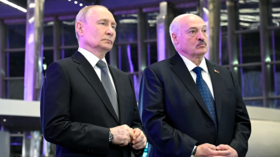
The fact that the massacre was staged by the NKVD police force in a forest near Smolensk in Western Russia was recognized by the Soviet Union in 1990. Russian Prime Minister Vladimir Putin and his Polish counterpart Donald Tusk will take part in the memorial service marking the 70th anniversary since the tragedy on April 7. Polish President Lech Kaczynski is expected to attend a memorial service on April 10.
Putin visited Poland in September last year to mark the beginning of WWII, and called the Katyn events “a crime” and asked for “forgiveness”. All European countries bear their share of responsibility for the war, he added.
Russian politicians and historians have stressed that many Soviet people were also killed in Katyn during repressions of the Stalin era.
A museum and church complex will be completed in Katyn by summer 2011, Kultura TV channel said. One of the goals of archivists is to establish the name of Russian citizens who were executed there, deputy director of the museum Galina Andreenkova said. “The names of the Polish officers buried there are already known,” she added.
The Kultura channel on April 2 changed its normal schedule to show the Wajda film on Katyn, which was made in 2007. The appearance of the film on Russian TV screens is “an unprecedented and at the same time a deliberate action,” said Sergey Shumakov, Editor-in-Chief of the channel.
“We believe that the viewers of Kultura are worthy of being the first in Russia to see a real big film which provokes a burning interest and fierce arguments in society,” Shumakov was quoted as saying by the channel’s website.
The film was followed on Kultura by a discussion of Russian historians and public figures. “Katyn” is considered by many as political, although the director wanted to shoot a film “about a human tragedy,” said Vitaly Tretyakov, political scientist and dean of the Higher School of Television at Moscow State University.
In his film “about the Katyn tragedy and the Katyn lies” Wajda condemns not Russia or Russians, but Stalinism that, as the movie shows, is directly associated with the Soviet Union, wrote Tretyakov in his blog.
Polish people who sided with “the Katyn lies,” that is, the Soviet Union, were the second to be condemned in the film, the analyst said. As for Nazism and Hitlerism, they are “on the edge of the director’s focus of attention,” Tretyakov added.
Another problem is that in the film Poland is shown only as “a suffering subject of European history of that period,” the analyst said. But Wajda “is a great master and a clever and honest man” and offers “no propaganda,” he added.
At the same time, Tretyakov was rather skeptical while speaking about the film’s perception by Russians. “I do not think that the film will impress the viewers much, though its appearance on TV will become a serious political event,” he said.
“It is clear that this is a political event,” Tretyakov said. “But I doubt that the arguments about Katyn will settle and the relations between Russia and Poland will be repaired.” The fact that the film was shown on Russian TV “will change the policy of modern Poland toward Russia for the better no more than by one or two degrees,” the analyst noted.
Historians and archivists who commented on the film said that “it represented the facts,” Vesti.ru website said. “Now nobody tries to dispute that the execution of thousands of Polish officers had been committed not by the Gestapo, but by the NKVD, who executed their own citizens in this way too,” it added.
Konstantin Kosachev, the head of the State Duma Foreign Affairs Committee, described the film as “a milestone in the realization of our common history by Poles and Russians.” At the same time, one may not agree with the way the director showed the facts”, he added.
One of the most important topics the film concerns is the hiding of the truth about Katyn, which lasted for many years, believes historian Mikhail Narinsky, the head of the Department of Foreign Policy at the Moscow State Institute of International Relations.
Kultura channel does not have an audience as big as other Russian state TV channels, observers say. However, the fact that Wajda’s “Katyn” was shown in Russia is evidence of a “serious advance of public conscience on the way to restoring historical justice,” Rossiyskaya Gazeta daily said.
“The film perfectly and precisely shows the historic truth,” believes the head of the Federal Archive Agency Andrey Artizov. “Moreover, this is a film that shows the tragedy suffered by both Polish and Soviet citizens,” he said.
Nevertheless, the execution of Polish officers by NKVD in Katyn in spring 1940 “remains a sensitive problem in Russian-Polish relations,” the paper said. The problem was politicized partly because no documents were available to the public. Now, practically all the documents concerning Katyn have been declassified, Artizov told the daily.
Among these documents is the order by the Political Bureau of the Communist Party’s central committee signed on March 5, 1940, Artizov noted. Only documents of the investigation on the Katyn events conducted by military prosecutors in the 1990s are classified now, as well as a number of documents that “do not change the essence of the crime,” he added.
“Katyn is a tragedy for all victims of Stalinism,” Izvestia daily said. Putin and Tusk will visit “a place where 4404 Polish officers were shot by the NKVD and buried,” it added. More than 20 years have passed since Russia recognized the atrocities of Stalin’s regime, but there are still a lot of versions and interpretations, the daily added.
Poles consider the events the most painful point of their history of the 20th century, explained Aleksandr Chubaryan, the director of the World History Institute of the Russian Academy of Sciences. Also, there has been a lot of mythology about the Katyn massacre, he said. At the same time, some tend to politicize it, he added.
Over 8,000 Soviet citizens executed by the NKVD are buried in Katyn, Chubaryan said. “I believe it is a little known fact in Poland, and the Polish public is not well informed of it, except relatives of officers,” he added.
There are sentiments in Poland against Russia, as well as in Russia against Poland, Chubaryan said, adding that this “should be overcome.” At the same time, Russia and Germany set a good example, the historian noted. Nobody in Russia condemns ordinary people or politicians in modern Germany for the crimes of the fascist regime, he added.
Sergey Borisov, RT
Russian Opinion and Analytics Review