Common economic space may “absorb” Union State of Russia, Belarus
Published: 18 October, 2010, 17:55
Edited: 19 October, 2010, 18:13
TAGS: Meeting, Putin, Russia, Politics, Belarus
As many analysts consider the results of the meeting between the prime ministers of Russia, Belarus and Kazakhstan as positive, the prospects of the Union State of Russia and Belarus still remain unclear.
Common economic space may abolish the Union State of Russia and Belarus, as Minsk does not hurry to take “political decisions,” Vremya Novostey daily said.
The participants of the Customs Union of the three countries on Friday “agreed on most important issues of the establishment of a common economic space,” the paper said. “According to the compromise, at the beginning the status-quo, advantageous to Russia, remains, and then Moscow will gradually meet the wishes of its partners.”
The process of creating a common economic space on the territory of the former Soviet Union has good potential to expand, Prime Minister Vladimir Putin said. Other countries, first of all, Kyrgyzstan and Tajikistan, may join it in the near future.
On the other hand, the future of the Union State of Russia and Belarus “is increasingly becoming problematic,” the daily said. Answering a question of a Belarusian journalist, Putin stressed that “the Union State will be absorbed by the common economic space if we do not go at a rapid pace on other sensitive directions.”
One of the most important issues for Moscow is a single currency, and now “the Belarusian side should take a political decision,” the daily noted.
During the meeting in Moscow, Belarusian Prime Minister, Sergey Sidorsky, defended the Union State, describing it as a platform for discussing a wide range of the issues of cooperation between the two countries. “And the economic cooperation is the basis for developing other spheres and directions, such as science, culture, healthcare and education.”
However, many analysts note that the Union State has unclear prospects. “In the political sphere, this project has been set aside for a long time, it is not developing,” believes Belarusian political scientist Pavlyuk Bykovsky. “Recently, this project has not been talked about much, neither in Russia nor in Belarus,” he told BFM.ru website.
Vedomosti daily has described the atmosphere of the Friday talks as “unexpected mutual understanding”, even if the problems that exists in the Russian-Belarusian relations are unlikely to disappear quickly.
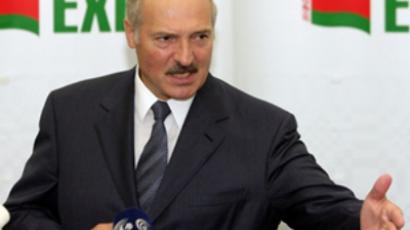
“The peaceful result of the meeting can be considered a signal of the Russian authorities that in the absence of Aleksandr Lukashenko, Russia and Belarus are able to come to agreements,” political scientist Mikhail Vinogradov told the paper. “All the agreements have been reached at the level of prime ministers.”
Sergey Borisov, RT

Munich security conference chance to shape new agenda – FM spokesmanOn October 14, 2010, Foreign Ministry spokesman, Andrey Nesterenko, briefed journalists about the upcoming Munich security conference, and other foreign policy events. |
19.10.2010, 11:38
12 comments
Go back to where you are happy – German author on immigration issueImmigration tensions are rising in Germany following Chancellor Angela Merkel's statement that multiculturalism has failed in the country. |
I am fascinated by these developments, if solely from an academic perspective. We have ASEAN, CarriCom, the EU and others aside. So what is this one going to be called? does it have a name yet? The emergence of these trans-national intergovernmental and supranational associations is very interesting to watch. There organic growth though series of treaties. It's entirely natural that the Eurasian one should closely resemble the former Soviet Union. You can't just disregard history and a common cultural heritage. There’s one thing I’m sure though, provided integration proceeds at a swift and steady pace as well as in a careful and considered way, Given Russia's economic might and the shear size of the combined areas involved it will be a regional power guaranteed a key role on world stage in the years to come.
The Soviet Union is over, so now the Common economic space can include other member states. While the Baltics are in the E.U., the Eurasian Economic Space can include a more open Iran in the future, Mongolia and perhaps Turkey, which already enjoys a Customs Union with the E.U. Georgia could be the link between Russia and Turkey...


" The peaceful reset of the meeting can be considered a signal of the Russian authorities that in the absence of Alexander Lukashenko, Russia and Belarus are able to come to agreement," political scientist Michail Vinogradov told papers. " All the agreements have been reached on the level of prime ministers". Political scientists chosen to elaborate on this website seem to become very complacent about certain standards of an average yet not so gullible readers beyond Russia. The article deliberately avoids the fact that Belarusian prime minister was asked by Lukashenko " to set a task to get some twenty basic agreements on single economic space by the end of 2010". Michail Vinogradov conveniently 'forgot' to mention that this task doesn't require the presence of Belarusian and Russian presidents and only requires finding solutions on the level of prime ministers. Although the Belarusian delegation was ready to compromise, to announce that all the agreements have been reached is premature and misleading. Unless Belarusian currency is due to be 'trade' for Russian roubles and the Belarusian consumers decided to drop their European inspired 'sophistication' in favour of the Russian car models. The overwhelming optimism of this project may be also shared by the predicted anticipation in figures: if up and running, by 2015 the Russian Federation will scoop $400 billions while Belarus and Kazakhstan will have $16 billions each. Shouldn't we question more the economic parity or wait for Astana to make headlines?