Russia, NATO work to restore relations
Published 30 Sep, 2009 10:26 | Updated 30 Sep, 2009 23:01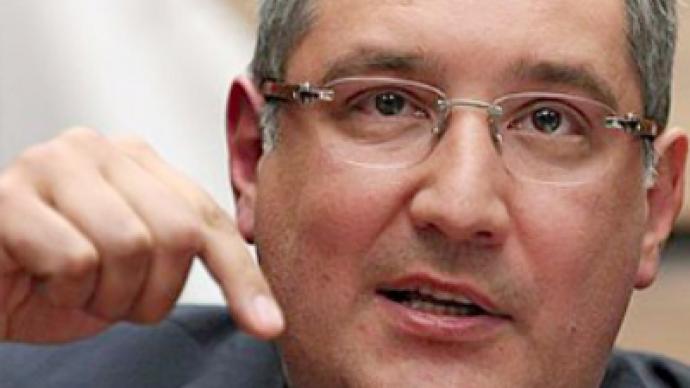
Russia and NATO are starting a new stage of mutual relations on Wednesday. The major lines of cooperation are strengthening security in Europe, military-technical cooperation and a combined effort in fighting terrorism.
The relations between Russia and NATO have never been easy. Despite the fact that the open military confrontation ended with the collapse of the Warsaw Pact and the Soviet Union, the two sides have had difficulties in building mutual trust.
The military nature of the North Atlantic Alliance always aroused Russian suspicions and NATO’s eastward expansion that started in the early nineties caused direct opposition as the Russian side saw it as a violation of promises given to Russia as it had agreed to the reunification of Germany. After some time the relations started to settle and Russia joined the Partnership for Peace program, but a new blow was delivered by the NATO bombings of Russia’s Balkan ally Yugoslavia in 1999. Great work was done to repair the damage and in 2002, as the two sides agreed to create a special diplomatic body called the Russia-NATO council. However, the effort was compromised again last August as Russian military forces repelled a Georgian attack on the republic of South Ossetia. Soon after the conflict Russia recognized South Ossetia along with Abkhazia as independent states.
The South Ossetian conflict led to a complete freeze in relations between Russia and NATO, but Russia repeatedly claimed that it was ready for renewal. This has happened now, one year after the events and soon after the reelection of the NATO Secretary General.
Anders Fogh Rasmussen paid great attention to ties with Russia in his very first speech as Secretary General at the recent meeting with US President Obama and several recent interviews. His proposals to Russia boil down to three key subjects: joint work in fighting terrorism and ensuring security; developing political dialogue by restarting the work of the Russia-NATO Council; and finally a joint estimation of threats and challenges.
Once again, Rasmussen assured the Russian side that NATO was not an enemy, but was firm in the position regarding the bloc’s expansion. “Russia must realize that NATO is here to stay,” the Secretary General said in his first speech, but added that NATO must also recognize Russia’s legitimate interests.
Dmitry Rogozin, Russia’s envoy to NATO, also expressed hope that the relations with the military bloc would start improving after the long stall. Rogozin spoke to Russian news television channel Vesti and gave a positive account of Rasmussen’s speech.
“I cannot recall over the whole period that I have worked in Brussels, and the veterans of Russian foreign politics cannot recall either that the Secretary General of NATO would start with a full-pledged address wholly dedicated to Russia-NATO relations. But this was what he did. Anders Fogh Rasmussen is trying to implement something what few people in NATO headquarters believe. He is trying to recreate these relations in a way that creates a common strategic interest. If he is sincere in doing so – more power to him – we will grant him support,” Rogozin said.
“We must sit at the table and, at last, instead of arguing, instead of two monologues and not a dialogue, we must start talking about threats aimed against the European Continent, including its Western and Eastern part,” Rogozin said. He went on to suggest that NATO officials withdraw all offensive weapons from the Russia-NATO division line, so that the modern weapons could be deployed at directions that are under threat, which, in Russian official’s view, was primarily the Southern direction. Such a move could mark the beginning of the true demilitarization process in Europe, Rogozin said.
Speaking of a joint fight against terrorism, Rogozin said that he expected a decision to set up a post for a representative of the Russian Federal Security Service with a permanent office in NATO. “The FSB deals with anti-terror issues and they will have official contacts with corresponding bodies in NATO,” Rogozin said.
Kirill Bessonov, RT