Mission Impossible? Ex-Ministers suggest ways to restore Russia-US partnership
Published 16 Jan, 2013 09:57 | Updated 16 Jan, 2013 14:10
As relations between Moscow and Washington turn increasingly frosty, two former high-ranking Russian and American officials have called for a series of measures to bring the two nuclear superpowers back in from the cold.
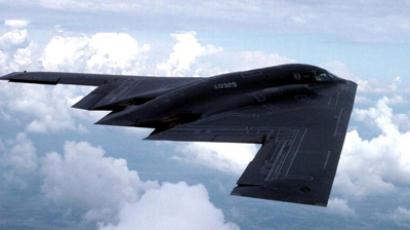
Former Russian Foreign Minister Igor Ivanov, together with former US Secretary of State Madeleine Albright, co-wrote an article in The New York Times (“A New Agenda for U.S.-Russia Cooperation,” Dec. 30, 2012) that suggests various bilateral-building initiatives between the two former Cold War foes.Albright and Ivanov believe that since Presidents Vladimir Putin and Barack Obama are back in power for another six years and four years, respectively, the time is ripe for Moscow and Washington to restore the shine to the partnership. But is the nostalgia for the Clinton-Yeltsin era, when Russia and America – not to mention Albright and Ivanov – enjoyed all the advantages of a rock-solid Russia-US relationship, clouding their perception of the current realities?On the other hand, are the two former high-ranking Russian and American officials correct in their assumption that putting the Russia-US relationship back on track simply requires the fine-tuning of a few diplomatic channels?Whatever the case may be, the first step, they advise, is to put arms reduction between the two countries on the fast track.Considering the question as to whether it is necessary to wait until 2018 for reducing nuclear stockpiles, "START III has become a truly important achievement in (the reduction of nuclear weapons), but it is possible to do more,” they write.Reminding that "Russia and the United States control 90 to 95 percent of the world’s nuclear weapons,” Albright and Ivanov believe it is possible to “continue negotiations of further reductions and still safely ensure our security.”There is just one problem, however, with Russia agreeing to any substantial cuts in its ballistic missile arsenal: America has shown its determination to build an all-encompassing missile defense shield in Eastern Europe. In other words, Washington apparently thinks that Moscow will drop its sword at precisely the same time the US is constructing a mighty shield . Albright and Ivanov, admitting that the US missile defense project “continues to cast a shadow over possible progress on arms control, even though both NATO and Russia say they want to cooperate in that sphere," may be underestimating the chances for setting things straight.Indeed, there is a vast difference between words and deeds, as Russia is keenly aware as the US and NATO hold out promises on cooperation on the project that continually lead to a diplomatic dead-end. Moscow, clearly at the end of its political patience, has warned that the construction of the system – without Russia’s participation – would upset the strategic applecart, thus putting the world at risk of another arms race. Despite such unappealing prospects, the US and NATO refuse to heed Russia’s warning, continuing on the construction of the project just miles from the Russian border.Nevertheless, Albright and Ivanov remain positive that their two governments will find a way to overcome the atmosphere of mistrust that the ABM system has created.Saying that “now is the time to be creative,” they go so far as to argue that missile defense could ultimately prove to be a “game-changer,” thereby uniting NATO and Russia “in protecting Europe."While such a turn of events would certainly put the shine back in the bilateral relationship, are Madeleine Albright and Igor Ivanov being overly optimistic and even unrealistic about the chances of such a change of heart on the part of Washington?After all, many Americans, and not least of all Americans who belong to the Democratic party, have given up hope on Barack Obama, who has backtracked on a number of dusty campaign pledges, including his promise to shut down the Guantanamo Bay detention facility, as well as the pledge to “sit down and talk with America’s enemies.” If unleashing aerial hell on America’s enemies courtesy of drone attacks may be considered “talking,” then Obama has certainly kept his word on that point (the US leader has authorized just under 300 drone attacks in Pakistan, six times more than during George W. Bush's two-term presidency).In other words, if Barack Obama finds it so easy to retreat from his promises to members of his own constituency, it seems highly probable that he will find it equally easy to go back on his word with the Russians. Meanwhile, Albright and Ivanov argue that the combined efforts of their respective governments in slashing nuclear stockpiles will set an example for other countries, possibly even enhancing the “credibility of our diplomacy in mobilizing international pressure on Iran to refrain from trying to build a nuclear weapon.”Some countries, including the United States and Israel, believe that Iran is attempting to build a nuclear weapon. Tehran vehemently denies the claims, saying they are conducting nuclear research in an effort to provide a reliable energy source for their people.Albright and Ivanov mentioned other trouble spots in the relationship, including their stance on Syria, where a western-backed militant opposition is attempting to usurp President Bashar al-Assad. Despite differences in the bilateral relationship, “[I]t is essential not to interrupt dialogue even on those issues where positions differ substantially,” the article says.On the question of Afghanistan, that has been the scene of a long war between Coalition forces and the Taliban,“Washington and Moscow, together with others, should support Afghan leadersinconstructingastablesociety, ableto withstand pressure from violent extremist groups," it says.Indeed, the cornerstone of the Russia-US relationship has been the declared willingness to work together in the fight against terrorism, as well as on other fronts. Albright and Ivanov called on Moscow and Washington to put disagreements behind them and “embark on a historic mission to start a new chapter” in relations between the two countries.While that would represent a chapter of a book that many people on both sides of the Atlantic would like to read, it will be interesting to see if Moscow and Washington have the political will to move their relations forward the next four years.Albright currently serves as a Professor of International Relations at Georgetown University's Walsh School of Foreign Service, while Igor Ivanov serves as President of the Russian International Affairs Council (RIAC).Robert Bridge, RT