VERSIONS: روسيا اليوم NOTICIAS FREEVIDEO ИНОТВ RTД FIND US ON: YouTube Twitter
breakingnews
Go to main page   Politics   Russia-US START talks underway  
MORE ON THE STORY
25.06.2009, 05:50 15 comments

US Congress wants to be “best friends” with Russia

With just two weeks to go before President Obama's visit to Moscow, nuclear disarmament is the hot topic in the US Congress, as Russia and America have only six months left to reach a compromise on a new weapons treaty.

Medvedev-Obama
17.04.2010, 10:25 6 comments

Iran holds nuclear summit of its own in response to US

A nuclear disarmament conference is underway in Iran, with up to 60 countries taking part in it. It comes as the UN discusses possible new sanctions against Iran.

19.03.2010, 17:03 3 comments

Moscow-Washington: reloaded

The Russian-US relations reset has become a reality, said Russia’s Foreign Minister after the meeting between President Dmitry Medvedev and US Secretary of State Hillary Clinton in Moscow.

26.03.2010, 15:02 5 comments

Strategic arms deal to be signed in Prague

A new nuclear arms reduction treaty will be signed by the Russian and American presidents on April 8 in the Czech capital Prague, as agreed during a phone conversation between Dmitry Medvedev and Barack Obama.

18.03.2010, 19:18

START pulling into the home stretch – Lavrov

US-Russian negotiations on a new START treaty in Geneva are approaching the finishing line, said Russian Foreign Minister Sergey Lavrov after talks with US Secretary of State Hillary Clinton in Moscow.

02.04.2010, 20:05 5 comments

Anti-missile defense still a concern for Russia on eve of START deal

As Russia and the US prepare to sign the new START treaty on April 8, Russia plans to put forth a statement detailing conditions under which it could withdraw from the deal.

US President Barack Obama on the Nuclear Security Summit on April 11, 2010 in Washington (AFP Photo / Mandel Ngan) 12.04.2010, 16:32 4 comments

Global leaders, minus Israel’s Netanyahu, gather for Washington nuclear summit

Israel is apprehensive that some leaders at this week’s nuclear security summit will use the event to put the spotlight on the nationl’s undeclared nuclear arsenal.

Medvedev-Obama
Mahmoud Ahmadinejad visiting the Natanz uranium enrichment facilities (AFP Photo / HO) 24.09.2009, 13:05 3 comments

“Existing non-proliferation regime inadequate”

Many countries, not only Iran and North Korea, would want the nuclear technology, so a global legal regime is needed to allow them use it for scientific purposes, says Fred Weir from Christian Science Monitor.

13.10.2009, 11:15 2 comments

Clinton in Moscow to talk missile defense, nuke reduction and Iran

Russia and the US are set to thrash out a new deal on nuclear arms cuts and discuss missile defense as US Secretary of State Hillary Clinton prepares to sit down for talks with President Medvedev.

24.10.2009, 05:03 2 comments

«Russia carefully studies new US missile defense plan»

Russia will closely watch the US anti-missile preparations in Europe to see how it matches its security interests, said Russian Foreign Ministry spokesman Andrey Nesterenko during the latest media briefing.

Russia-US START talks underway

Published: 18 May, 2009, 19:15

(26.0Mb) embed video

TAGS: Arms, Meeting, Nuclear


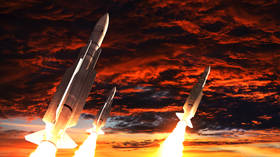
Russia and the United States are due to begin talks on Tuesday on a new treaty to reduce the number of nuclear weapons.

A source in the Russian Foreign Ministry told Interfax news agency that it will be “the first substantive discussion” of a new treaty and not “simply an exchange of opinions.”

Assistant Secretary of State Rose Gottemoeller is on her way to Moscow as head of a US delegation preparing the way for President Obama's visit in July.

The Strategic Arms Reductions Treaty, or START 1, which was signed in 1991 currently places a limit of 6,000 warheads on each side. It is due to expire in December.

The Russian and American presidents agreed during their first meeting in London in April upon an immediate start to new START talks. Experts believe that the future agreement will lead to larger arms reductions.

Both Russia and the US have to move fast to establish a new agreement, since the old one is due to expire in just six months’ time. The talks were not held before since the US unilaterally withdrew from the anti ballistic missile treaty in 2001.

“I think what we are going to see in this new agreement is lower ceilings on the number of warheads that may be deployed on strategic delivery systems – the missiles and the bombers – and we are going to see lower ceilings on the number of missiles and bombers that may be deployed by each side,” said Daryl Kimball, executive director of Arms Control Association. “I think they will be looking for some revised rules and numbers on these issues in the new agreement.”

There is speculation that Russia is planning to bind the strategic arms’ reduction program with anti ballistic missile agreements.

However, experts say that in this case there will hardly be a consensus between the two countries, since Russia’s position on the subject is clear: the country is concerned that US defense plans in Eastern Europe may threaten its security.

“As far as I understand Russia’s position, it is not going to bind the nuclear reduction treaty with the anti missile defense problem in Eastern Europe, although these issues are linked. The reasons for it are quite clear: results in both anti missile defense and nuclear reduction problems in one treaty will take months or even years and we simply do not have that time,” Anton Khlopkov, the Director of the Centre for Energy and Security Studies explained.

Joseph Cirincione, President of the Ploughshares Fund, and a personal friend of U.S. negotiator, Rose Gottemoeller, says he hopes both countries will be nuclear-weapon free within a couple of decades.

“Both sides recognize that nuclear weapons are more likely to be used against them in military operations. I see this process extending over time, though. Probably another 20-25 years and in each stage it will go to lower and lower numbers. I think it is likely that we will see in the very near future, in the next couple of years, a treaty where both the US and Russia reduce to about 1,000 warheads each. Then down to hundreds and that is when it really gets tough. I think it will take a decade or more to go from hundreds of nuclear weapons down to a regime where we could very favorably get to zero”.


+9 (16 votes)
 
Back to top
next MORE NEWS
18.05.2009, 13:56

Caucasus peace talks: little hope for progress

As the fifth round of international talks on the peace settlement in Caucasus opens in Geneva, the prospect of progress in resolving the conflict between Georgia, Abkhazia and South Ossetia seems bleak.

Vladimir Kremlev for RT 19.05.2009, 13:58

ROAR: Russian Opinion and Analytics Review, May 19

In Tuesday’s ROAR we look at oil markets and how the global economic crisis may shift trends in it. The fate of the US air base in Kyrgyzstan is also in focus.