“The fight against terrorism has not finished”
Published 29 Mar, 2010 12:44 | Updated 5 Apr, 2010 16:13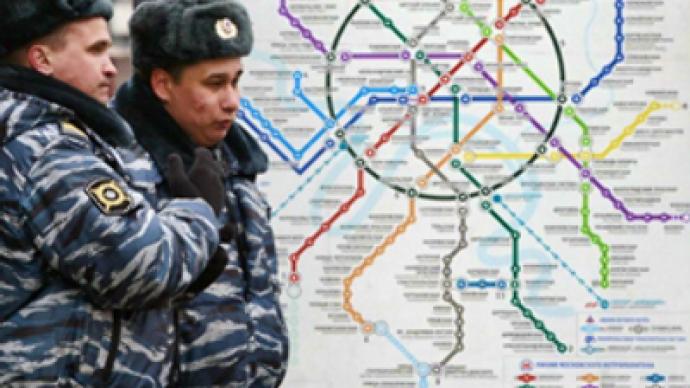
Some success had been reached recently in fighting terrorism in the North Caucasus, but it is clear the work has not been completed yet, analysts believe.
The blasts in the Moscow Metro are connected with recent counterterrorist operations against militants in the North Caucasus, many observers have said.
Terrorist acts in the Moscow Metro have demonstrated serious faults in the work of law enforcement agencies with getting intelligence in the North Caucasus, believes deputy chairman of the State Duma Security Committee, Gennady Gudkov. He even suggested establishing a special department of the Federal Security Service (FSB) dealing with operatives in the Caucasus.
The practice of sending officers of special services to the region for some months “has not justified” itself either, Gudkov told Interfax news agency. “High-quality specialists should be sent for two or three years on a voluntarily basis,” he said. “Of course, they should receive a very high salary, a social package for them and their families, and guarantees,” the deputy noted.
“A terrorist war” is being waged against Russia, first chairman of the same committee Mikhail Grishankov told the agency. The attacks have been conducted to “destroy stability” in the country, he believes.
Two terrorist acts followed “a quiet period after administrative and organizational measures had been taken and the special services had actively worked,” Grishankov said. “It seems that the terrorists had accumulated strength and money for attacks.”
“Two terrorist acts in Moscow is a colossal tragedy for the country,” the deputy believes. It shows that “it is necessary not only to continue the fight against terrorism, but to seek new, more effective forms and methods of this struggle,” the deputy believes.
Well-organized structures or small armed groups could be involved in the terrorist attacks on the Moscow Metro, believes deputy Duma speaker and leader of the Liberal Democratic Party Vladimir Zhirinovsky. He explained the blasts by “the struggle against Russia and external factors,” the agency said.
The Islamic factor has not been ruled out either, taking into account the preparation of suicide bombers that is being conducted in Afghanistan and a number of other countries, Zhirinovsky believes. Another possible cause is that bandit groups still exist in the North Caucasus, he added.
At the same time, the struggle of groups inside Russia that are involved in corrupted activities may have led to the terrorist acts too, Zhirinovsky said.
He called for the establishment of a bank of biometric data for all Russian citizens and stressed that his party is ready to support a relevant law.
“It is premature to speak about the causes of the terrorist acts on the Metro," military observer for the Kommersant daily Ivan Konovalov said. It is unclear “who exactly committed them or whether they are connected with arrests of leaders of the underground in the Caucasus,” he told Actualcomment.ru website.
It should be remembered that “there have been other explosions and the derailment of the Nevsky Express train,” Konovalov said. “The only thing that our law enforcement agencies could be told is that nothing has been finished and a long struggle against bandits is ahead,” he added.
This kinds of attack could only be planned by people who have lived in Moscow for some time, said Vladimir Anokhin, vice president of the Academy of Geopolitical Problems. A certain organization, rather than separate shakhids [martyrs], has organized the attacks, he told the website.
However, we have not heard for many years that “a serious hornet’s nest has been detected in Moscow,” Anokhin said. Law enforcement agencies have not been prepared for such a situation, he opined.
Terrorist organizations seem to have decided to speak loudly about themselves as the country is preparing to the celebrations of Victory Day, believes Oksana Goncharenko of the Center for Political Conjuncture. It may be a response to the arrests or elimination of several top militants, such as Said Buryatsky and Anzor Astemirov, she noted.
The terrorist groups may be trying to demonstrate that “they are still active, although all known militant leaders have already been eliminated,” the analyst said. However, their elimination does not mean that the whole network has been destroyed, she said, adding that this is “the most difficult problem for Russian law enforcement agencies.”