Technology behind Paralympic success
Published time: January 13, 2013 08:32
Edited time: January 13, 2013 12:32
South Africa's Oscar Pistorius in the men's 400m semifinal heat at the 30th Summer Olympics in London. (RIA Novosti / Syisoev)
Download video (20.2 MB)
Embed
Code
<object type="application/x-shockwave-flash" allowscriptaccess="always" allowfullscreen="true" quality="high" data="http://rt.com/s/swf/player5.4.swf" width="690" height="388"><param name="menu" value="false"><param name="wmode" value="transparent"><param name="flashvars" value="skin=http://rt.com/s/swf/jwplayer/skin.zip&abouttext=RT&aboutlink=http://rt.com/about-us/corporate-profile/&stretching=uniform&controlbar.position=over&file=http://rt.com/files/sport/paralympics-technology-london2012-pistorius-499/i49e4c196f2195e19832c4e80be6d1212_88033_2013-01-07t152554.017_paral.mxf.flv&image=http://rt.com/files/sport/paralympics-technology-london2012-pistorius-499/mens-oscar-30th-pistorius.si.jpg&provider=http"></object>
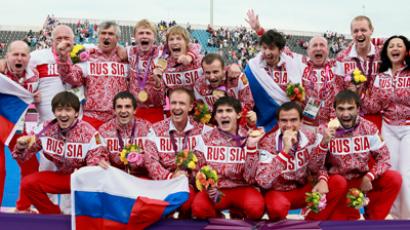
The 2012 London Paralympics was hailed as a great success, particularly for Russia, who finished second overall. RT looks into some of the technology, which allowed many disabled athletes to produce the performances of their lives.
© Autonomous Nonprofit Organization “TV-Novosti”, 2005–2013. All rights reserved.
Comments
Add comment
By posting your comment, you agree to abide by our Posting rules
Log in to comment in full, or comment anonymously under character-limit restriction.