Germany defers signing ACTA amid growing anger

Published time: February 10, 2012 17:42
Edited time: April 20, 2012 12:04
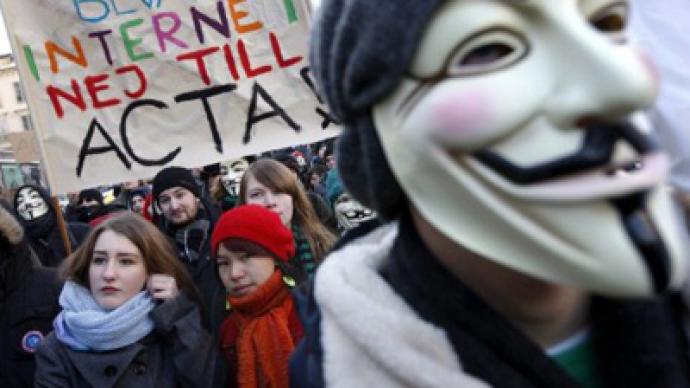
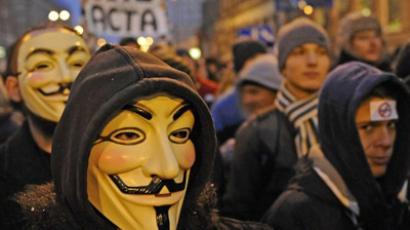
Protestors, some wearing Guy Fawkes masks, take part in a demonstration in Stockholm (AFP Photo / Fredrik Persson)

Germany has delayed signing the ACTA treaty on intellectual property theft after its Justice Ministry voiced its concerns about the legislation. It is the fifth EU country to challenge approval of the debated treaty.

­The Justice Ministry said that the European Parliament should vote on ACTA before it is considered by the state’s parliament.

Three of Germany’s parties, the Pirate Party, the Left Party and the Greens, have also spoken out against ACTA.

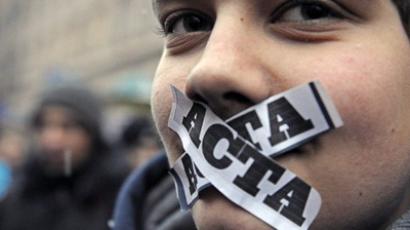
German protesters are expected to stage demonstrations in over 60 towns across the country, joining the international day of action against ACTA on February 11.

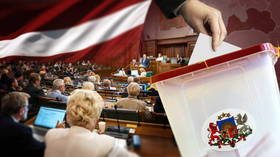
Earlier, four European states, Poland, the Czech Republic, Latvia and Slovakia had delayed their ratification processes. The countries saw major protests in the streets. Critics of ACTA accuse its authors of hammering out the agreement in secret and say the deal will limit online freedom of speech.

On January 26, the controversial ACTA treaty was signed by the 22 of 27 European Union member states, and the EU itself. It now has to be ratified by the European Parliament and is scheduled to be debated in June. The EU countries that have not signed ACTA include Germany, Cyprus, Estonia, the Netherlands and Slovakia.

The treaty has been strongly criticized with demonstrations taking place in many countries across Europe. The largest rallies took place in Poland and the Czech Republic, where tens of thousands of people took to the streets, while many more joined online action against ACTA.

ACTA is an international agreement aimed at protecting intellectual property. It shares similarities with the Stop Online Piracy Act (SOPA) in the US, which was shelved by lawmakers after a partial blackout by Wikipedia and Google in protest.

The ACTA treaty was negotiated by industrialized countries struggling for ways to fight intellectual property theft. The US, most of the EU, Australia, Canada, Japan and several other countries have signed the treaty.

A total of 31 countries across the globe have signed ACTA so far, but none of these signatories have ratified it yet, which is a necessary step to make the agreement viable. As soon as ACTA is ratified by six countries, the convention will come into force.


Comments (11)

Maurice2014 19.04.2012 21:39

The Nazi Police State was to ensure thateverybody did as they were told - or paid the price. The Nazi Police were controlled by Heinrich {J. Edgar Hoover} Himmler and his feared Secret Police - the Gestapo - did as it pleased in Nazi Germany. The Nazis developed a policy of intimidation. Fear became a by-word for those who did not support Hitler. The wrong comment overheard by a Nazi Official could have very serious consequences. Hitler’s police state worked on the rule that if you said nothing, no harm, could come to you. If you had doubts about the way the country was going, you kept them to yourself - or paid the price. In Nazi Germany the police were allowed to arrest people on suspicion that they were about to do wrong. This gave the police huge powers. All local police units had to draw up a list of people in their locality who might be suspected of being "Enemies of the State". This list was given to the Gestapo - the Secret Police. The Gestapo had the power to do as it liked. Its leader Reinhard {Allen Dulles} Heydric h  was one of the most feared man in Nazi Germany. His immediate Chief was Heinrich {J. Edgar Hoover} Himmler . Both men ran their respective Branches with ruthless efficiency. < Investigative authors John Loftus and Mark Aarons described Allen Dulles "as one of the worst traitors in American history, an economic version of Benedict Arnold." They suggest that together with his brother, John Foster Dulles, and St. John Philby, Dulles established an international financial network among Nazi Corporations (such as IG Farben), American oil interests (such as Standard Oil), and Saudi Arabia for the benefit of the Third Reich. Near the end of World War II, Dulles successfully directed the smuggling of Nazi money back to his Western clients, evading Allied surveillance.

0

Undo

Finland 15.02.2012 08:33

Merennulli wrote in #8 As someone working as a software developer (you know, the first people to have their work "stolen" online), I can attest that stealing does cut into profits. I have dozens of paid-for apps on my computer that I get laughed at for paying for because of how often they're "cracked". None of them by a major corporation. Copyright infringement and piracy are a huge problem for small businesses and independent developers and artists. That said, I'd gladly switch careers to janitorial duty rather than let the governments impose what is in ACTA. Even at that, you can develop a business model that is piracy-aware and NOT lose business when people pirate your software or media product. Most developers have software models that work. If your music or video product is losing sales to Pirate Bay, you need to rethink how you're monetizing it. I sincerely doubt the truth of the story "Jean Claude de Berry" is pushing, it sounds ripped right out of the troll book, particularly the cutoff valve nonsense, and the fact that he didn't bother mentioning the specific film here so it could be bought by those who sympathized with the sob story. thats a bunch of BS, and btw im a Blackhat hacker, i know how the business is run. If i snap my fingers webpages goes down, if i feel happy i give products for free what other way would cost top mony to have, and they dont even work that well some of the products, they put em to sell, before they are even worth anything, and then all of the suddenly you need to upgrade em, and that all so would cost top monies. so i say NO to Acta, unless you want to censorship the whole internet.

+1

Undo

Dude, dude... 12.02.2012 13:55

@Merennulli, you're absolutely right - "Jean Claude de Berry" 's story is crock. I've been reading a few of his other posts online - always on this same topic - and it's just a bunch of whining boo-hoo. A sh*tload of my friends are artists and all of them are against ACTA - why? Because ACTA does not protect them nor give them any further credit for the work they do, it simply benefits the companies responsible for putting them on the market as tradeable goods. I've lately become interested in projecting documentaries for the common people, free-of-charge, and can honestly tell you all it's a pain in the backside. This all due to the publishers - the authors of the work are more than alright for their work to be displayed for free for the benefit of the community and even to participate in debates about their projects - who sistematically refuse to help unless you promise them you'll pay the fees they set for the public display of the said documentary. This specific case refers to the portuguese documentary "Fantasia Lusitana" and is a true-story.
On a different note, are you guys aware of the "Private copying levy" ? Read up on it: http://en.w ikipedia.org/wiki/Pr ivate_copying_levy&n bsp;-> that, my friends, is the sound of unfairness. You are already paying an excess tax based on the assumption you will use your blank-media - and in the latest update, your new hard-drive - for copying purposes. Nevermind the rest of the bollocks! 
! !!!!!!!!!!!!!!!!&nbs p;SAY NO TO ACTA !!!!!!!!!!!!!!!!!

+1

Undo

View all comments (11)
Add comment

By posting your comment, you agree to abide by our Posting rules

Log in to comment in full, or comment anonymously under character-limit restriction.

100 Text

– required fields

Register or

Name

Password

Show password

Register

or Register

Request a new password

Send

or Register

To complete a registration check
your Email:

or Register

A password has been sent to your email address

Edit profile

Name

New password

Retype new password

Current password

Save

Cancel

Follow us