In Libya, death and disappearance still stalk the land
Published 21 Dec, 2011 07:38 | Updated 21 Dec, 2011 14:24People are vanishing in broad daylight in Libya, as the country’s new rulers continue to settle accounts with their opponents. Widespread insecurity means the families of the kidnapped can do no more than hope that their loved ones are still alive.
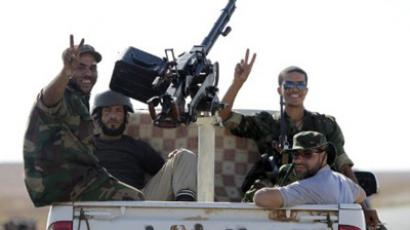
Libya’s conflict is over, and the man who stood in the way of Western-style democracy is dead. Yet atrocities against Muammar Gaddafi’s loyalists continue. The images emerging from Libya are disturbing.Against this distressing background, Russia is demanding a probe into civilian casualties in Libya caused by NATO bombings.That's Moscow’s reaction to a report by human rights groups which claims dozens were killed in air strikes – despite the alliance saying its operation was almost flawless.After the NATO-backed rebels overran Gaddafi’s home town of Sirte, staring death in the face became an everyday experience for residents of the loyalist stronghold. Local men, young and old, were captured by the winners, who delivered a summary verdict – the Colonel’s countrymen were labeled “Gaddafi dogs” – with the associated deadly consequences.Scenes of rebels executing loyalists played out all across Libya for months as the rebels, assisted by Western powers, sought to liberate the country. Urban legends about the Colonel’s sadistic tendencies grew more outlandish by the day, justifying any sort of treatment for his perceived loyalists. “In some places the violence is quite bad,” says Fred Abrahams of Human Rights Watch. “The town we looked at was Towerga and the militias from the neighboring town of Misrata are terrorizing the people of Towerga. They accuse them of having fought for Gaddafi and having committed atrocities in his name,” he reveals.A prison in Tripoli where Muammar Gaddafi was said to have held his political opponents, with no access to lawyers and no chance of a fair trial, has become a landmark of the liberated capital.But while the prison’s new guards spare no details in narrating Gaddafi’s ferocities, fear and hatred still reside in its neighborhood. Abu Salim is an impoverished district in the south of Tripoli where Muammar Gaddafi had a strong support base prior to his ouster from the capital. The district also lent its name to the Abu Salim prison, notorious for its mistreatment and arbitrary killing of inmates. Today, the prisoners are long gone, and Gaddafi is dead. Yet the human rights violations in Abu Salim continue. Men from the neighborhood are still vanishing without trace, and their families are too frightened to even speak of their disappearance. One of the few places in Libya where families of alleged Gaddafi supporters can turn to for help is an NGO formed by Mohammad Miloud Benhammed earlier this year to investigate the fate of those who disappeared in Gaddafi’s prisons. He is now primarily dealing with people who have gone missing under Libya’s new leadership. “It’s usually mothers who come here, and at first they are scared to tell me that their son or husband was with the Gaddafi forces. They usually say he was a civilian caught in the crossfire. But I tell them that I don’t care which side he was on. All I need is accurate information so that we can start searching,” the head of Mitiga Missing People group told RT.Mohammad and his friends have been taking photos of unidentified bodies which are being regularly discovered across Libya. These snapshots have become the relatives’ most realistic hope of finding closure.But even after sifting through them, many manage to retain hope. “I hope he’s in Tunisia. Maybe he’s in a hospital. Maybe he’s lost his memory or has no way of contacting us,” said Evyed Farhatn, whose brother disappeared on the frontlines of Bani Walid.Those pursuing the long search for disappeared relatives say hope dies last. In this shattered country, hope remains alive even if many much-loved family members do not.