Three-time Refugees: Syrian Circassians back to Russia
Published 8 Oct, 2012 08:29 | Updated 8 Oct, 2012 16:31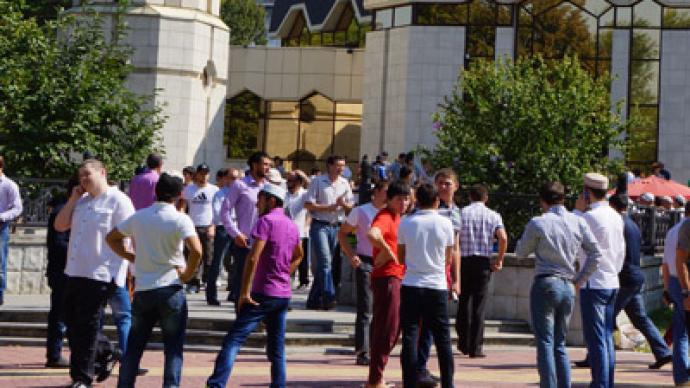
Syria’s 18-month war has generated a massive wave of refugees, with some coming to Russia. Many are rediscovering their historic links to their new surroundings and mourning the peace and prosperity they once enjoyed in their former home.
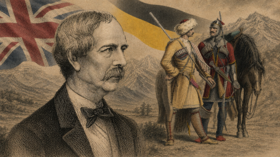
Turkey has kept its doors wide open to anyone seeking escape from violence, while Russia offers a lengthy routine of red-tape to follow. In Turkey, refugees are accommodated in tents and trailers, provided for and given an allowance, but limited to the territory of the camp.In Russia, refuges are accommodated in sanatoriums and are free to roam the town and mix with the population while their paperwork is being processed over several months. In Turkey, the refugee program is part of the state budget, while in Russia Syrians live off private donations from local businessmen.I spent an hour in the lobby of a sanatorium in Nalchik (capital of Kabardino-Balkaria, a republic in the North Caucasus) waiting to meet the refugees. Out of 500 Circassians who arrived in Kabardino-Balkaria from Syria, 80 have found a safe haven in this city. Many Circassian families have been refugees more than once. In the 19th century, they fled to the Ottoman Empire from Russia when it annexed the Caucasus; and in the 20th century, when Israel invaded the Golan Heights, they fled to Damascus. Now they are back in Russia. Another Caucasus republic, Adygeya, has provided shelter for 200 more Syrians and a few thousand more are still waiting in Syria for their permit to come. But the refugee quotas for 2012 are already exhausted for the North Caucasus. As for North Ossetia, this republic flatly refused to house any of the Syrian refugees: the majority of its population is Christian or adherents of the native religion, whereas those who were about to come are Muslim descendants of Ossetian migrants.You can see Syrians on the streets, in the parks, in the local mosque or at the marketplace. They are always friendly and hospitable, a bit embarrassed by their idle lifestyle here – and have trouble getting used to the mountains and there being so many trees around.The premises of sanatoriums accommodating them are not secured – unlike the refugee camps in Turkey. Kids are out on the sports grounds, teenagers work out in gyms, seniors enjoy quiet walks in the park, while mothers are busy hanging out laundry – just like they used to do in Syria. The manager is very unhappy with me for having violated the important hospitality tradition of the North Caucasus by deciding not to wait any more and simply walking into the residential quarters to talk to the Syrians myself. The tradition runs as follows: “Your guest is not for sale.” (That means that no one can force the guests to spend time with you. They are free to make you company if they choose to.)
Natai Al Shavras, 35, is an architect from Damascus. His father is an engineer, his mother teaches Arab literature and his brother is a geologist. He has brought the whole family along. “The situation in Syria is getting worse by the day, and we’ve been jobless for a year now. It’s a disaster for the whole country,” says Natai. At home, his grandparents spoke Circassian. They never learnt Arabic. Among other languages, Natai speaks English and French, like most educated Syrians do – and some Russian as well.Natai explains that the Syrian Circassians enjoyed their fair share of success in Syria. They were the upper crust in the Syrian society, and a lot of them were Communist.He spent some time working for a project on preservation of Syria’s archeological heritage sponsored by Syrian first lady Asma Assad.“I traveled across the whole country and to my horror discovered there was a whole industry – an illegal trade in artifacts. That was a way for the poor to somehow get by. We drafted and submitted reports on that, urging the government to do something about it. Asma Assad had some good ideas and intentions, but this illicit business is patronized by secret services. They have ruled Syria for 50 years and gained enormous power and influence. They have taken over all kinds of political, economic and social activities.”I asked Natai what he thinks of the stance taken by Russia, criticized by the US and its allies for not being against Assad’s government.“Russia wants a peaceful solution. It’s not that it supports Assad. In any case Assad’s family will have to go, but they don’t want to go. They could have resolved all the issues in their own time, but they failed to do it. The media depicts the whole situation as a clash between the US and Russia, but the story is actually different. This is a war where Syrians fight Syrians,” says Natai.Natai says that there was no pressure on religious communities, but political and public activists, union leaders were always under pressure. Whenever people formed a committee, they would be thrown in jail. The young Assad promised he would support them, but a year later they ended up in prison.”He tells us that there is no war between the Shia and the Sunnis, while some try to convince the world that this is what the situation in Syria is like: “We have always had people who supported the government and those who opposed it. It is not a matter of religion, it’s just the way things are. Christians are staying neutral, but there are a lot of them in the peaceful opposition groups. The Druze and Kurds are trying to be above the conflict, but it is getting more and more difficult to maintain that position.”He has his own explanation of how the conflict got a religious coloring. “Mosques, churches were the only outlet. For 30 years Saudi Arabia and Iran have been trying to influence Syria, they gave a lot of money to promote religion among the people. The Muslim Brotherhood was against the regime, and this example inspired people,” says Natai.He thinks that Syrians, even those of them who strongly oppose Assad, don’t want to be occupied by another country, because they are all familiar with the sad situation in Iraq. But it was the occupation of Iraq that destabilized Syria. “People wanted to join those fighting against the US, but were not allowed to,” Natai continues. Many of the Circassians I talked to said that at the beginning of the Iraq war Assad wanted to take the Islamists under his wing, but the US pressured him, so not only were the people not allowed to go to Iraq as volunteers, but they were also persecuted in Syria.Many believe that despite taking an active stance, Turkey doesn’t want to engage in the conflict – there are many Syrian families with Arab relatives in Turkey and Turks who have worked in Syria. Previously, Syria employed protectionist policies regarding jewelry, handicraft, textiles and foodstuffs, which were of exceptionally high quality. The Assad government abandoned protectionism and raised taxes, which resulted in Turkish goods flooding the Syrian market. Since the war began all the mutual benefits have vanished.
If for some Circassians Russia is just a stop on their way, others plan to settle down here. Ahmad, 50, is an artist. Like other refugees, he’s spent the last six months waiting for his papers ping-ponged by bureaucrats from Russia to Syria and back.The Russian Federal Migration Service sent a request to Damascus two months ago. “Maybe they sent those letters by horses. The post must have been faster in the Middle Ages,” grins Ahmad.He has a Russian wife and has had a Russian passport for 20 years now. There are some 250,000 families like his in Syria. “I had my passport replaced officially twice by the embassy. But now, all of a sudden, they want a confirmation that the passport was issued legally. It seems strange, especially given the fact that my children served in the Russian army.”One of his sons is a surgeon, the other is still a student.His wife is now away to visit her relatives residing in a town on the Volga River. Some time ago they both went to Abkhazia when Ahmad had to extend his visa. “My father was born in Abkhazia and my mother in Kabardino-Balkaria. So now thanks to those bureaucrats, I had a glimpse of my father’s homeland,” Ahmad says in almost-pure Russian.
Nadezhda Kevorkova, RT