Give peace a chance? US and Israel postpone largest joint drill
Published 15 Jan, 2012 19:12 | Updated 15 Jan, 2012 23:18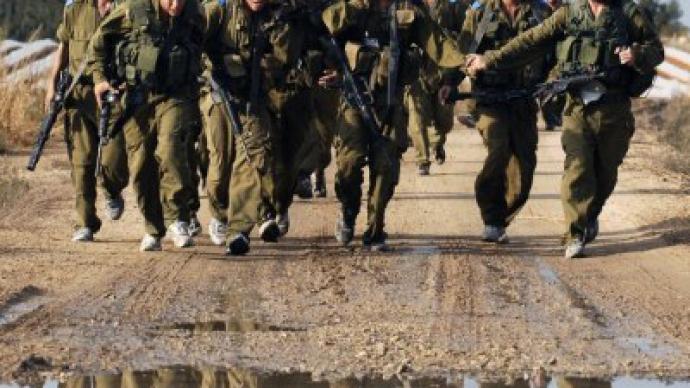
“Austere Challenge 12”, the US-Israel joint-missile defense drill, has been postponed till the summer at the earliest, according to Israeli media. Some link the move to Washington’s growing concern Israel may be planning a unilateral attack on Iran.
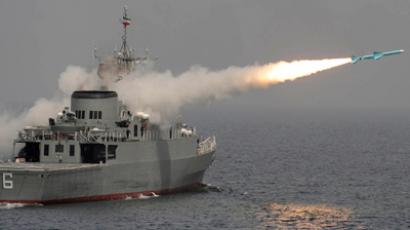
The drill, originally set for April, was intended to create a high level of interoperability between the two countries’ missile defense systems. Thousands of US troops would be deployed in Israel to be joined by an equal number of Israeli soldiers. It would also be the first time a top US commander (Admiral James Stavridis of the US European Command) has been assigned to participate in the simulations. The maneuvers had been scheduled to take place at a time of spiraling tensions around Iran. Moreover, the probability loomed they would coincide with Iran’s own large-scale naval war games.Israel denies any link between “Austere Challenge 12” and the political build-up in the Gulf, saying their joint drill with the US was “routine,” “planned in advance” and “not in response to any real-world event,” reports Agence France Presse. Despite the claims, the drill, unique in its size and scope, has sparked concerns in the region that Israel may be bolstering its defense with US troops for an imminent strike on Iran’s nuclear facilities. Now the drill has been postponed due to “technical and logistical” reasons, or, as Israeli public radio puts it, “budgetary constraints.” Analysts suggest Washington does not want to put a burning match close to Iran’s tinderbox. Moreover, there is also major disagreement between Israel and the US on the red lines for a strike on Iran. This, according to the Associated Press, is likely to head the agenda that General Martin Dempsey, a top US military chief, is taking to Israel for next weekend’s discussions with Israel’s defense minister, Ehud Barak, and the chief of staff, Benny Gantz. Israeli media speculate Dempsey’s visit is a part of the US effort to avoid any “surprise” on Iran coming from Israel.
Israeli vice PM: Obama’s holding off action on Iran is electioneering
The prospect of Israel adding to the regional instability with a unilateral strike against Iran is causing concern in Washington. The US recently signalled its uncertainty as to whether Israel would update them ahead of any such an action. Washington’s position is that a strike on Iran should be carried out only after firm intelligence that Tehran is building a nuclear weapon is obtained. At present, the White House seems satisfied with the route of diplomatic pressure and economic sanctions, and is pressing Israel to give them time to have effect. US sanctions targeting the Iranian central bank and oil exports have made Iran “wobble,” Israeli Prime Minister Benjamin Netanyahu admitted to an Australian newspaper. But while some Tel-Aviv officials praise Obama’s resolve against Tehran, others slam the US president for signing a bill which makes sanctions on Iran take effect “only” six months later. "In the United States, the Senate passed a resolution by a majority of 100-to-1 to impose these sanctions, and in the US administration there is hesitation for fear of oil prices rising this year, out of election-year considerations," Moshe Yaalon, Israel's vice prime minister, told Israeli radio.Israel declines to rule out a strike – as does the US.“It is the policy of the Israeli government and the Obama administration that all options remain on the table. And it is crucial that the ayatollahs in Tehran take this policy seriously,” said Michael Oren, Israel’s ambassador to the US, echoing the stance announced by US defense secretary Leon Panetta.Earlier this month, Tehran crossed at least one of Israel’s own “red lines,” when reports emerged that Iran had begun enriching uranium at the Fordo underground nuclear facility near the city of Qom.Reputed to be the Middle East's only country with a nuclear arsenal, Israel considers Iran's uranium enrichment program as a mortal threat to its security. After the publication of the International Atomic Energy Agency’s report on Tehran’s alleged experiments with nuclear mini-warheads, Tel-Aviv threatened to resort to force if it deems the diplomatic isolation of Iran a dead end.