Canine as a search warrant? SCOTUS to debate dogs vs Fourth Amendment
Published 30 Oct, 2012 21:12 | Updated 31 Oct, 2012 01:14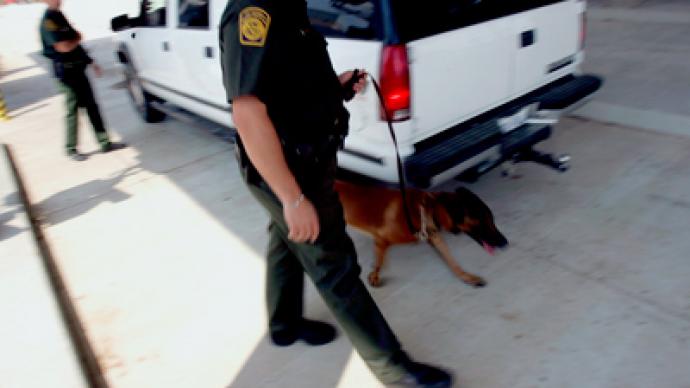
You can’t teach an old dog new tricks, but you can sure as hell take him to the Supreme Court. That’ll be the case twice this week when the country’s top justices hear two separate cases involving drug-sniffing canines.
On Wednesday, the Supreme Court is expected to hear arguments in both Florida v. Jardines and Florida v. Harris — two distinct but similar cases that are being argued all the way to the Washington. In Jardines, the Court will be asked to consider if using law enforcement dogs to sniff around the homes of citizens can be considered a search by itself, and with Harris, Chief Justice John Roberts and his robe-clad colleagues will have to hear arguments about the actual abilities of canines to locate contraband. Pending the outcomes of either case, the use of drug-sniffing dogs by law enforcement agencies across the country could soon be drastically different.Joelis Jardines got in trouble with the law six years ago after a chocolate Labrador retriever named Franky found a suspicious smell coming from the man’s home in south Florida. The police had received an anonymous tip that Jardines might be harvesting marijuana inside of his residence, so they brought Franky over to sniff out the scene. Based on the dog’s response to the scent of the pot, the cops went back to court and asked for a warrant. From there, they were able to go inside and confiscate roughly 25 pounds of weed.That search was thrown out by Florida’s top court, though, after it was ruled that Franky’s preliminary sniff constituted an "unreasonable government intrusion into the sanctity of the home." Letting the dog poke his nose around Jardines’ house was a search itself, the court ruled, and one that the police didn’t have a warrant to conduct. “Jardines is a line-drawing case: the question is can police use the dog at the front door," George Washington University law professor Orin Kerr tells reporters. "If a warrant were needed, police would never use the dog at a house, because then they could just go inside."An appeals court challenged the verdict, and now it will be up to the presidential appointees on the Supreme Court to consider how canine cops can be used. When it’s time to weigh in on Florida v. Harris, though,the court will have to consider just how accurate those adorable wet-noses actually are. Clayton Harris was also the subject of a criminal case back in 2006 after officers bear Bristol, FL pulled over his pick-up truck from having an expired tag. That time the drug dog on the scene was a German shepherd named Aldo, and he alerted the officers to what was turned out to be the odor of ingredients used in the manufacturing of methamphetamines. Harris pleaded no contest to the charges that were filed, but the state Supreme Court said the department never proved Aldo's reliability with any evidence of training or certification, or any expertise his handler could have had. "The state's 'credentials alone' canine-reliability test is based on an overgeneralized assertion – that all trained or certified drug-detection dogs are reliable in the field," a group of 34 law professors said when they filed a brief supporting Harris.“Some dogs as more accurate than others, and, like people, dogs have good days and bad days,” an attorney for Mr. Harris told the Florida Supreme Court when the case first went up to debate. Justice David H. Souter pointed out to the SCOTUS only a year earlier that a then-recent study showed that dogs in artificial testing situations return false positives as much as 60 percent of the time. Last year, an independent study conducted by the Chicago Tribune found that alerts from dogs during traffic stops led to drugs or paraphernalia being recovered in less than half of all instances.The Florida court eventually suppressed the evidence that Aldo alerted the authorities to, to which an appeals panel argued.If the Supreme Court says the dog’s word is good enough, though, those false positives won’t even begin to matter. When the cases are brought up in Washington this week, we’ll find out if drug-sniffing canines can continue to be used as they are today.Or, as law professor Orin Kerr explains to the New York Times, it’ll pretty much come down to asking the justices, “What do you think of a dog’s nose?”