Innocence not enough to save you from death row
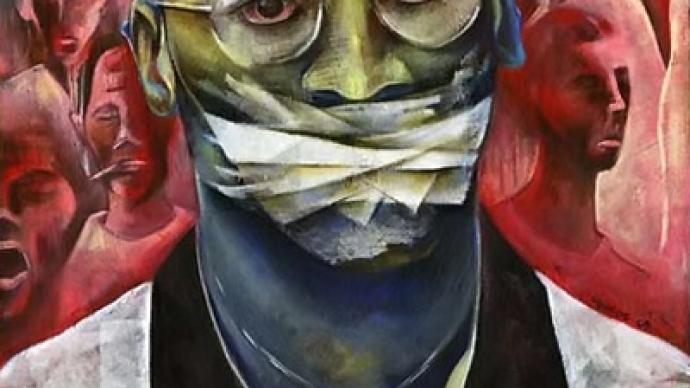
In 1991 Troy Davis was convicted of murdering a white police officer and given the death sentence. Davis’ legal team claims to have solid evidence of his innocence, but the state of Georgia won’t listen and is prepared to execute him.
America’s death penalty is again at the forefront of legal debate. From cases like Davis’ to those of Mumia Abu-Jamal and cases where death was carried out only later learn the individual was innocent, the heated issue rages on. Davis’ team has actively tried to submit evidence that their client is innocent, evidence they say exonerates him. If this is indeed true the state of Georgia may be very close to executing an innocent man. Meanwhile, Mumia Abu-Jamal, seen by many as a political prisoner held by the US, was recently issued a rare sentencing appeal. A US appeals court has overturned Abu-Jamal’s death sentence so he may face sentencing again, giving him the opportunity to possibly avoid death. There is however no guarantee he will not receive the death sentence again. Both cases and a number of historical examples routinely bring to light the debates over the death penalty, a practice most modern nations have abolished. The US, China and Iran are but a few of the nations that continue its use.Deirdre O'Connor, the founder and executive director of Innocence Matters explained the case of Troy Davis is one where a man sits on death row for a crime he did not commit, and the evidence proves it. In Davis’ case the person who did the shooting has actually confessed on a number of times, but the court refuses to hear about it. “Poor minorities are expendable,” said O'Connor, explaining the approach in the US legal system. “It becomes less about who did it and less about the search for truth, and more about holding someone accountable. And, because people of African descent and minorities and people who don’t have money are treated as expendable, it doesn’t matter if we get to the truth.”The majority of convictions are based on limited evidence and a racial bias is present in the US justice system. Davis sits on death row, un-executed wand without an execution date, because the state of George does not have enough of the drug used to execute prisoners. Most nations who create the drug have ceased production on moral grounds while a number of nations have banned its export to prevent the US from using it to kill inmates.The former lead counsel for Mumia Abu-Jamal, Robert R. Bryan, said the awarding of a new sentencing for Abu-Jamal is a very positive development both for Abu-Jamal and advocates who support abolishing the death penalty. He argued the death sentence is both irrational in the case and unconstitutional. Abu-Jamal became a globally known figure, with various nations calling for his release. While in prison he authored books and received honorary citizenship from cities across the globe. The Most Rev. Dr. Desmond Tutu and Noam Chomsky have also rallied behind him in support. “He [Mumia Abu-Jamal] became a symbol, not only in the fight against the death penalty for the 20,000 men, women and children on death rows around the world, but Mumia was also very symbolic of a legal system often breaks,” he commented. “I do not believe Mumia Abu-Jamal would be on death row if he were not African American.” Race plays a role, Bryan argued. There is a disproportionate number of African Americans on death row and in US prisons when compared to Caucasians or others. The appeals decision brings about a very important shift, he explained. The cases of Abu-Jamal and Davis both show mistakes are made and prejudices exist in the system. The system is human and errors do occur. The risk of human error ending in executing an innocent person is too great, he explained, and should be addressed by abolishing the death penalty.