EPA approves 'Agent Orange' pesticide
Published 11 Apr, 2012 19:36 | Updated 11 Apr, 2012 23:36
The Environmental Protection Agency has refused a petition that aimed to ban the sale of a powerful pesticide linked with cancer — and while already available, a surge in sales is expected as scientists ready a new crop resistant to the chemical.
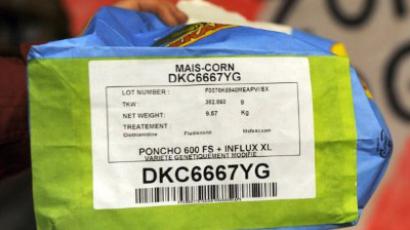
Not only has the EPA rejected a petition that sought to prohibit the domestic sale of the dangerous 2,4-D pesticide — a key ingredient in Agent Orange — but the main manufacturer of the chemical predicts that sales will skyrocket in the coming months. The reason, it would seem, is that Dow Chemicals is awaiting federal approval of a genetically engineered crop they’ve created that will be resistant to 2,4-D. If approved, farmers will be able to plant the frankencrop corn variant and douse their fields with the pesticide to eliminate unwanted weeds with greater success. Although 2,4-D isn’t currently used to a large degree on corn fields, all that could soon change for the country’s most successful crop. Opponents argue, though, that the potential side effects of the pesticide are enough to push for a ban on 2,4-D altogether.The Natural Resources Defense Council, an environmental watch group, has argued that expose to 2,4-D has caused in some cases cancer, hormone disruption, genetic mutations and neurotoxicity, reports the New York Times. In voting not to hear the petition against the pesticide, however, the EPA says that they believe there to be a lack of evidence that would be significant enough to raise suspicion.“After considering public comment received on the petition and all the available studies, EPA is denying the request to revoke all tolerances and the request to cancel all registrations,” the agency says in their explanation this week. According to the National Resources Defense Council, the truth behind the toxicity of the chemical is quite the contrary.“This dangerous pesticide is lurking all over the place – from ball fields and golf courses, to front lawns and farms – exposing an enormous amount of the American public to cancer and other serious health risks,” NRDC senior scientist Dr. Gina Solomon wrote earlier this year. “There’s no reason to continue allowing a toxic Agent Orange-ingredient in the places our children play, our families live and our farmers work. EPA must step up and finally put a stop to it.”The NRDC is not alone in their opposition, either. The Center for Food Safety has also fought to ban the sale of 2,4-D as Dow develops their pesticide resistant-crop. “Dow’s ‘Agent Orange’ corn will trigger a large increase in 2,4-D use — and our exposure to this toxic herbicide — yet USDA has not assessed how much, nor analyzed the serious harm to human health, the environment or neighboring farms,” the center’s executive director, Andrew Kimbrell, warns. “This novel corn will foster resistant weeds that require more toxic pesticides to kill, followed by more resistance and more pesticides — a chemical arms race in which the only winners are pesticide/biotechnology firms.”In discussing the seriousness of the consequences, Dr. Amy Dean adds to the Center for Food Safety that “Many studies show that 2,4-D exposure is associated with various forms of cancer, Parkinson’s Disease, nerve damage, hormone disruption and birth defect.”“Because it poses significant health risk, exposure should not be increased, but significantly reduced to protect the public’s health,” the doctor insists.The 2,4-D chemical was also instrumental in the formula for Agent Orange, the chemical weapon used by the US during the Vietnam War that is believed to have either killed, maimed or disfigured one million people.The NRDC had filed their petition to end sales of 2,4-D back in November 2008. After over two years of waiting without response, they sued the EPA in February for not acting quickly enough, Only on April 9, 2012 did the EPA officially announce it would deny the petition. Mae Wu, a lawyer with the group, tells the New York Times that the NRDC was “disappointed that it has taken this long to deny our petition” and also “disappointed that they are not protecting public health by getting this toxic chemical off the market.”