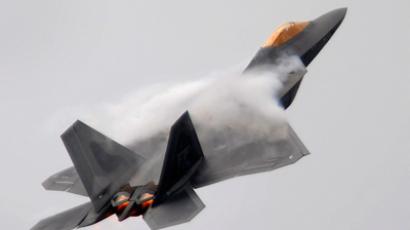
Take my breath away: Top guns refuse to fly $143 million F-22 fighter
Published 1 May, 2012 20:39 | Updated 2 May, 2012 00:39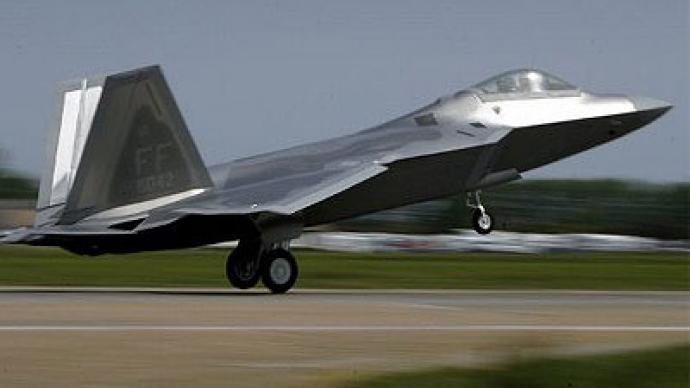
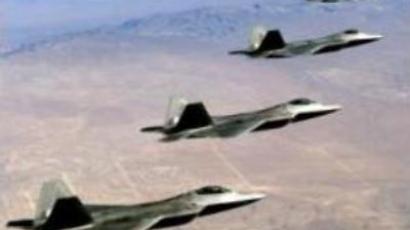
The F-22 is the world’s most sophisticated operational fighter plane, and one of the most expensive. But due to an unexplained and potentially deadly problem that causes oxygen to drain out of the cockpit, pilots are refusing to be assigned to it.
Air Force General Mike Hostage admitted that a number of F-22 pilots are refusing to fly the stealth fighter until it is completely safe or have asked to be moved to different planes altogether. He did not specify how many out of a total of some 200 F-22 pilots refused, but claimed it was a "small number". Usually, securing a seat on the most modern plane in the USAF is a hotly-contested competition reserved for the best pilots. But the F-22 has been plagued by a persistent fault – a deficiency of oxygen in the cockpit, leading to hypoxia.Hypoxia starts when the brain is starved of oxygen. It can cause dizziness, disorientation and blackouts and, potentially, loss of consciousness. But when operating a jet that flies at nearly twice the speed of sound, even a momentary lapse could prove disastrous.The Air Force has documented a recent flight when the pilot became so disoriented he allowed the plane to descend so low it brushed the tops of trees before he managed to compose himself and gain height at the moment of contact.The most alarming thing is that hypoxia has been reported for years, and not only have the engineers not found a solution, but they don’t even understand what is causing the problem – whether it’s a design flaw or the body’s response to flying conditions.The Air Force grounded the jets for five months last year while it examined them. It allowed the planes back up in the air in September 2011. Since then, it admits there have been at least eight more incidents of in-flight hypoxia.A highly-placed Air Force panel is currently holding weekly meetings to discuss progress.General Mike Hostage has even promised to personally climb into the cockpit.“I'm going to check out and fly the airplane so I can understand exactly what it is they're dealing with,” he said.
Stuck in the hangar
The oxygen problem is the latest debacle in the life of a plane that has come under a firestorm of criticism.At $79 billion for less than 200 planes – the final F-22 rolled off the production line last year – the entire program has been dismissed as exorbitantly expensive.Despite being introduced into the Air Force in 2005, the stealth jet has not seen any action. Designed for air-to-air combat against other latest-generation jets it’s had no place in the counter-insurgency and bombardment missions the US has conducted in the Middle East and Afghanistan.Now, with the more versatile and modern F-35 scheduled for introduction in 2016, the F-22 risks becoming a niche failure that never saw its time come.And that’s even if it gets cleared for take-off.