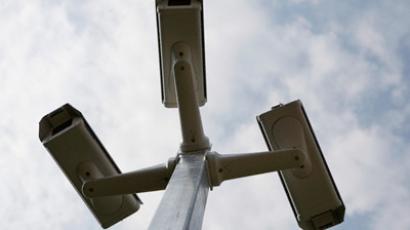
New DVRs will use cameras and microphones to monitor their owners
Published 5 Dec, 2012 21:47 | Updated 6 Dec, 2012 01:47
Think Google ad targeting is crossing the line? Verizon filed a patent for a cable television box that uses sensors to record what you’re doing and target you with specific advertisements that relate to your mood.
The telecom giant Verizon wants to know you better. Much better. The company just registered a patent for its DVR of the future. The set-top box would use a depth sensor, an image sensor, an audio sensor and a thermal sensor to determine what those watching television are doing. If a couple is having an argument in front of the TV, a marriage counseling ad may come up. If two people are cozying up, Verizon may put up an ad for contraceptives or a romantic getaway.The sensors would also be able to detect where someone is looking. If the viewer is watching a certain ad, Verizon might use that as an indicator to play similar ads in the future.“If detection facility detects one or more words spoken by a user (e.g. while talking to another user within the same room or on the telephone), advertising facility may utilize the one or more words spoken by the user to search for and/or select an advertisement associated with the one or more words,” Verizon wrote in its application.Rather than watching television, television will be watching its viewers.But even pets and inanimate objects could become a part of the targeted advertising. The detection facility would in some cases be able to identify animals (such as dogs, cats, and birds), retail products with brand images or words (such as a bag of chips or a soft drink), furniture and decorations. Verizon would then stream ads that would correspond to the viewer’s style or interests.Even more intrusive might be the DVR’s ability to detect and communicate with mobile devices held by viewers. If Verizon senses a mobile phone being used, it may “communicate with the mobile device to limit the content accessible by the way of the mobile device”, as well as stream advertisements that correspond to what the viewer is looking at on his or her phone.If Verizon proceeds with its plans, the technology may bring Big Brother into the households of millions of Americans, giving the tech company a strategic advantage over what Americans watch on their devices.The company would always know whether a user is “eating, exercising, laughing, reading, sleeping, talking, singing, humming, cleaning, playing a musical instrument, performing any other suitable action, and/or engaging in any other physical activity during the presentation of the media content,” according to the patent.The paperwork was filed by Verizon in 2011, but the patent filings weren’t required to be released by the US Patent and Trademark Office for 18 months.Verizon officials declined to comment on the patent when questioned by the media source FierceCable, but released a statement to CBS Radio about the issue of privacy.“Verizon has a well-established track record of respecting its customers’ privacy and protecting their personal information. As a company that prizes innovation, Verizon takes pride in its innovators whose work is represented in our patents and patent applications. While we do not comment on pending patent applications, such futuristic patent filings by innovators are routine, and whatever we might do in the future would be in line with our well-established track record of respecting our customers’ privacy and protecting their personal information,” the statement reads.While the patent may not represent plans for current technology, it may provide a glimpse into the future – a future where every private action becomes the interest of a major corporation.